On Wednesday, March 16, Turner Classic Movies (TCM) will celebrate the film preservation work of The Museum of Modern Art with 24-hour program of 14 films drawn from MoMA’s collection. Chief curator of film Rajendra Roy and I flew to Los Angeles in late February to tape cohosting spots with the well-known TCM host Robert Osborne. We were eager to be a part of TCM’s ongoing commitment to spotlighting efforts to protect the world’s cinema heritage. And we also got to sit in the red leather chairs during the interview with Mr. Osborne!


Posts in ‘Film’
March 15, 2011
|
Conservation,
Film
Turner Classic Movies Presents 24 Hours of Films Preserved by MoMA
March 14, 2011
|
Film
Celebrating 40 Years of New Directors/New Films
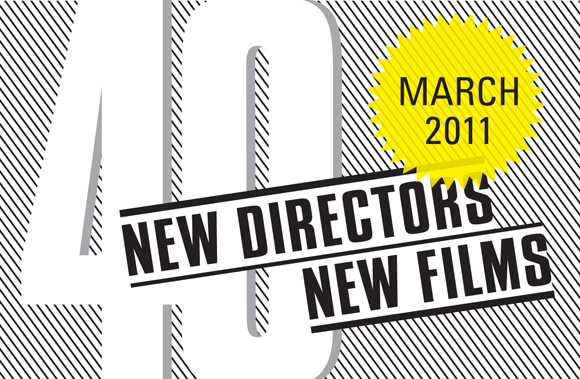
All of us have had the experience of being green (in the “inexperienced” sense, not the “Kermit” sense); that nervousness, insecurity, and exhilaration that propels us through uncharted territory. There are moments like this that are universal: first day of school, new job, first date. For artists, the moment when they present themselves for the first time to critics and discerning audiences can be extremely unsettling. Over the past 40 years the organizers of New Directors/New Films at MoMA and the Film Society of Lincoln Center have embraced the challenge of creating moments of nervous exhilaration for artists and audiences at every screening.

February 10, 2011
|
Collection & Exhibitions,
Film
Leonardo: Da Vinci at MoMA
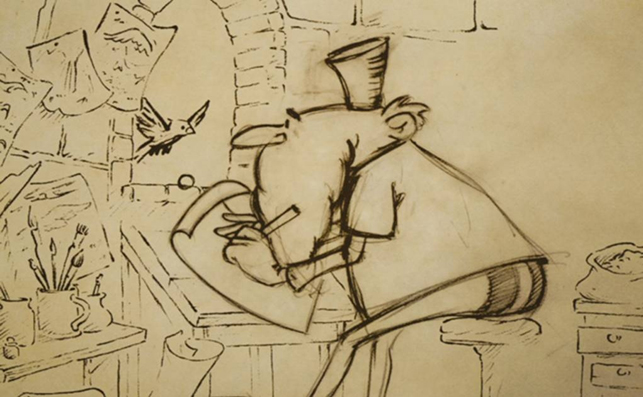
Still image from Leonardo. Directed by Jim Capobianco. 2010
People often ask me, “How do you discover new films for acquisition for the MoMA collection?” This is a good question that mines the basics of curatorial work, but one that is also impossible to answer in a concise manner. Our collection is growing all the time, and each work has its own unique origin story. Here’s one of them.

January 3, 2011
|
Film
Bertolucci on Bertolucci

Bernardo Bertolucci. Photo by Brad Balfour
In December I had the very amazing opportunity to participate in a roundtable interview with famed Italian director and screenwriter Bernardo Bertolucci, who was in town for the opening of MoMA’s full-career retrospective of his work.
December 17, 2010
|
Artists,
Collection & Exhibitions,
Film
Preserving Warhol’s Films
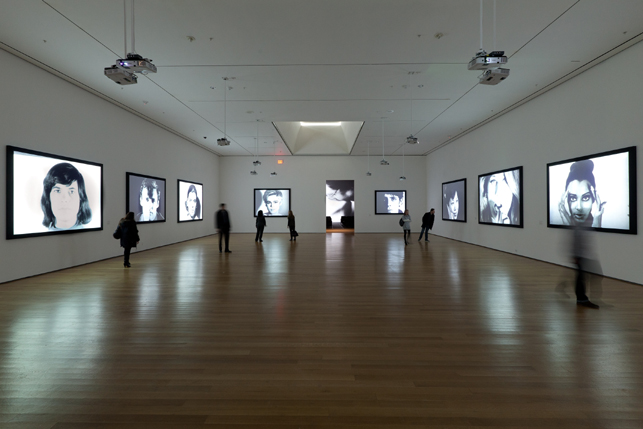
Installation view of Andy Warhol: Motion Pictures at The Museum of Modern Art, 2010. Left to right, Screen Test: Susan Sontag (1964), Screen Test: Dennis Hopper (1964), Screen Test: Kathe Dees (1964), Screen Test: Edie Sedgwick (1965), Kiss (1963–64), Screen Test: Lou Reed (1966), Screen Test: Kyoko Kishida (1964), Screen Test: Baby Jane Holzer (1964), and Screen Test: Donyale Luna (1964). © 2010 The Andy Warhol Museum, Pittsburgh, PA, a museum of Carnegie Institute. All rights reserved. Photo: Jason Mandella
The exhibition Andy Warhol: Motion Pictures marks the continuation of the long-term effort to preserve one of the artist’s most important bodies of work. Before his death in 1987, Warhol stipulated that his works should be cared for by The Museum of Modern Art, and in 1997 The Andy Warhol Foundation for the Visual Arts completed the donation of the surviving 4,000 reels of original footage and print materials.

December 15, 2010
|
Events & Programs,
Film
Talking about Film
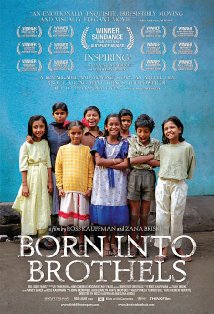
Film poster for Born into Brothels: Calcutta's Red Light Kids
When you hear teens open a question with “I want to know, ’cause I want to be a director,” you understand why you’re doing what you’re doing—why you choose to stay at work late on Friday evenings, why you spend your time off screening films, why you pour over the DVD extras to learn as much as you can about a film’s context. For years now, artist and educator Alejandro Duran and Anne Morra, an associate curator in MoMA’s Department of Film, have been doing just that to guide young artists in the dissection and interpretation of some of the world’s great films.
December 9, 2010
|
Film,
Modern Women
Candid Thoughts on Lillian Gish
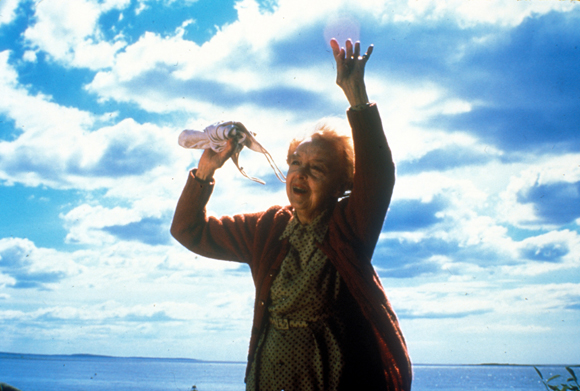
The Whales of August. 1987. USA. Directed by Lindsay Anderson

November 23, 2010
|
Film
Eternally Grateful: Lillian Gish
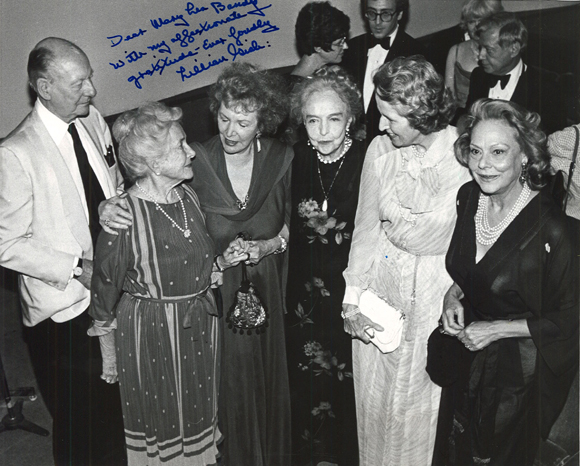
The Museum of Modern Art's Lillian Gish retrospective reception, September 18, 1980. From left: Sir John Gielgud, Helen Hayes, Nedda Harrington Logan, Lillian Gish, Mrs. John D. Rockefeller, Irene Worth. Photo: MoMA Department of Film archives
The inspiration for MoMA’s upcoming Lillian Gish retrospective came about during the planning of the publication Modern Women: Women Artists at The Museum of Modern Art. When I was asked to write an essay on a film artist for the book, actress Lillian Gish quickly came to mind. Not only is she integral to the history of film, but also to the history of film collecting at MoMA. She was an early champion of the Department of Film’s preservation efforts, and she was instrumental in getting her frequent collaborator D. W. Griffith to give his films to the Museum.

November 12, 2010
|
Film,
Modern Women
Barbara Hammer on Feminist Film
One of the key experimental filmmakers of her generation, Barbara Hammer (American, b. 1939) is renowned for creating the earliest and most extensive body of avant-garde films on lesbian life and sexuality. In this fascinating video interview, she talks about her career as a filmmaker and the development of feminist and queer filmmaking over the last thirty years.
October 28, 2010
|
Conservation,
Film
Rescuing Mangue-Bangue
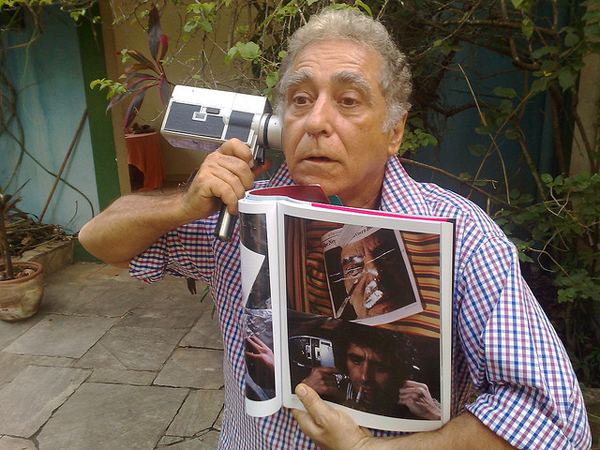
Mangue-Bangue director Neville D’Ameida photographed during a comic moment, Rio de Janeiro, Brazil, 2008
I take my work as a curator very seriously. I consider myself fortunate to put into practice on a daily basis the knowledge I gained as an undergraduate and graduate film and art history student. But honestly, we’re not saving lives here at MoMA or finding the means for alternate energy sources that will sustain our planet for millennia. My mother is proud of my professional achievements too, but she’ll never have the chance to say to her friends “my daughter, the Nobel Prize winner.” Even so, the work of a film curator is significant, enduring, and critical to the history of cinema.
If you are interested in reproducing images from The Museum of Modern Art web site, please visit the Image Permissions page (www.moma.org/permissions). For additional information about using content from MoMA.org, please visit About this Site (www.moma.org/site).
© Copyright 2016 The Museum of Modern Art
Welcome to MoMA.org. To take full advantage of all the site’s features, including the option to save works in the collection, please upgrade your browser to Firefox,
Google Chrome, Safari, or Internet Explorer 9.
See our help page for more information.
To take full advantage of all of the features on MoMA.org, please upgrade your browser to Firefox, Google Chrome,
Safari, or Internet Explorer 9.