
MoMA
Posts in ‘Collection & Exhibitions’
February 17, 2011  |  Collection & Exhibitions
On the Staging of Staging Action

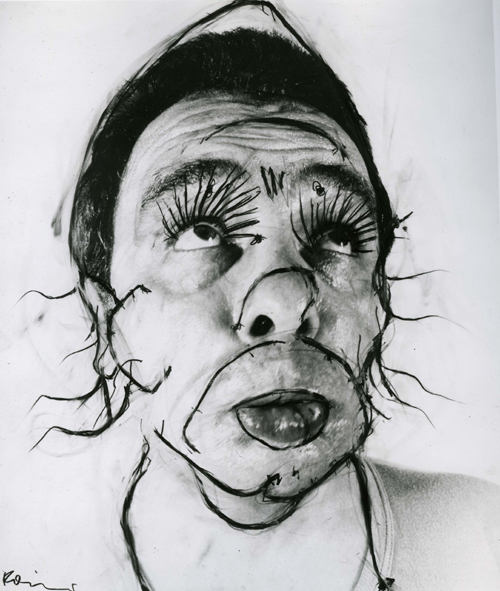
Arnulf Rainer. Untitled. 1969–74. Oil stick on gelatin silver print. The Museum of Modern Art. Gift of Joachim Aberbach (by exchange). © 2011 Arnulf Rainer

As I’ve assisted Roxana Marcoci and Eva Respini with the exhibition Staging Action: Performance in Photography since 1960—which opened January 28 in The Robert and Joyce Menschel Gallery on the third floor—I’ve come to recognize the variety of layered themes that are present in the show, despite the fact that the exhibition itself only includes about 50 works (many of which are new acquisitions).
February 16, 2011  |  Collection & Exhibitions
Listening to Art

The Residents. Freak Show. 1995

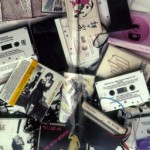
The Residents. Freak Show. 1995. Interactive CD-ROM. The Museum of Modern Art Library. Image courtesy the artists

The idea of looking at music has percolated in my mind for decades. I followed how the violin prodigy Laurie Anderson successfully straddled the worlds of art and music. She cleverly harnessed media to merge visuals with lyrics. Her work unfolded in tandem with technology, as computers and software allowed her to move more fluidly between disciplines. Before long we all stopped seeing a distinction between art and music.

February 15, 2011  |  Collection & Exhibitions, Counter Space
Eat, Drink, (Read!) MoMA

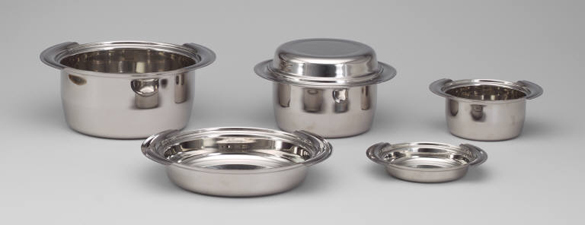
Roberto Sambonet (Italian, 1924–1995). Center Line Set of Cookware. 1964. Stainless steel. Manufactured by Sambonet S.p.A., Vercelli, Italy. Gift of the manufacturer, 1972

Several exciting things are happening now in the world of Counter Space—time for an update!

February 10, 2011  |  Collection & Exhibitions, Film
Leonardo: Da Vinci at MoMA

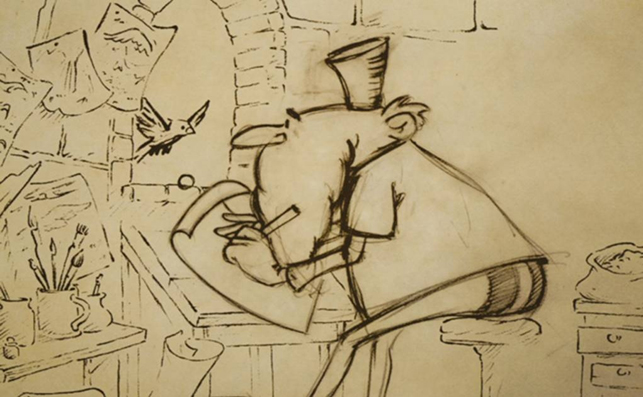
Still image from Leonardo. Directed by Jim Capobianco. 2010

People often ask me, “How do you discover new films for acquisition for the MoMA collection?” This is a good question that mines the basics of curatorial work, but one that is also impossible to answer in a concise manner. Our collection is growing all the time, and each work has its own unique origin story. Here’s one of them.

February 7, 2011  |  Artists, Collection & Exhibitions
Stück Natur: The Microenvironment-in-a-Jar Siren

Haus-Rucker & Co. Stück Natur (Piece of Nature). 1971–73

When you spend a lot of time around objects, you find that some objects continue to unfold with every new encounter while other objects do not. I was charmed from the start by Haus-Rucker & Co.’s Stück Natur (Piece of Nature), a microenvironment in a preserving jar, but didn’t expect it to continue to draw me back in.

February 3, 2011  |  Artists, Collection & Exhibitions
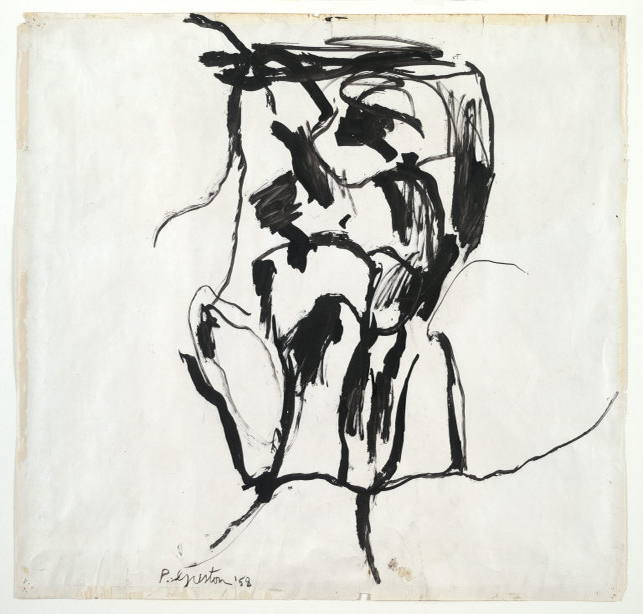
Guston & Feldman: A Double View

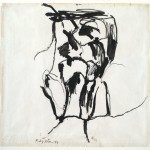
Philip Guston. Head – Double View. 1958. Ink on paper. The Museum of Modern Art. Purchase. © 2011 The Estate of Philip Guston

The 1958 Philip Guston drawing Head – Double View is currently on view in The Big Picture, the fourth-floor installment of MoMA’s Abstract Expressionist New York exhibition. One floor down, in the complementary show Ideas Not Theories: Artists and the Club, 1942-1962, the black-on-white composition appears again, this time on the cover of an album by the American composer Morton Feldman. Feldman—who was friends with many of the artists associated with the New York School, Guston in particular—featured the drawing on the jacket of his 1959 Columbia Masterworks release New Directions in Music 2.

February 3, 2011  |  Artists, Collection & Exhibitions
Last Chance to See Monika Grzymala and the exhibition On Line: Drawing Through the Twentieth Century

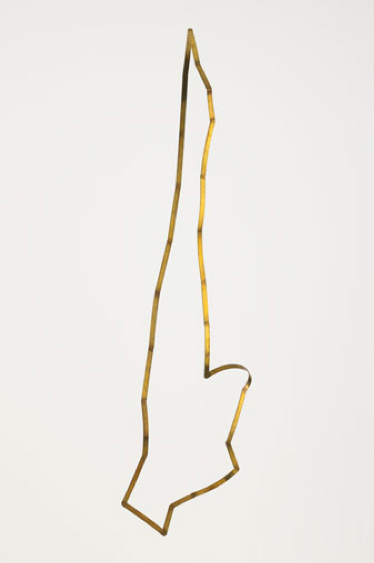
Monika Grzymala’s work always pushes the viewer—it forces us to question how we categorize artworks, what they’re made of, and where they can be installed. Monika has worked with adhesive tape, handmade washi paper, and a diverse range of other materials to create large scale drawings-in-space— works that are grounded in the idea of drawing and the artist’s direct engagement with materials, but that expand into three dimensions, filling and shaping the viewer’s own space.

Modern Poets: The Political Line

Gyula Kosice. Escultura Movil Articulada (Mobile Articulated Sculpture). 1948

Next Wednesday, February 2, MoMA will present another iteration of Modern Poets, our long-running series of readings and performances in which poets and writers reflect upon modern and contemporary art and culture. This program is presented in conjunction with the exhibition On Line: Drawing Through the Twentieth Century</a>, which explores the transformation of drawing, the potential of mark making, and line and gesture through diverse mediums. Taking the concept of the political line as a point of departure, we have invited a group of international poets selected by Chilean-born poet Cecilia Vicuña—who will also read from her own collection of poems—to share their reflections on this extended notion, as it relates to them personally or to the world more universally.

January 26, 2011  |  Collection & Exhibitions
So You Want to Design a Kitchen

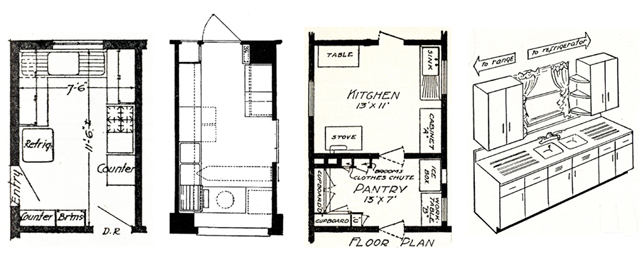
From left: Radford’s Details of Building Construction, 1911; Frankfurt Kitchen, 1926-27; Architectural Graphic Standards, 1941; Architectural Graphic Standards, 1951

It’s 1926 and, like Margarete Schütte-Lihotzky, you want to design a functional kitchen. If you’re in the U.S. or Great Britain, you might then turn to a standards manual. At the time, there was Radford’s Details of Building Construction (1911). Then, five years after Schütte-Lihotzky’s Frankfurt Kitchen, two underemployed architects created an expanded manual more suited to 20th-century life. Their Architectural Graphic Standards (1932) has been continuously revised ever since.

January 24, 2011  |  Collection & Exhibitions, Design
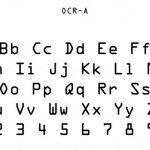
Digital Fonts: 23 New Faces in MoMA’s Collection

Matthew Carter's Walker

MoMA has just acquired 23 digital typefaces for its Architecture and Design Collection. Some are of everyday use, like Verdana; others are familiar characters in our world, like Gotham, which was used in President Obama’s election campaign, or OCR-A, which we can find at the bottom of any product’s bar code; and others are still less common, but exquisitely resonant, like Walker or Template Gothic.