MoMA
Posts in ‘Collection & Exhibitions’
The Power of Happiness: Cameron Platter’s Impressions from South Africa

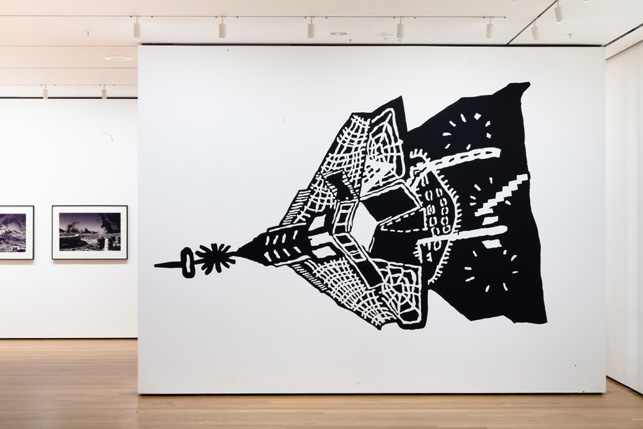
Installation view at MoMA of Kwakuhlekisa. 2007. Stencil, dimensions variable. Publisher: the artist, Shaka’s Rock, South Africa. Edition: 3. The Museum of Modern Art. General Print Fund. © 2011 Cameron Platter. Photo by Thomas Greisel

I’m delighted to have my work included in the exhibition Impressions from South Africa, 1965 to Now at The Museum of Modern Art, and in MoMA’s collection. And I’m a real fan of what’s been done, and highlighted, in this show.

Introducing the Young Architects Program International
Holding Pattern by interboro Partners

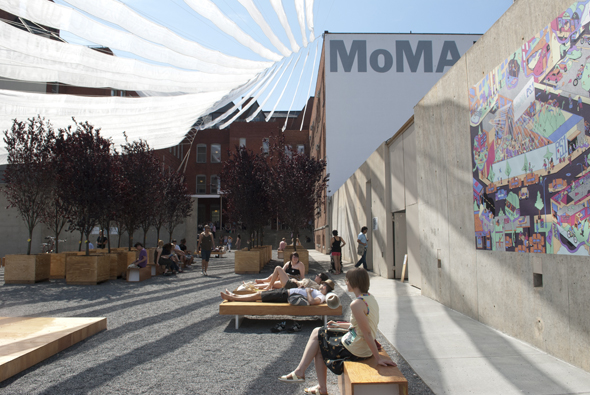
Installation view of Holding Pattern by interboro Partners, winner of the 2011 Young Architects Program, 2011. Digital rendering courtesy of Interboro Partners

Each year, MoMA renews its commitment to experimental architecture and architectural display with a full-scale installation of a project chosen from a competition among virtually untried architects. In the galleries of the Museum, architecture collection masterworks and temporary exhibitions of computer- and hand-drawn architectural renderings, models, photographs, and films are regularly shown. But each year the outdoor spaces of MoMA PS1 provide a unique temporary outdoor gallery where emerging talents can turn projects and drawings into spaces and palpable experiences.

June 30, 2011  |  Collection & Exhibitions
Beatriz González: A Contemporary Court Painter


Beatriz González. Acuerdo bancario (Bank Agreement). 1980

Beatriz González. Acuerdo bancario (Bank Agreement). 1980

While preparing the exhibition I Am Still Alive: Politics and Everyday Life in Contemporary Drawing, Christian Rattemeyer and I had a conversation with our colleagues Luis Pérez-Oramas and Geaninne Gutiérrez-Guimarães about the premise of the exhibition. They immediately suggested that we look at the work of Beatriz González, a leading figure among Latin American Pop artists and currently one the most influential living artists in Colombia, whose work explores sociopolitical subject matter specific to her country’s history and vernacular culture.


Beatriz González. Turbay condecorado (Turbay honored). 1980

Beatriz González. Turbay condecorado (Turbay honored). 1980

Like many of the works in the exhibition, including Marine Hugonnier’s series Art for Modern Architecture (Homage to Ellsworth Kelly), Robert Morris’s untitled gouache paintings on newsprint, and On Kawara’s storage boxes for his date paintings lined with local newspaper clippings, there is a direct link between González’s work and the newspaper and print culture. When Julio César Turbay Ayala became president of Colombia in 1979, González turned her sketchbook into a visual diary of sorts, producing a simple, stylized drawing each day based on the daily media coverage of his presidency. Her stated intent was to become a type of “court painter,” and to critically document the spectacle of leadership. Made between 1979 and 1981, these drawings—fragmentary depictions of Turbay attending sessions of Congress, meeting with church, government, and military personnel, and engaging in leisure activities—provide an intimate look at the disparate public aspects of power. These works are prime examples of the artist’s straightforward use of drawing in her artistic production, and mark a significant and more politically charged change in her work towards a more explicit reflection on the growing violence and turmoil that engulfed Colombia throughout the 1980s and 1990s.

Beatriz González. Turbay esquiando (Turbay Skiing). 1980


Beatriz González. Turbay esquiando (Turbay Skiing). 1980



From the Records of MoMA PS1: The 40th Anniversary of The Brooklyn Bridge Event

What do you get when you put a group of artists together on a condemned pier beneath the Brooklyn Bridge? No, this isn’t a joke, but the colorfully bizarre origin story of that renowned laboratory of contemporary art, MoMA PS1.

June 16, 2011  |  Artists, Collection & Exhibitions
Katharina Fritsch in MoMA’s Garden

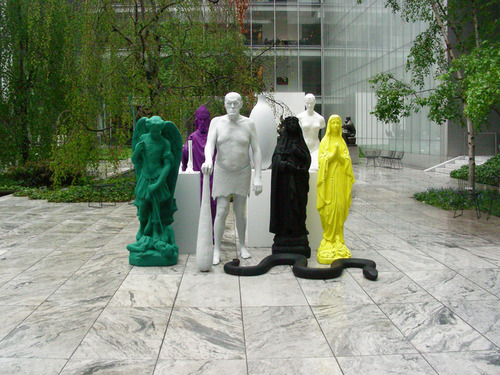
Katharina Fritsch. Figurengruppe. 2006–08 (fabricated 2010–11). Bronze, copper, and stainless steel, lacquered, dimensions variable. Gift of Maja Oeri and Hans Bodenmann (Laurenz Foundation). © 2011 Katharina Fritsch

A brilliant yellow Madonna, a set of skeleton feet, a grey giant leaning obdurately on his club, a green and boyish-looking St. Michael slaying the dragon, a pitch-black snake—these and other figures make up a curious cast of characters currently on view in MoMA’s Sculpture Garden. 

I went to MoMA Cuba and…

Old Havana, Cuba

Admittedly, I was extremely anxious about traveling to Cuba. But now, having returned from a trip to Havana made possible through MoMA’s 12-month internship program, I feel enlivened. Although complicated politics  still surround Cuban-American relations, Cuba has much to offer. The beaches are as beautiful as the vistas in Old Havana. Music and dance can be heard and seen in the city as well as in its surrounding regions, making for a lively experience despite the visibility of poverty. Havana’s charmingly dilapidated urban landscape is speckled with a mix of Lada automobiles from the 1970s and modern Peugeots. And while Cuba’s backdrop may sometimes seem a little dated, its arts culture, and more specifically its contemporary printmaking scene, is far beyond its time.

June 1, 2011  |  Artists, Collection & Exhibitions
Artists Respond to Picasso’s Guitars

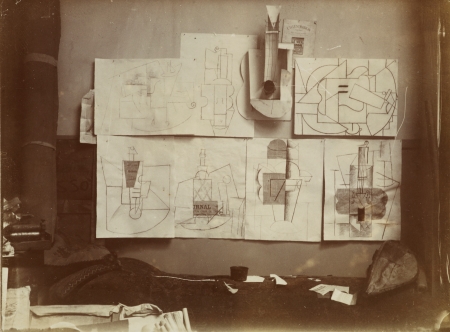
Picasso's studio at 242 Boulevard Raspail, Paris, December 1912. Private collection. © 2011 Estate of Pablo Picasso/Artists Rights Society (ARS), New York

The artists who first glimpsed Picasso’s cardboard Guitar around 1912 marveled—and sometimes scoffed—at its fragility and seeming impermanence, but almost 100 years later its continued survival, while miraculous, is not its only notable quality. What do artists, in 2011, standing in front of the cardboard Guitar and its sheet-metal counterpart have to say? With this question in mind, curator Anne Umland and I asked a diverse group to visit Picasso: Guitars 1912–1914 and share their impressions.

June 1, 2011  |  Artists, Collection & Exhibitions
A Conversation with Boris Mikhailov

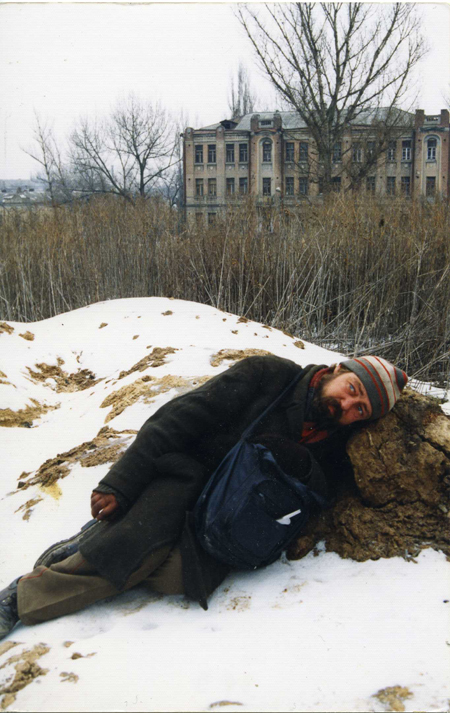
Boris Mikhailov. Untitled, from the series Case History. 1997–98. Chromogenic color print. Courtesy the artist, Pace/MacGill Gallery, New York, and Galerie Barbara Weiss, Berlin. © 2011 Boris Mikhailov

Boris Mikhailov is one of the leading photographers from the countries that formerly constituted the Soviet Union, and his work is currently on view in the exhibition Boris Mikhailov: Case History at the Museum (through September 5).

May 26, 2011  |  Artists, Collection & Exhibitions
Talking to Tony Conrad

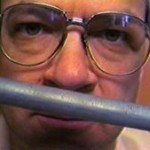
Tony Conrad. In Line. 1986. Video, color, sound, 7 min. © 2011 Tony Conrad

One of the major aims of Looking at Music: 3.0 is to examine the impact of technological innovation on music and art during the 1980s and 1990s. The advent of the music video, the proliferation of TV, and the development of cheap, immediate, color video recording equipment were significant events of this era that had a huge impact on the media artists used as well as the content they investigated.

May 19, 2011  |  Collection & Exhibitions, Design
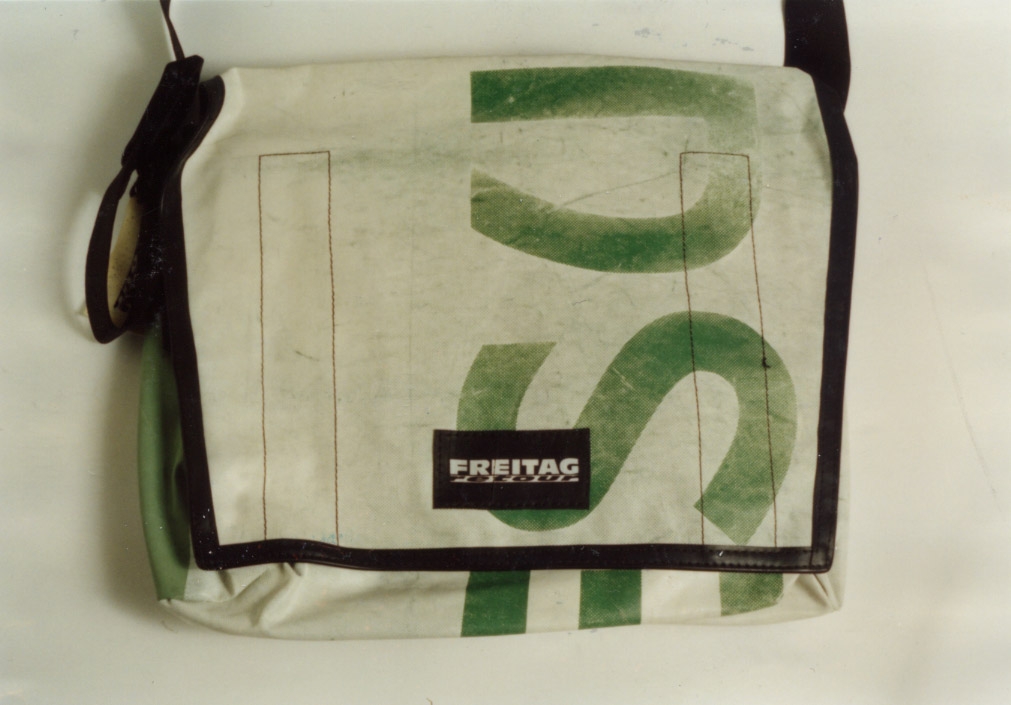
The Freitag Top Cat Bag: Environmentally Responsible and Good-Looking, Too

Markus Freitag and Daniel Freitag. Top Cat Bag (model F13). 1993. Used truck tarpaulins, seatbelts, and innertubes). Manufactured by Freitag, Zurich, Switzerland. The Museum of Modern Art. Gift of Lars Müller

As the Architecture and Design Objects Preparator, it’s not unusual for me to catch people in the galleries pointing at an object I’ve installed, saying something like, “I have one of those.” I suspect you’re not likely to hear this very often in the Painting and Sculpture Galleries, but it happens all the time on the third floor.