
MoMA
Posts in ‘Behind the Scenes’
Edward Steichen Archive: The Photographer in Front of the Lens

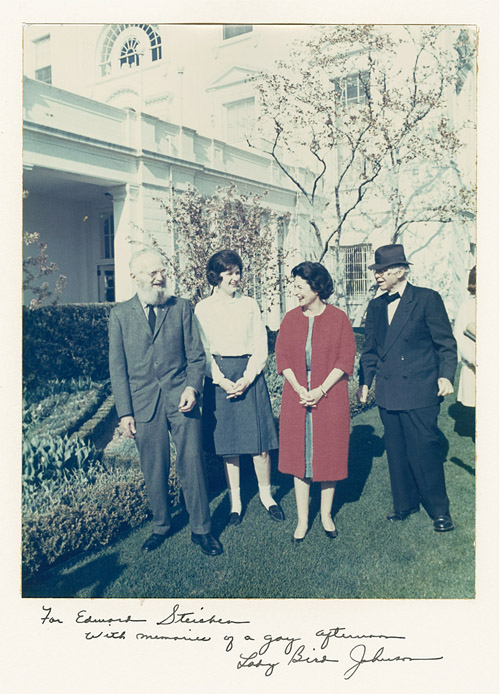
Unknown White House photographer. "For Edward Steichen with memories of a gay afternoon, Lady Bird Johnson." From left, Edward Steichen, Lynda Bird Johnson, First Lady Claudia Taylor (Lady Bird) Johnson, Carl Sandburg. Rose Garden, The White House, Washington, DC, (April 10, 1964). Chromogenic color print. Edward Steichen Archive, VIII. The Museum of Modern Art Archives, New York

Among his many contributions to photography in a long and productive life, Edward Steichen (1879-1973) was a master portraitist, capturing, in now-iconic images, sitters as diverse as Gloria Swanson,  Winston Churchill, and Walt Disney (and friends).

Edward Steichen Archive: Delphiniums Blue (and White and Pink, Too)
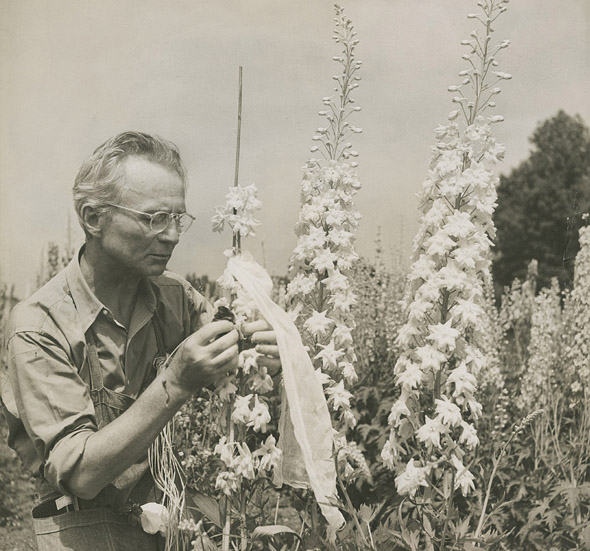
Edward Steichen with delphiniums (c. 1938), Umpawaug House (Redding, Connecticut). Photo by Dana Steichen. Gelatin silver print. Edward Steichen Archive, VII. The Museum of Modern Art Archives

Edward Steichen with delphiniums (c. 1938), Umpawaug House (Redding, Connecticut). Photo by Dana Steichen. Gelatin silver print. Edward Steichen Archive, VII. The Museum of Modern Art Archives

Edward Steichen: painter, photographer, modern art promoter, museum curator, exhibition creator—and delphinium breeder.

Yes, in addition to his groundbreaking career as a visual artist and museum professional, Steichen was also a renowned horticulturist. While he lived in France, the French Horticultural Society awarded him its gold medal in 1913, and he served as president of the American Delphinium Society from 1935 to 1939. In the early 1930s, after leaving his position as chief of photography for the Condé Nast publications—including Vogue and Vanity Fair—and more than 10 years before beginning his career as Director of the Department of Photography at MoMA, he retired to his Connecticut farm to raise flowers.

November 17, 2010  |  Artists, Behind the Scenes, Library and Archives
Edward Steichen Archive: The 55th Anniversary of The Family of Man

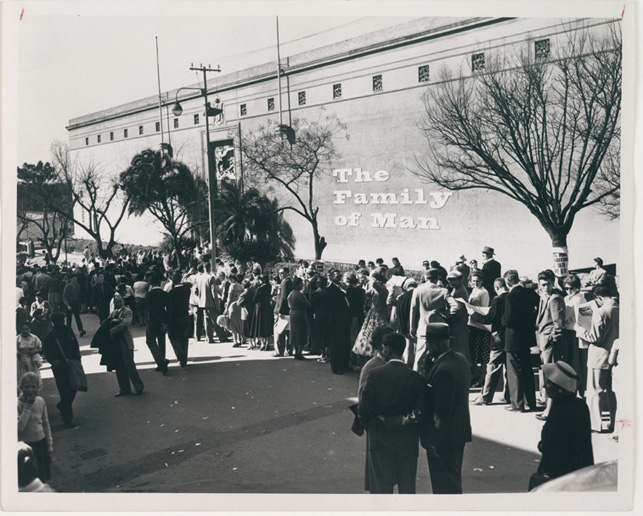
Visitors await entry to The Family of Man, an exhibition organized by The Museum of Modern Art, at the Government Pavilion, Johannesburg, Union of South Africa (on view August 30–September 13, 1958). From The International Council/International Program Exhibition Records. Image courtesy The Museum of Modern Art

This year marked the 55th anniversary of the opening of MoMA’s photography exhibition The Family of Man, a show that was groundbreaking in its extent—503 images by 273 photographers originating in 69 countries—its physical design, and the numbers of people who experienced it.

November 11, 2010  |  Artists, Behind the Scenes
From the Imaging Studio: Reflections on Brancusi’s Newborn

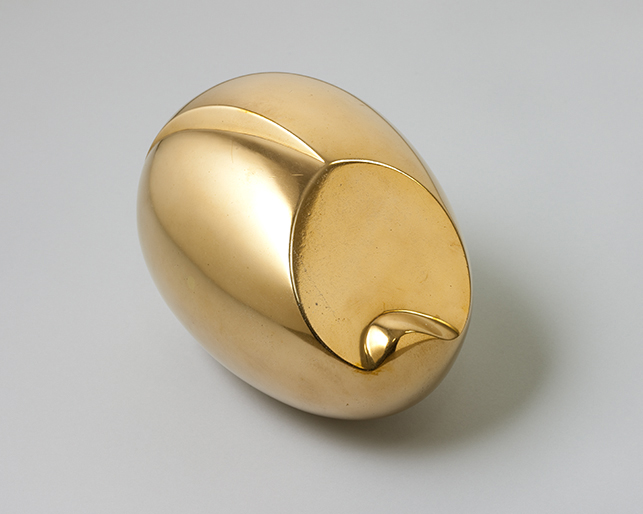
Constantin Brancusi. The Newborn. Version I, 1920 (close to the marble of 1915)

Take a look at this sleek, smooth sculpture by Constantin Brancusi—a shimmering ovoid form seemingly floating in space. Would it ever strike you as one of the most difficult objects in our collection to photograph? Well, it is!

September 27, 2010  |  Behind the Scenes, Rising Currents
Rising Currents: Looking Back at Putting Process on Display

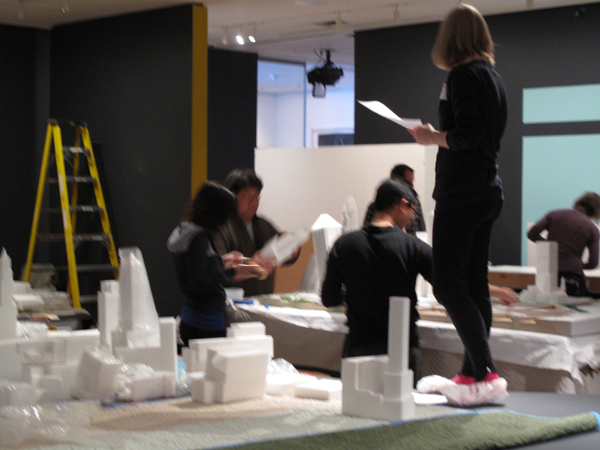
ARO team in the midst of installation. Photo: Ingrid Chou

As the first of five exhibitions in the Issues in Contemporary Architecture series, the unprecedented nature of Rising Currents presented a number of firsts, including some novel moments in MoMA’s exhibition-making process: the first time producing an exhibition without a checklist of objects well in advance of opening; the first time exhibition content and exhibition design developed so closely in tandem; and the first time our modest, minimalist model platform held the weight, intellectual and actual, of five whole teams of architects, planners, ecologists, and their well-intentioned installers. (We really put that poor thing to the test, but I think everyone is the better for it).

Unpacking Fluxus: The Joke’s On Us

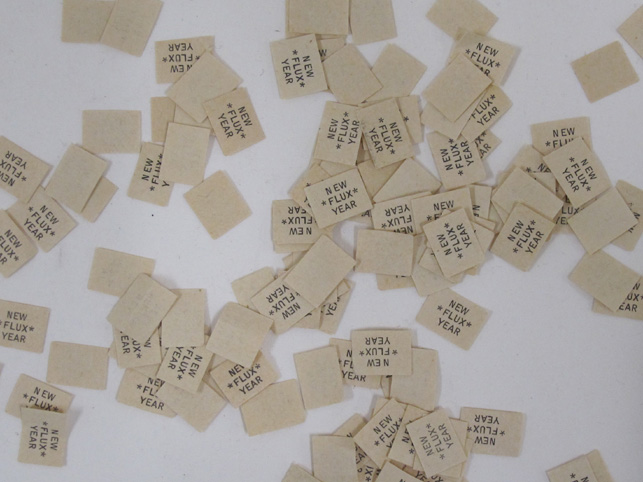
Confetti from George Maciunas’s New Flux Year. c. 1967. The Museum of Modern Art. The Gilbert and Lila Silverman Fluxus Collection Gift, 2008

Upon opening an orange faux-reptile-skin box marked only with the typed words “top” and “pull,” we received quite a surprise: out jumped a coiled toy snake and a shower of confetti printed with the words “New Flux Year.” Rattled, we soon found that the joke was on us, as we were left returning every last scrap of paper, along with the spring-loaded snake, back into the box before shutting it carefully.

Unpacking Fluxus

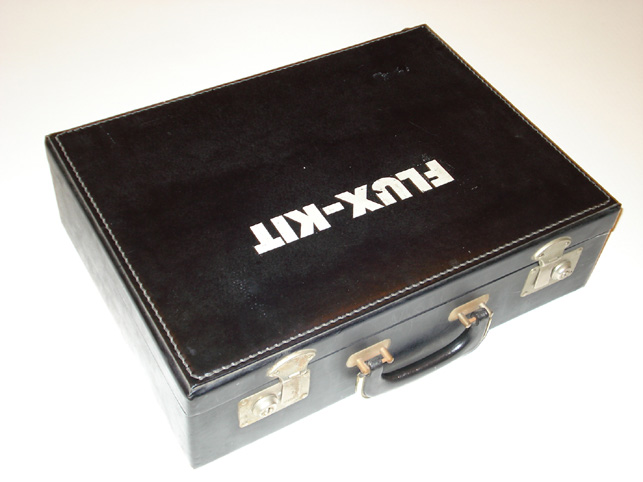
Various artists. Fluxkit. c. 1965. Vinyl-covered attaché case with screenprint, containing objects in various media. The Museum of Modern Art. The Gilbert and Lila Silverman Fluxus Collection Gift, 2008

“Thus there is in the life of a collector a dialectical tension between the poles of disorder and order,” philosopher and critic Walter Benjamin observed in his 1931 lecture Unpacking My Library. In the museum’s tidy spaces, where a predominant curatorial objective is to make sense out of the jumbled reality of things, this opposition between organization and chaos captures the imagination. As my colleagues and I begin to work with the Gilbert and Lila Silverman Fluxus Collection Gift recently acquired by the MoMA—highlights of which are currently on view in the Fluxus Preview exhibition on the fourth floor—Benjamin’s proposal repeatedly comes to mind.

May 28, 2010  |  Behind the Scenes, Tech
Revenge of the “30 Seconds” Videos

The sequel is a notoriously dicey—though sometimes brilliant—film enterprise, be it Indiana Jones and the Temple of Doom, The Empire Strikes Back, or my personal favorite at the age of twelve, The Karate Kid, Part II. After the first round of 30 Seconds videos, in which MoMA staff and members created short videos with filmmaker Thilo Hoffmann, we invited Thilo back late last year. The results are in, and you can now see selected videos by staff and members.

A Room with a View

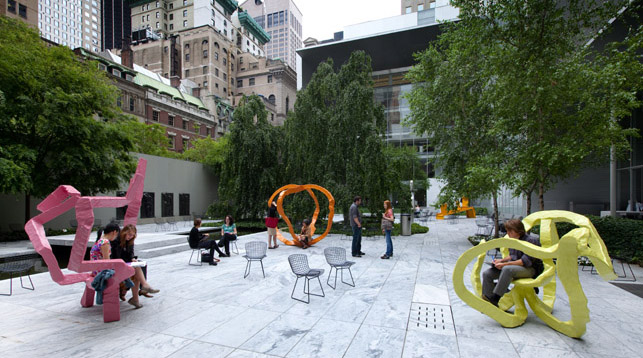
Installation view of the exhibition Sculpture in Color (May 18, 2009–January 11, 2010), featuring three 2006 polyester sculptures by Franz West—Maya’s Dream, Lotus, and Untitled (Orange). Photo by Jason Mandella

Long before I began working at MoMA, I happened to sit next to the former wife of a renowned artist at a dinner marking his posthumous retrospective. I asked her awkwardly about how she had met him, and with tenderness she painted a memorable picture of their first encounter, which centered around MoMA. The year was 1959, and she, a young woman working at the membership desk, was nudged on by a coworker to introduce herself to a security officer who was in the Sculpture Garden, guarding a geodesic dome installation by Buckminster Fuller.

May 20, 2010  |  Behind the Scenes
MoMA Offsite: Getting There

Henri Rousseau. The Dream. 1910

I’ve talked so much in this outgoing loan column about the traveling works themselves, and the many different contexts they inhabit beyond the expanses of MoMA’s walls. But I’ve yet to address just how the works get to their destinations. It’s no secret that fine art is crated, shipped by special art-handling companies, and covered by specific art insurance policies…but did you know that some works are personally escorted by Museum staff? This week I talked to two curatorial assistants from the Department of Painting and Sculpture who have been on a handful of courier trips, as we call them, to all corners of the globe. Carla Bianchi is part of a team at MoMA that handles all matters of our loan program, from the moment an official request is received to the time a work finally returns to MoMA, sometimes years later. Nora Lawrence supports exhibitions in our department; recently she worked with Ann Temkin on the catalogue and installation for Monet’s Water Lilies.