
MoMA
Posts in ‘An Auteurist History of Film’
July 27, 2010  |  An Auteurist History of Film
Lewis Milestone’s All Quiet on the Western Front

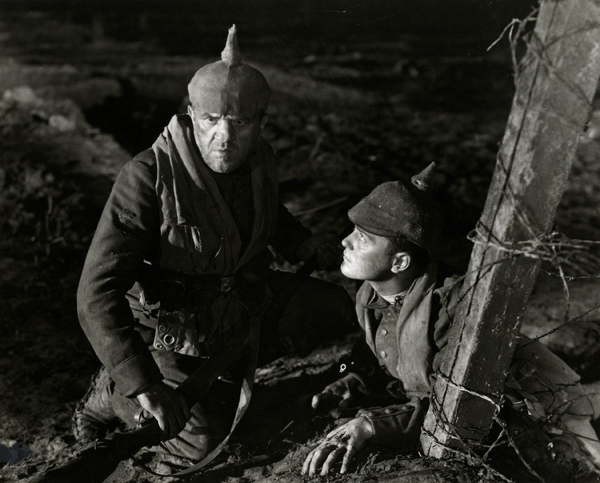
All Quiet on the Western Front. 1930. USA. Lewis Milestone

All Quiet on the Western Front. 1930. USA. Lewis Milestone

These notes accompany screenings of Lewis Milestone’s </i>All Quiet on the Western Front, July 28, 29, and 30 in Theater 1.</p>

Lewis Milestone (1895–1980) was born Lev Milstein near Odessa, Ukraine. He immigrated to America in 1913 and served in the photographic unit of the Army Signal Corps during World War I. He began working in Hollywood in 1919, and directed his first film in 1925. Even before his Oscar for All Quiet on the Western Front (1930), he had won a “Best Comedy Direction” statuette for Two Arabian Knights (1927), beating out Charles Chaplin’s The Circus.
July 20, 2010  |  An Auteurist History of Film
Howard Hawks’s The Dawn Patrol

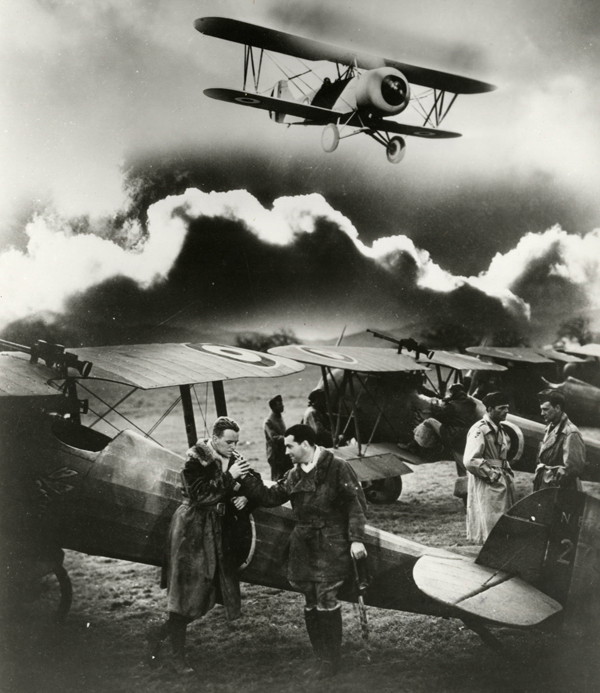
The Dawn Patrol. 1930. USA. Directed by Howard Hawks

The Dawn Patrol. 1930. USA. Directed by Howard Hawks

These notes accompany screenings of Howard Hawks’s </i>The Dawn Patrol, July 21, 22, and 23 in Theater 1.</p>

Like his friendly rival John Ford, Howard Hawks (1896–1977) began work as a Hollywood property man (in Hawks’s case, while still attending school). He received a degree in mechanical engineering from Cornell, and his films reflect both the precision this implies and the erudition of a college boy. (Ford, by contrast, spent about two minutes in college.) After a stint in the Army Air Corps and a job designing airplanes, Hawks wound up directing his first film at the Fox studio—where Ford was also under contract—in 1926.

July 13, 2010  |  An Auteurist History of Film
Josef von Sternberg’s Morocco

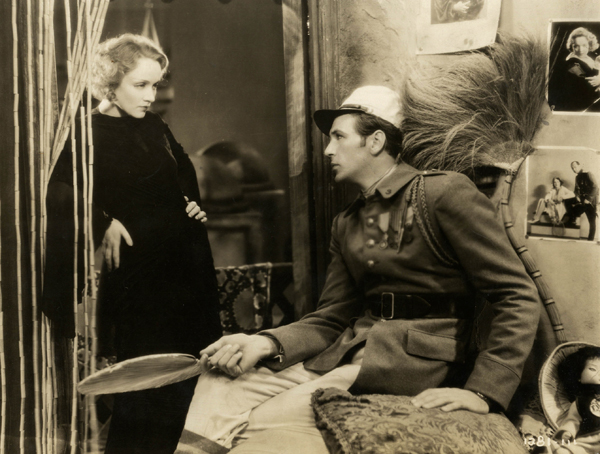
Morocco. 1930. USA. Directed by Josef von Sternberg

Morocco. 1930. USA. Directed by Josef von Sternberg

These notes accompany screenings of Josef von Sternberg’s </i>Morocco, July 14, 15, and 16 in Theater 2.</p>

On March 31, 1930, Marlene Dietrich appeared on the stage of Berlin’s Gloria Palast for the premiere of The Blue Angel before sailing that very night for America to work on Morocco. The director of both films, Josef von Sternberg (1894–1969), had long since departed, expecting never to see the actress again.

July 6, 2010  |  An Auteurist History of Film
Rouben Mamoulian’s Applause
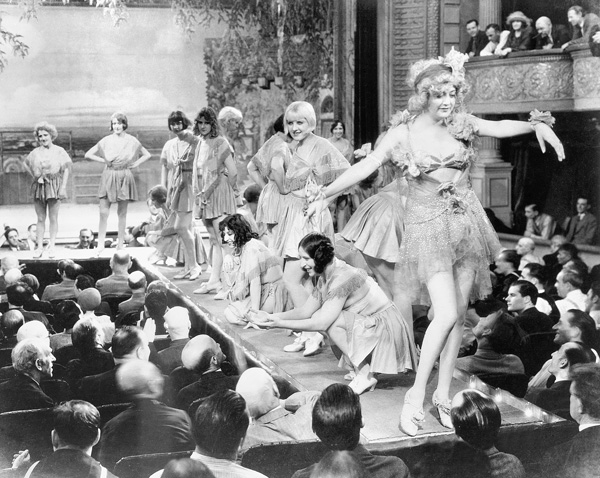
Applause. 1929. USA. Directed by Rouben Mamoulian

Applause. 1929. USA. Directed by Rouben Mamoulian

These notes accompany screenings of Rouben Mamoulian’s Applause, July 7, 8, and 9 in Theater 3.

Rouben Mamoulian’s (1898–1987) career as a film director showed potential for five years, before limping into a disappointing second act and then virtually disappearing. He was a promising newcomer like George Cukor—another of the many imports from the Broadway stage who turned to film around the advent of sound technology—but unlike Cukor, whose career lasted more than a half-century, Mamoulian never quite figured out how to survive and thrive within the Hollywood system. The great success of his stage production of Porgy in New York made him and everyone else think he was notably inventive, but his cinematic gifts proved limited and transitory.

June 29, 2010  |  An Auteurist History of Film
D. W. Griffith’s Abraham Lincoln

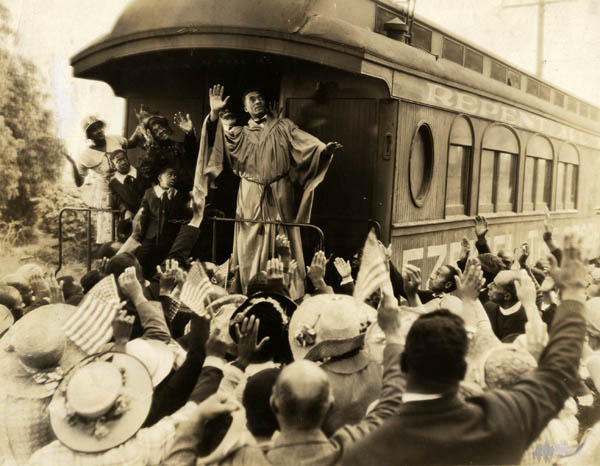
Abraham Lincoln. 1930. USA. Directed by D. W. Griffith

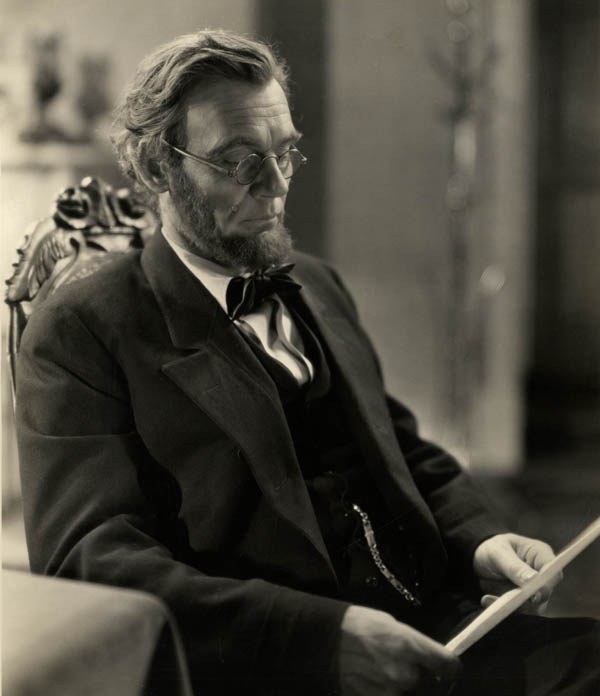
Walter Huston as our sixteenth President in Abraham Lincoln. 1930. USA. Directed by D. W. Griffith

These notes accompany screenings of D. W. Griffith’s </i>Abraham Lincoln, June 30 and July 1 and 2 in Theater 3.</p>

D. W. Griffith (1874–1948) came to the end of his professional road in 1931. It is now time both to bury and praise him.

He remained an enigma to the end. His final feature, The Struggle (1931), was a passionate plea against alcohol made by a committed, unredeemable, and self-destructive drunk, and if Abraham Lincoln (1930) was intended as some sort of apologia for The Birth of a Nation</a> (1915), the director seems to have missed the point of the outrage he inspired.

June 22, 2010  |  An Auteurist History of Film
Alfred Hitchcock’s Blackmail
Blackmail. 1929. Great Britain. Directed by Alfred Hitchcock

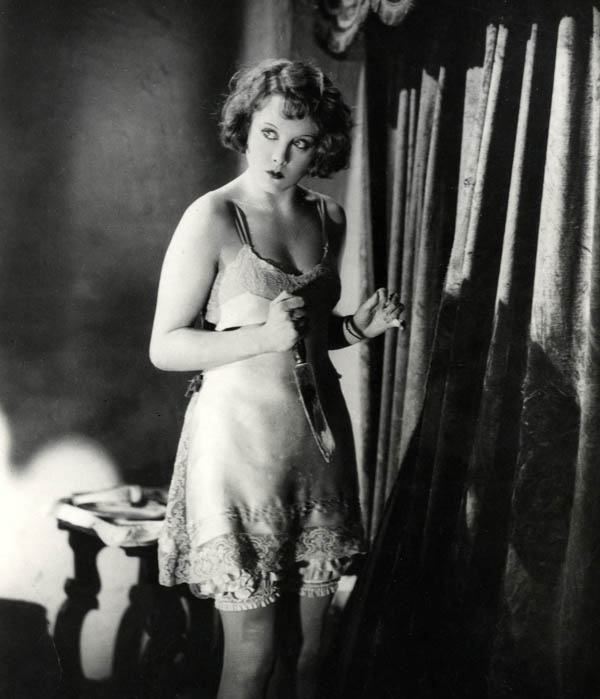
Blackmail. 1929. Great Britain. Directed by Alfred Hitchcock

These notes accompany screenings of Alfred Hitchcock’s Blackmail, June 23, 24, and 25 in Theater 2.

Alfred Hitchcock (1899–1980) is the leading example of a commercially successful film director who never lost his taste for innovation and experimentation. He must be something of an anathema to those on the avant-garde fringes of film whose whole career may not attract the audiences that Psycho (1960) or The Birds (1963) could garner in a single day. Yet, his body of work remains extremely personal and unified in its vision of a precarious universe.

June 15, 2010  |  An Auteurist History of Film
King Vidor’s Hallelujah
Hallelujah. 1929. USA. Directed by King Vidor

Hallelujah. 1929. USA. Directed by King Vidor

These notes accompany screenings of King Vidor’s Hallelujah, June 16, 17, and 18 in Theater 2.

1894 was a uniquely auspicious year for the movies. Not only is that when film history as we have come to know it began, but three of the medium’s greatest directors were born: Jean Renoir, John Ford, and Josef von Sternberg. It was also the year of King Vidor’s birth, and, while he may not have achieved quite the unity of vision of the other three, he came close.

June 8, 2010  |  An Auteurist History of Film
Charles Chaplin’s The Circus
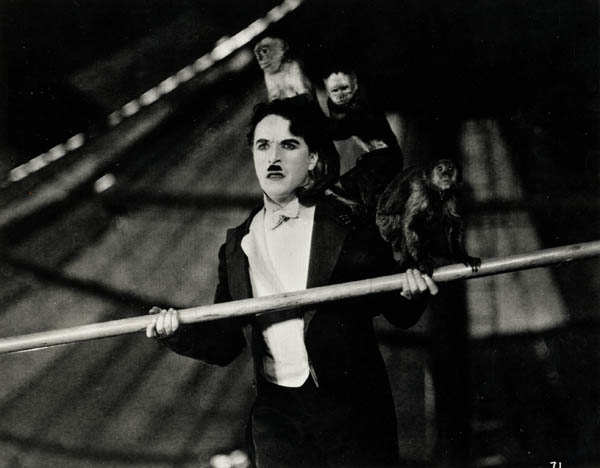
The Circus. 1928. USA. Directed and written by Charles Chaplin

The Circus. 1928. USA. Directed and written by Charles Chaplin

These notes accompany screenings of Charles Chaplin’s The Circus, June 9, 10, and 11 in Theater 3.

With the possible exception of his own 1952 film Limelight, Charles Chaplin’s The Circus (1928) is the most personal and self-revelatory film ever made by a major director. Chaplin (1889–1977) made more than seventy shorts between 1914 and 1923, passing through several studios before the establishment of his own.

June 1, 2010  |  An Auteurist History of Film
Early Animation
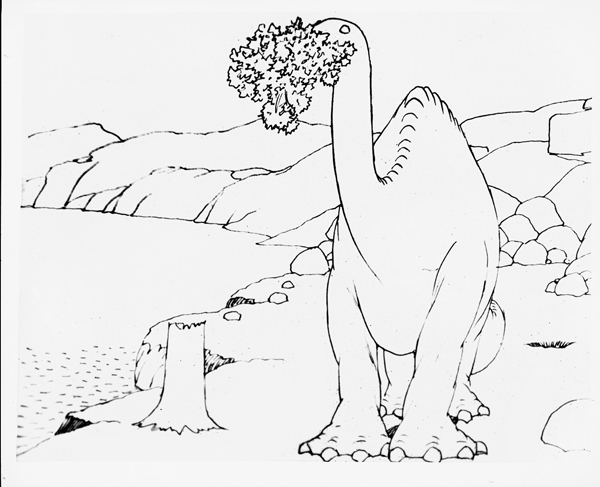
Gertie the Dinosaur. 1914. USA. Directed by Winsor McCay. Preserved with funding from Celeste Bartos

Gertie the Dinosaur. 1914. USA. Directed by Winsor McCay. Preserved with funding from Celeste Bartos

These notes accompany the Early Animation program, June 2, 3, and 4 in Theater 2.

The art of film animation developed out of a long tradition of newspaper and magazine cartoonists both in Europe and the United States. The Frenchman, Emile Cohl (1857–1938), and the American, Winsor McCay (1871–1934), were politically tinged newspapermen who took advantage of the newly-invented concept of stop-motion photography, shooting a slightly varied drawing on each successive film frame. Although their work appears primitive beside Pixar technology, there must have been a sense of wonder and awe in early audiences who saw drawn figures come to a kind of life on the screen.

May 25, 2010  |  An Auteurist History of Film
Victor Seastrom’s The Wind
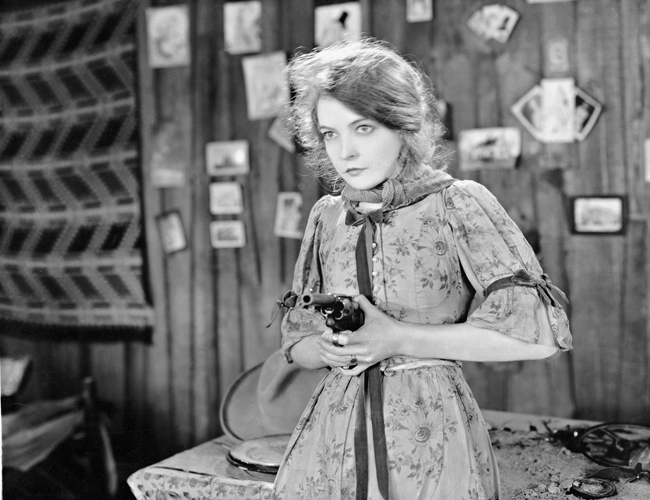
The Wind. 1928. USA. Directed by Victor Seastrom. Acquired from MGM

The Wind. 1928. USA. Directed by Victor Seastrom. Acquired from MGM

These notes accompany the screening of The Wind, May 26, 27, and 28 in Theater 3.

As we draw toward the end of the silent period, I recognize that Victor Sjöström (1879–1960)—”Victor Seastrom” during his MGM years—has been somewhat neglected in this series. We did show his early Ingeborg Holm (1913), and several clips appeared in the documentary Swedish Cinema Classics, but that is insufficient for a full appreciation of his importance. His work between 1917 and his departure for Hollywood in 1923 (including Terje Vigen, The Outlaw and His Wife, The Phantom Chariot, and his numerous adaptations of Selma Lagerlof novels) place him in the first rank of silent-film directors, and he pioneered the pitfalls of directing himself as an actor before Chaplin, Stroheim, or Keaton. Several of his nine Hollywood films no longer survive, although the two Lillian Gish vehicles, The Scarlet Letter and The Wind, still remain and appear to be the best of the lot. He returned to Europe in 1928, directing only two talkies but continuing to act in Swedish films until his bravura performance for Ingmar Bergman in Wild Strawberries (1957) at the age of seventy-eight.