
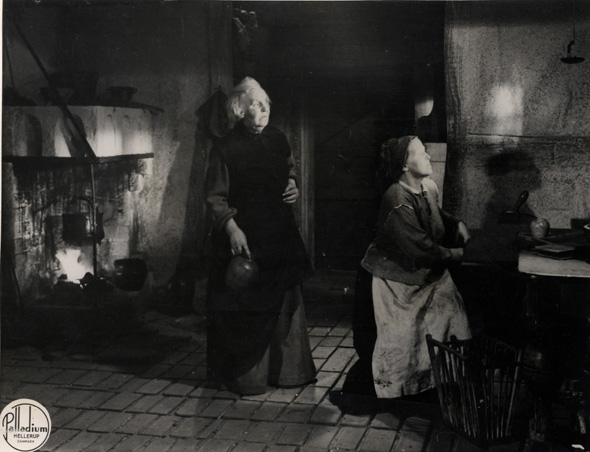
These notes accompany the screenings of Carl Th. Dreyer’s </i>Day of Wrath</a> on July 6, 7, and 8 in Theater 3.</p>
Despite being one of the greatest film directors, Carl Th. Dreyer (1889–1968) will probably always be considered an acquired taste. His best films are much too austere and demanding for even many serious moviegoers.
Posts by Charles Silver
Carl Th. Dreyer’s Day of Wrath
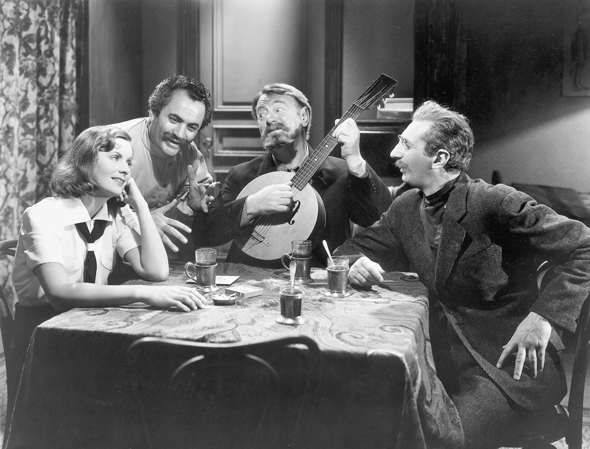
Ernst Lubitsch’s Ninotchka
Oops! I almost left out Ninotchka. Somehow, this 1939 masterpiece slipped through the cracks. I apologize for whatever inconvenience this violation of my self-imposed chronology may cause, although I don’t think the Prime Directive has been threatened.
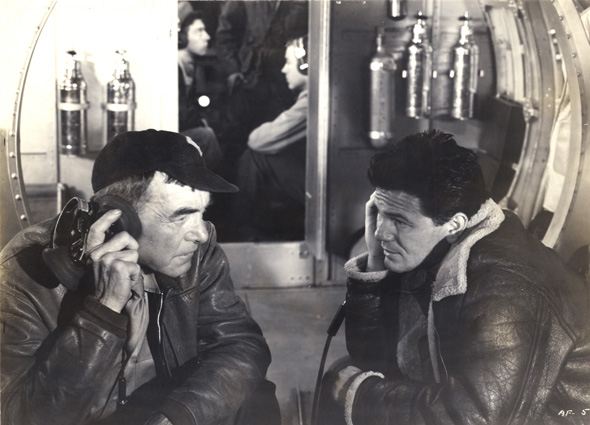
Howard Hawks’s Air Force
Leo Hurwitz and Paul Strand’s Native Land
These notes accompany the screenings of Leo Hurwitz and Paul Strand’s </i>Native Land</a> on June 15, 16, and 17 in Theater 2.</p>
For a number of reasons, I had some hesitation about including Native Land in our series. First of all, with two directors, it tends to undermine the argument that film art is a medium with a single primary creator.
Why We Fight: Frank Capra’s WWII Propaganda Films
These notes accompany the screenings of Frank Capra’s </i>Why We Fight</a> WWII propaganda films on June 8, 9, and 10 in Theater 3.</p>
Because everyone went to the movies during World War II, the American government found the film industry to be more helpful in propagandizing the populace than at any time before or since. Americans were movie-mad and generally believed whatever they saw at the local theater.
Michael Curtiz’s Casablanca
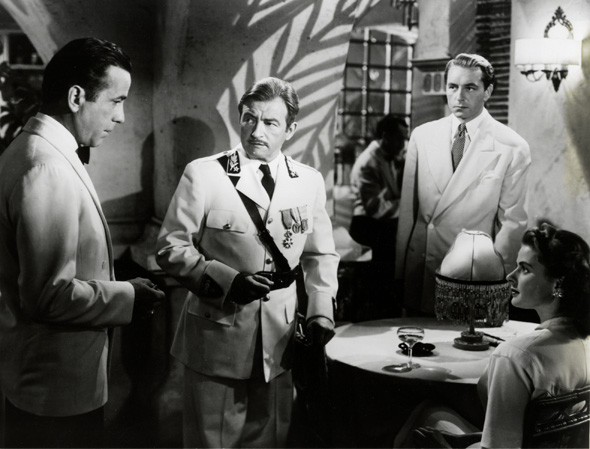
These notes accompany the screenings of Michael Curtiz’s </i>Casablanca</a> on June 1, 2, and 3 in Theater 1.</p>
In a recent Internet posting, the Writers Guild of America chose Casablanca as the greatest screenplay of all time. The list of 101 titles included only two foreign films—Renoir’s Grand Illusion and Fellini’s 8 1/2—worth including. I don’t know how people find time for such insipid silliness, but they do.
Preston Sturges’s The Lady Eve
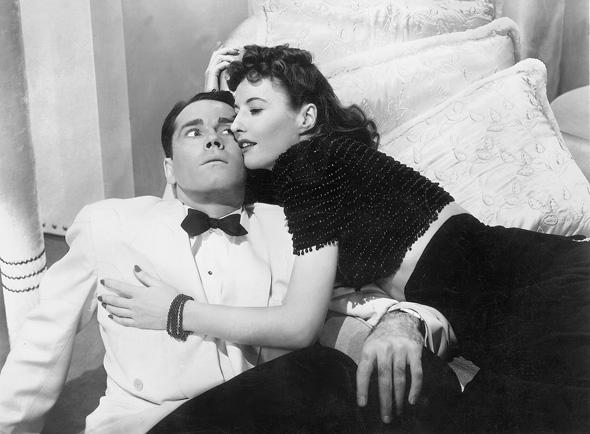
These notes accompany the screenings of Preston Sturges’s </i>The Lady Eve</a> on May 25, 26, and 27 in Theater 3.</p>
Preston Sturges (1898–1959) was in that fraternity of Hollywood scriptwriters (along with Billy wilder, John Huston, Joseph L. Mankiewicz, Blake Edwards, and Elaine May, to name just a few) who ultimately weren’t content to let someone else direct their scripts. Sturges’s own transition took a long time; he wrote part or all of 17 films between 1930 and his directorial debut a decade later.
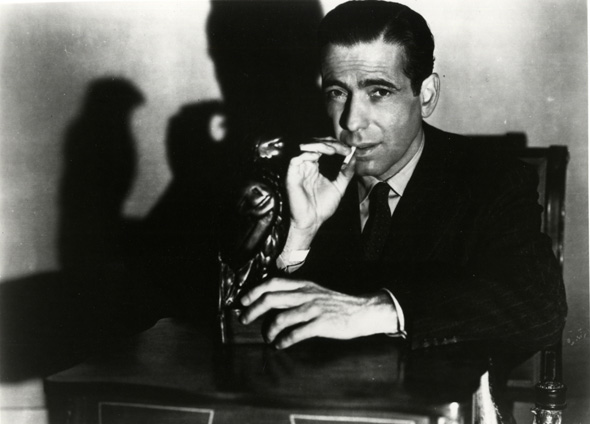
John Huston’s The Maltese Falcon
These notes accompany the screenings of John Huston’s </i>The Maltese Falcon</a> on May 18 (in Theater 2), 19 (Theater 3), and 20 (Theater 2).</p>
John Huston (1906–1987) has always been something of an enigma to me. The director of The Maltese Falcon, The Treasure of the Sierra Madre, Key Largo, The Asphalt Jungle, The Red Badge of Courage, The African Queen, and late-career gems like The Man Who Would Be King, Prizzi’s Honor, and The Dead</a> is too formidable to be dismissed out of hand. Yet there are too many instances where Huston seems to fail to be engaged or, over his two-decade-long middle period, seems blatantly frivolous.
John Ford’s How Green Was My Valley
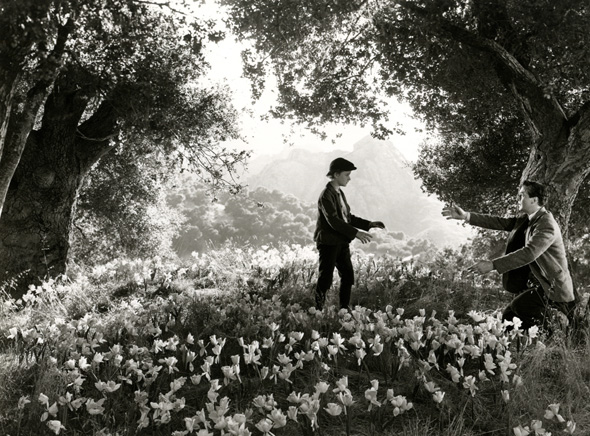
These notes accompany the screenings of John Ford’s </i>How Green Was My Valley</a> on May 11, 12, and 13 in Theater 3.</p>
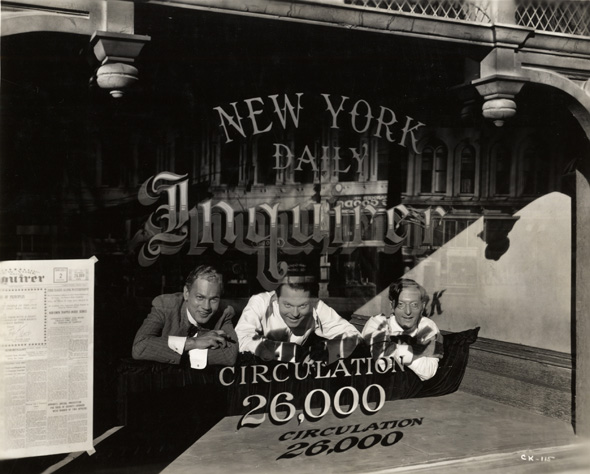
By 1941, John Ford (1894–1973) had attained the peak of the Hollywood studio system. Aside from a few of his later Westerns, How Green Was My Valley remains unchallenged as his best film. It beat out Citizen Kane</a> for the Oscar (partially due to industry antipathy toward Orson Welles), but it also stands head-and-shoulders above any other film that Hollywood, in its collective wisdom, ever managed to choose for its top award.
Orson Welles’s Citizen Kane
These notes accompany the screenings of Orson Welles’s </i>Citizen Kane</a> on May 4, 5, and 6 in Theater 3.</p>
Orson Welles (1915–1985) would have been 96 this Friday. Like the other three greatest American-born directors (D. W. Griffith from La Grange, Kentucky; John Ford from Portland, Maine; and Howard Hawks from Goshen, Indiana), Welles (from Kenosha, Wisconsin) was a product of that essentially rural America which began to disappear with the coming of the Industrial Age.
If you are interested in reproducing images from The Museum of Modern Art web site, please visit the Image Permissions page (www.moma.org/permissions). For additional information about using content from MoMA.org, please visit About this Site (www.moma.org/site).
© Copyright 2016 The Museum of Modern Art