Roelf Mulder, Byron Qually, Etienne Rijkheer, …XYZ Dot Dot Dot Ex Why Zed Design, Ltd.
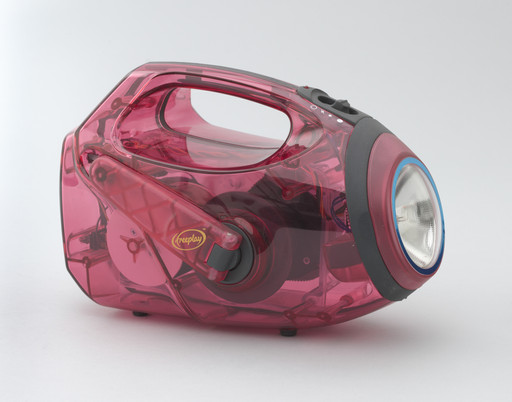
Human Powered Radio (model FPR2)
1998
Polycarbonate, ABS plastic, nylon, and brass
Not on view
In the event of a large-scale emergency, when many communications and power infrastructures are down, this human-powered, battery-free radio can keep its user aware of the current situation. The Freeplay Foundation, a humanitarian organization that works mostly in Africa, sells this radio to subsidize the production of a sturdier version, the Lifeline radio, which has been conceived to operate in the harshest conditions and climates. The Lifeline radio is distributed for free to distant communities that have no access to electricity and cannot afford batteries. One great obstacle to the alleviation of poverty is isolation; radio can play a vital role in its capacity to reach people isolated by geography, conflict, or illiteracy, giving them access to information and education.
Born out of Necessity, March 2, 2012–January 28, 2013.
Explore more


From MoMA Design Store


Installation views
We have identified this work in the following photos from our exhibition history.
Licensing
Artwork or archival images
If you would like to reproduce an image of a work of art in MoMA's collection, or an image of a MoMA publication or archival material (including installation views, checklists, and press releases), please contact Art Resource (publication in North America) or Scala Archives (publication in all other geographic locations).
Audio and film clips
MoMA licenses archival audio and select out of copyright film clips from our film collection. At this time, MoMA produced video cannot be licensed by MoMA/Scala. All requests to license archival audio or out of copyright film clips should be addressed to Scala Archives at [email protected]. Motion picture film stills cannot be licensed by MoMA/Scala. For access to motion picture film stills for research purposes, please contact the Film Study Center at [email protected]. For more information about film loans and our Circulating Film and Video Library, please visit Circulating Film and Video Library.
Text from a publication or the archives
If you would like to reproduce text from a MoMA publication, please email [email protected]. If you would like to publish text from MoMA's archival materials, please fill out this permission form and send to [email protected].
Feedback
This record is a work in progress. If you have additional information or spotted an error, please fill out this feedback form.