Painted wood on wood base
Not on view
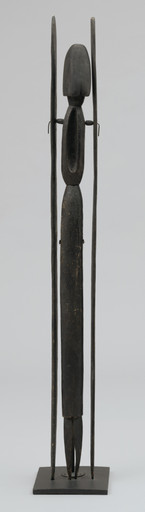
What do these shapes remind you of? For the artist Louise Bourgeois, they represented her friends and family. Bourgeois grew up in France and moved a long way to live in the United States. She missed home and made sculptures like these to feel less lonely. She would group different shapes together and sometimes even included objects representing herself. In this work she is the object in the middle, and the smaller oval shapes attached to her are her sons. If these figures could talk, what might they say to each other?
2022/2023
Publication excerpt from MoMA Highlights: 375 Works from The Museum of Modern Art, New York (New York: The Museum of Modern Art, 2019)
Unlike many modern sculptors, Bourgeois never abandoned representation, and Quarantania, I is explicitly anthropomorphic. Each of its elements was originally made as an autonomous work: the central figure, Woman with Packages (1947–49), is surrounded by four variations of Bourgeois’s sculpture Shuttle Woman. The intimate arrangement suggests a gathering of close friends or family members in conversation. Approximately life-size, the five figural forms address viewers symbolically as well as physically. Their shapes recall wooden weaving shuttles, traditional instruments associated with the crafts of tapestry making and repair, from which Bourgeois’s parents earned their livelihood.
The individual figures in Quarantania, I are typical of the totemic painted wood sculptures—her first works in three dimensions—that Bourgeois produced in the 1940s and ’50s and which she later called Personages. Despite their formal proximity to other works she was familiar with—by Surrealists and artists from various regions of Africa—Bourgeois asserted that her Personages “had nothing to do with sculpture.” Rather, she said, these works were “manifestations of homesickness” for aspects of the life she had known before moving from Paris to New York in 1938, the year she began making them.
Gallery label from 2019
After moving to New York in 1938, Bourgeois began to make totemic wood sculptures that she later called “personages.” These abstracted figures, Bourgeois explained, were “manifestations of homesickness”—stand-ins for the friends and family she had left behind. For this piece, she assembled five elongated figures on a single platform, their close arrangement suggesting an intimate gathering. Bourgeois represented herself as the central figure, with three oval-shaped attachments symbolizing her children. Seen together, the figures’ shapes recall needles or weaving shuttles—tools associated with Bourgeois’s childhood and parents, who ran a tapestry restoration business.
Explore more
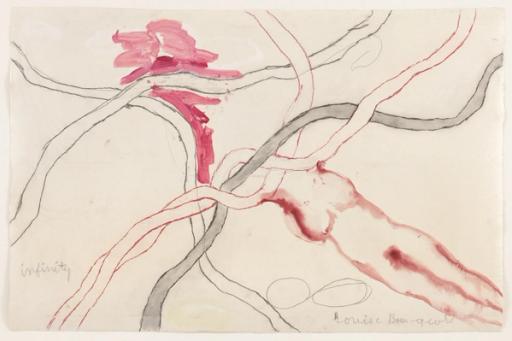
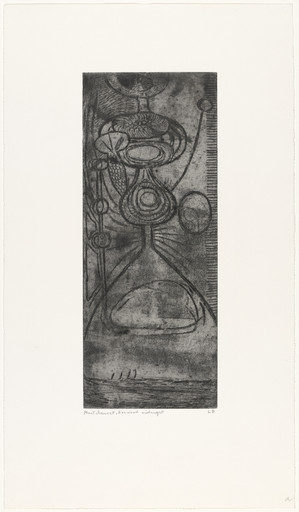
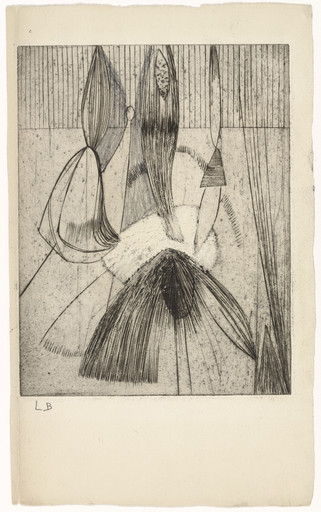
Louise Bourgeois
American, born France. 1911–2010 3040 works onlineBorn in Paris in 1911, Louise Bourgeois was raised by parents who ran a tapestry restoration business. A gifted student, she also helped out in the workshop by drawing missing elements in the scenes depicted on the tapestries.
Learn more →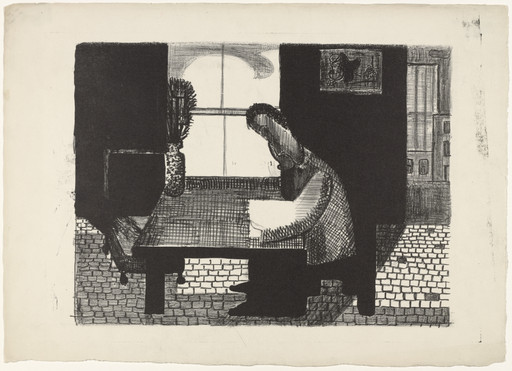
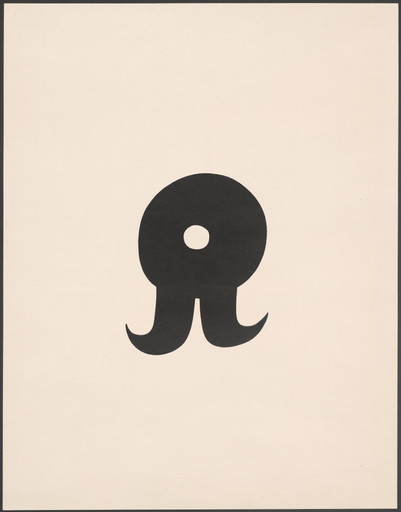
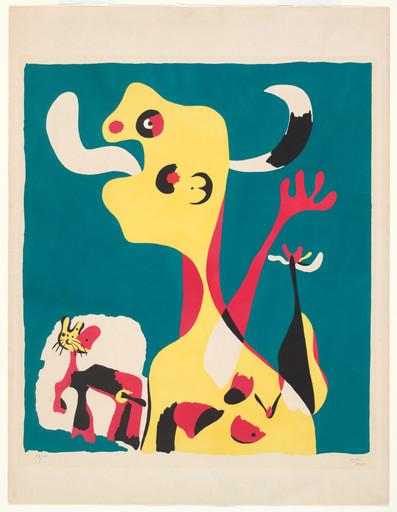
Biomorphic
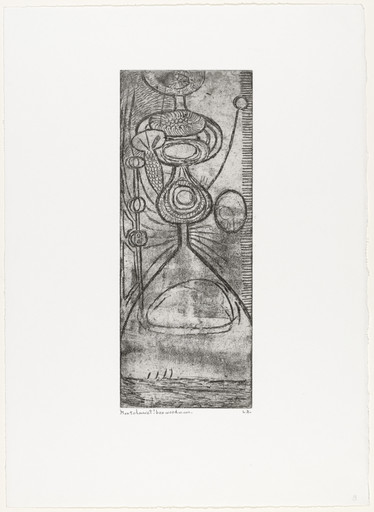
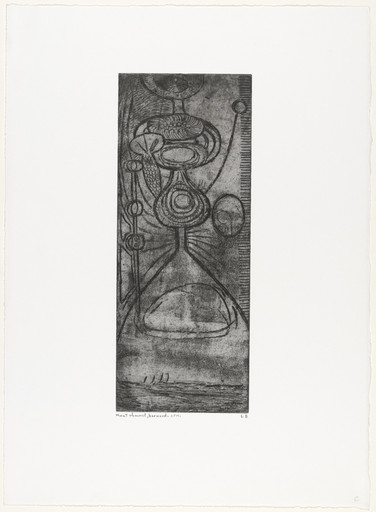
Derived from the Greek words bios (life) and morphe (form), the term refers to abstract forms or images that evoke naturally occurring forms such as plants, organisms, and body parts.
Learn more →

Audio
Audio from the playlist Collection 1880s–1940s
Audio from the playlist Kids
Audio from the playlist Verbal Descriptions
From MoMA Design Store


Installation views
We have identified this work in the following photos from our exhibition history.
Licensing
Artwork or archival images
If you would like to reproduce an image of a work of art in MoMA's collection, or an image of a MoMA publication or archival material (including installation views, checklists, and press releases), please contact Art Resource (publication in North America) or Scala Archives (publication in all other geographic locations).
Audio and film clips
MoMA licenses archival audio and select out of copyright film clips from our film collection. At this time, MoMA produced video cannot be licensed by MoMA/Scala. All requests to license archival audio or out of copyright film clips should be addressed to Scala Archives at [email protected]. Motion picture film stills cannot be licensed by MoMA/Scala. For access to motion picture film stills for research purposes, please contact the Film Study Center at [email protected]. For more information about film loans and our Circulating Film and Video Library, please visit Circulating Film and Video Library.
Text from a publication or the archives
If you would like to reproduce text from a MoMA publication, please email [email protected]. If you would like to publish text from MoMA's archival materials, please fill out this permission form and send to [email protected].
Feedback
This record is a work in progress. If you have additional information or spotted an error, please fill out this feedback form.