Barnett Newman’s Broken Obelisk, made of Cor-Ten steel, stands more than 25 feet tall and weighs 6,000 pounds. An inverted obelisk—a four-sided tapering monument from Ancient Egypt—balances precariously atop a pyramid, another Egyptian form. The sculpture was not designed for a particular site, and it commemorates no specific person or moment in history. Some interpret Broken Obelisk as a universal monument to all humanity. However, the severed, upended form could also suggest that there is nothing to celebrate—perhaps an allusion to the social unrest of the Civil Rights Movement and Vietnam War protests occurring in the United States in the 1960s.
Explore more
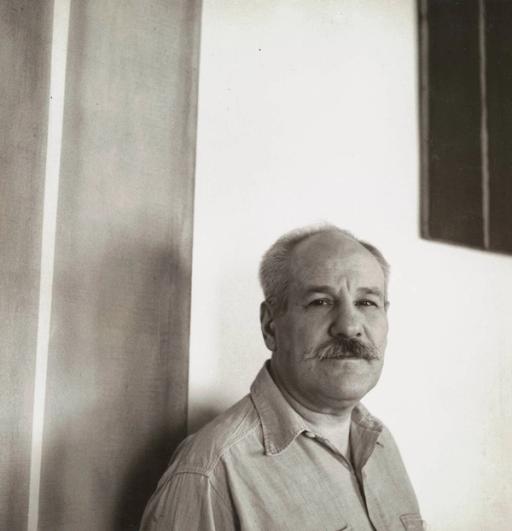
Barnett Newman
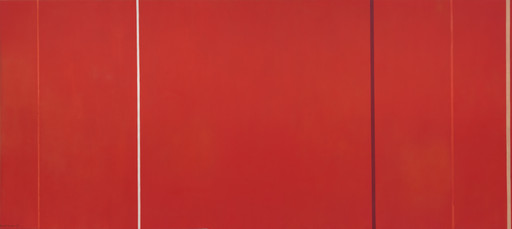
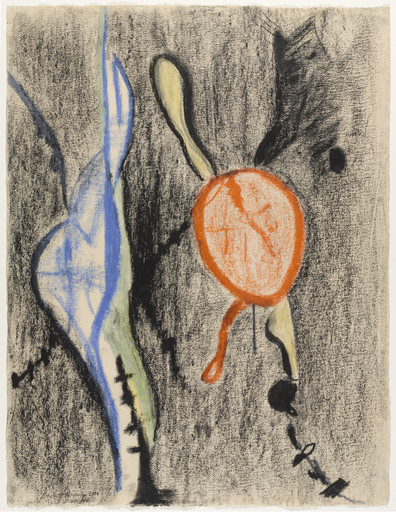
American, 1905–1970 61 works onlinePainter and theorist Barnett Newman was one of the most intellectual artists of the New York School. He was born and raised in New York, the son of Polish Jewish immigrants.
Learn more →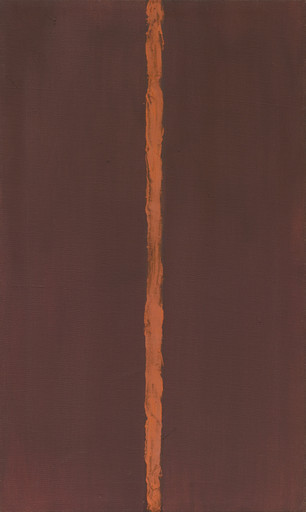
Audio
Audio from the playlist Audio Descriptions
Audio from the playlist Sculpture Garden
From MoMA Design Store


Installation views
We have identified this work in the following photos from our exhibition history.
Licensing
Artwork or archival images
If you would like to reproduce an image of a work of art in MoMA's collection, or an image of a MoMA publication or archival material (including installation views, checklists, and press releases), please contact Art Resource (publication in North America) or Scala Archives (publication in all other geographic locations).
Audio and film clips
MoMA licenses archival audio and select out of copyright film clips from our film collection. At this time, MoMA produced video cannot be licensed by MoMA/Scala. All requests to license archival audio or out of copyright film clips should be addressed to Scala Archives at [email protected]. Motion picture film stills cannot be licensed by MoMA/Scala. For access to motion picture film stills for research purposes, please contact the Film Study Center at [email protected]. For more information about film loans and our Circulating Film and Video Library, please visit Circulating Film and Video Library.
Text from a publication or the archives
If you would like to reproduce text from a MoMA publication, please email [email protected]. If you would like to publish text from MoMA's archival materials, please fill out this permission form and send to [email protected].
Feedback
This record is a work in progress. If you have additional information or spotted an error, please fill out this feedback form.