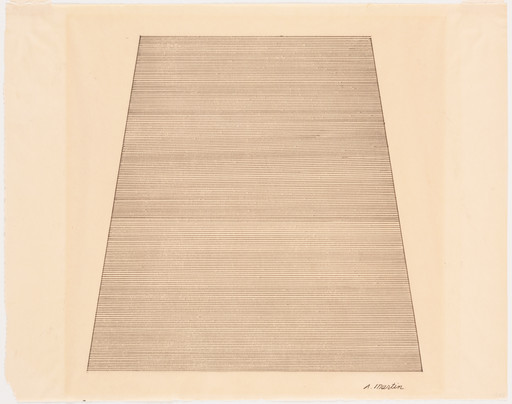
Of the genesis of her paintings, Martin said, "When I first made a grid I happened to be thinking of the innocence of trees and then this grid came into my mind and I thought it represented innocence, and I still do, and so I painted it and then I was satisfied. I thought, this is my vision." Martin rendered fine vertical lines and lightly shaded horizontal bands in oil and pencil, softening the geometric grid, which in this case seems to expand beyond the confines of the canvas. For Martin the grid evoked not a human measure but an ethereal onethe boundless order or transcendent reality associated with Eastern philosophies.
Making Space: Women Artists and Postwar Abstraction, April 19 - August 13, 2017.
Gallery label from "Collection: 1940s—1970s", 2019
Martin once said, “I hope I have made it clear that the work is about perfection as we are aware of it in our mind but that the paintings are very far from being perfect . . .” Close examination of the surface reveals subtle tension between the grid’s regularity and the wavering of Martin’s drawn lines. She created this six-foot-square canvas while standing, and used a metal ruler to guide her hand. Though the painting is titled The Tree, she remarked years later that her paintings are “not really about nature. It is not what is seen—it is what is known forever in the mind.”
"Collection: 1940s—1970s", 2019
Explore more
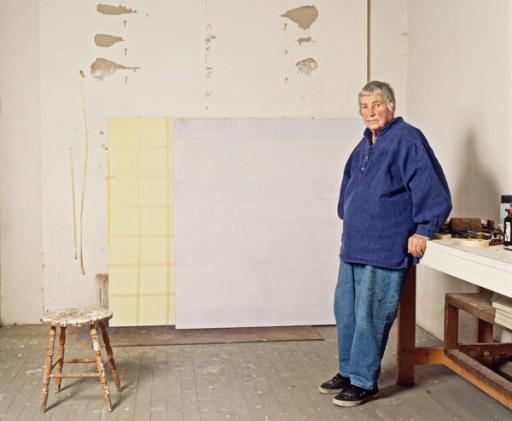
Agnes Martin
American, born Canada. 1912–2004 55 works onlineBorn on a farm in rural Saskatchewan, Canada, Agnes Martin immigrated to the United States in 1932 in the hopes of becoming a teacher.
Learn more →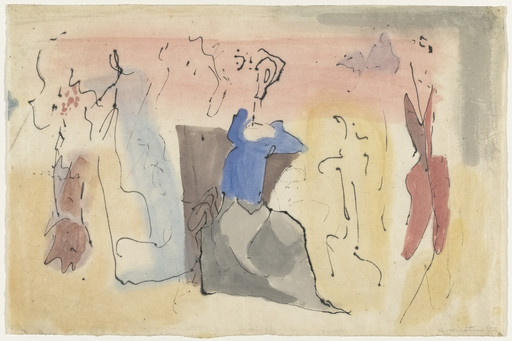
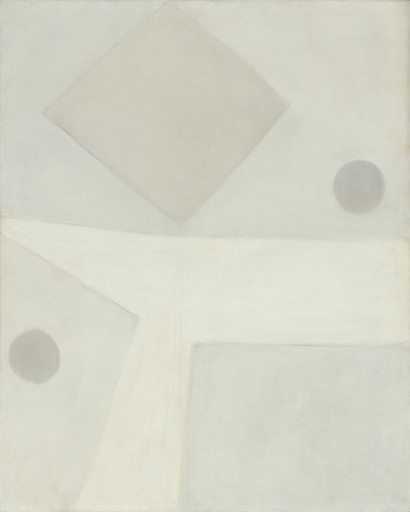

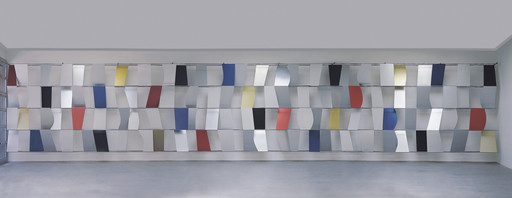
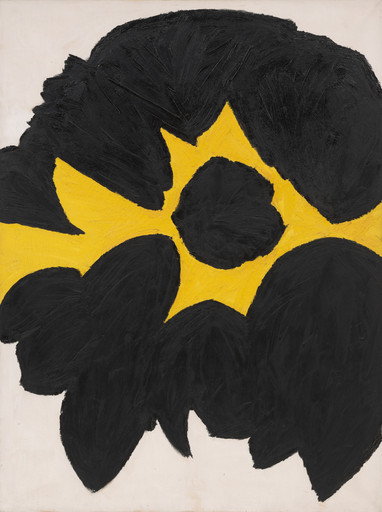
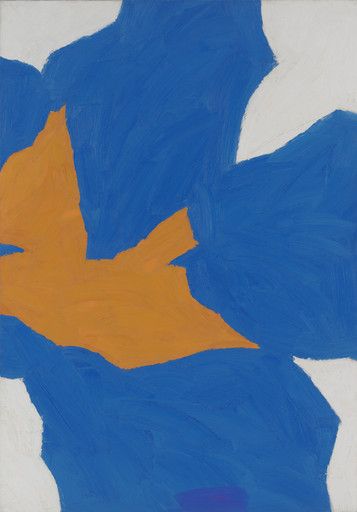
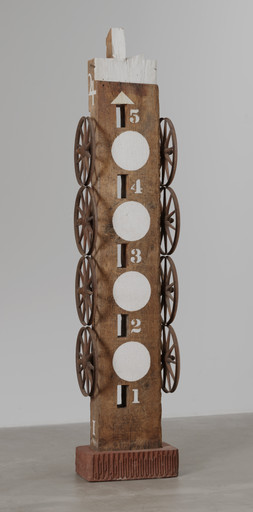
Coenties Slip
For a brief period in the 1950s and ’60s, an out-of-the-way street at the southeastern edge of Manhattan hosted a community of artists whose work there would change art history.
Learn more →
Audio
Audio from the playlist Making Space: Women Artists and Postwar Abstraction
Audio from the playlist 1880–1950: Works from the Collection
From MoMA Design Store


Installation views
We have identified this work in the following photos from our exhibition history.
Licensing
Artwork or archival images
If you would like to reproduce an image of a work of art in MoMA's collection, or an image of a MoMA publication or archival material (including installation views, checklists, and press releases), please contact Art Resource (publication in North America) or Scala Archives (publication in all other geographic locations).
Audio and film clips
MoMA licenses archival audio and select out of copyright film clips from our film collection. At this time, MoMA produced video cannot be licensed by MoMA/Scala. All requests to license archival audio or out of copyright film clips should be addressed to Scala Archives at [email protected]. Motion picture film stills cannot be licensed by MoMA/Scala. For access to motion picture film stills for research purposes, please contact the Film Study Center at [email protected]. For more information about film loans and our Circulating Film and Video Library, please visit Circulating Film and Video Library.
Text from a publication or the archives
If you would like to reproduce text from a MoMA publication, please email [email protected]. If you would like to publish text from MoMA's archival materials, please fill out this permission form and send to [email protected].
Feedback
This record is a work in progress. If you have additional information or spotted an error, please fill out this feedback form.