Not on view
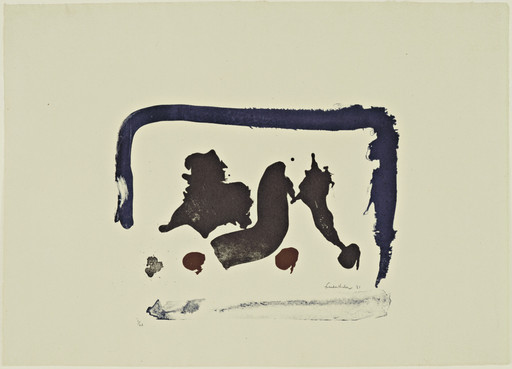
A leading artist of the second generation of Abstract Expressionism, Helen Frankenthaler knew from a young age that she wanted to be a painter. She had her first solo gallery show at the age of twenty-three in 1951, and painted her landmark work, Mountains and Sea, the following year. In the late 1950s, a printmaking renaissance was beginning, and some of Frankenthaler's fellow artists began encouraging her to try the medium. In 1961, at the invitation of Tatyana Grosman, Frankenthaler ventured out to Universal Limited Art Editions (ULAE), Grosman's Long Island printmaking studio, and began making lithographs. Frankenthaler has said, “After the first day there I felt no hesitation. I was very committed. All I had to do was start work on that print. It was a whole new road-and a very connected road.”
By 1976 Frankenthaler had made about fifty prints, thirty-seven of them at ULAE, in mediums including lithography, intaglio, screenprint, pochoir, and woodcut. In that year, she was invited to the new Bedford, New York, workshop of Kenneth Tyler, formerly of Gemini G.E.L. in Los Angeles. Working there, she revolutionized woodcut, a medium generally out of favor with artists at that time. With Essence Mulberry, duly inspired by the faded colors of hand-painted fifteenth-century prints seen at the Metropolitan Museum of Art, and a lushly ripe mulberry tree on Tyler's property, Frankenthaler set out to re-create the look of painting with mulberry juice. She carved four blocks, one each of oak, birch, walnut and lauan, all having different printed effects. A reinvention of the technique, the ethereal Essence Mulberry differs from most major woodcuts of the modern period, which tend toward a bold expressionist idiom. To date Frankenthaler has completed about one hundred twenty-five editions and one hundred fifteen monotypes.
an essay by Sarah Suzuki, in Deborah Wye, Artists and Prints: Masterworks from The Museum of Modern Art, New York: The Museum of Modern Art, 2004, p. 146.
Explore more
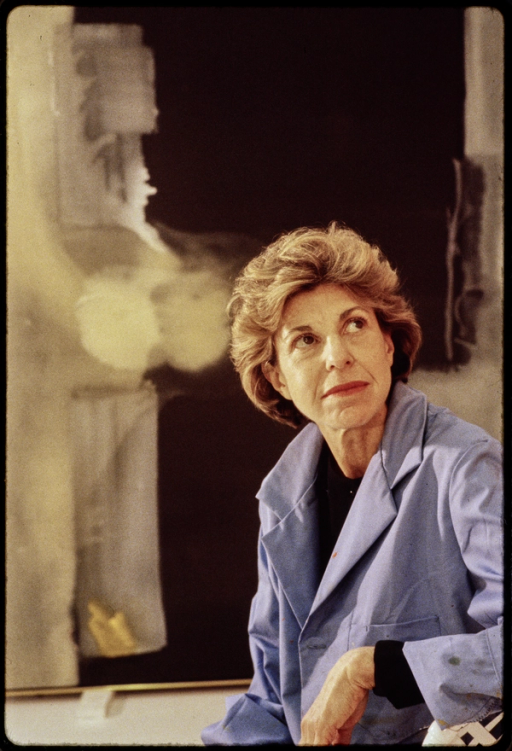
Helen Frankenthaler
American, 1928–2011 77 works onlineThe artist Helen Frankenthaler has offered two childhood scenes as foundational stories for the path her innovative practice would take.
Learn more →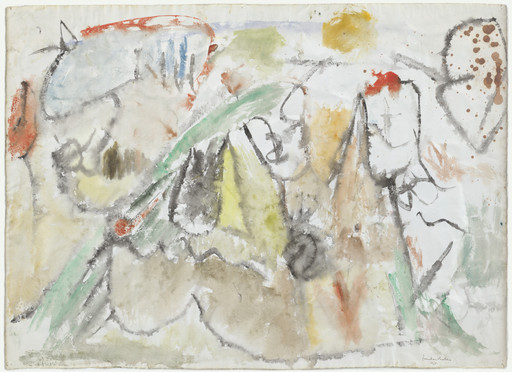

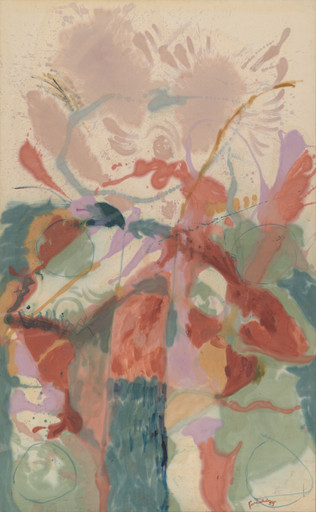
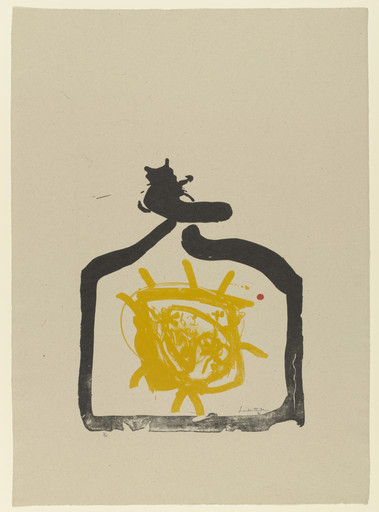
Woodcut
A printmaking technique that involves printing an image from a carved plank of wood. The image is cut into the wood using tools such as chisels, gouges, and knives.
Learn more →
From MoMA Design Store


Installation views
We have identified this work in the following photos from our exhibition history.
Licensing
Artwork or archival images
If you would like to reproduce an image of a work of art in MoMA's collection, or an image of a MoMA publication or archival material (including installation views, checklists, and press releases), please contact Art Resource (publication in North America) or Scala Archives (publication in all other geographic locations).
Audio and film clips
MoMA licenses archival audio and select out of copyright film clips from our film collection. At this time, MoMA produced video cannot be licensed by MoMA/Scala. All requests to license archival audio or out of copyright film clips should be addressed to Scala Archives at [email protected]. Motion picture film stills cannot be licensed by MoMA/Scala. For access to motion picture film stills for research purposes, please contact the Film Study Center at [email protected]. For more information about film loans and our Circulating Film and Video Library, please visit Circulating Film and Video Library.
Text from a publication or the archives
If you would like to reproduce text from a MoMA publication, please email [email protected]. If you would like to publish text from MoMA's archival materials, please fill out this permission form and send to [email protected].
Feedback
This record is a work in progress. If you have additional information or spotted an error, please fill out this feedback form.