Born in Scandinavia, a region known for long periods of cold and darkness, Edvard Munch shared the Symbolist mentality of artists and writers from that locale and throughout Europe in the 1890s. He rejected the Impressionist practice of studying effects of light on the external world and instead looked inward to explore themes of love and jealousy, loneliness and anxiety, and sickness and death. His personal history, with the premature loss of his mother and an older sister, as well as complex and unsatisfactory entanglements with women, provided him with a constant source of artistic motifs.
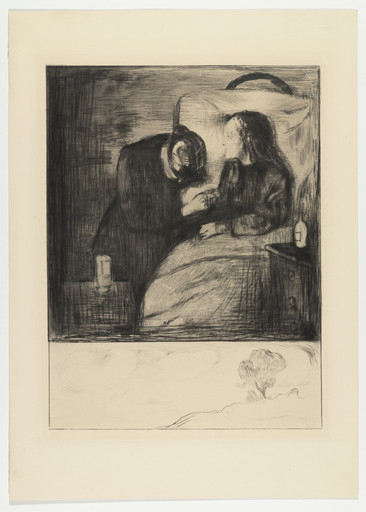
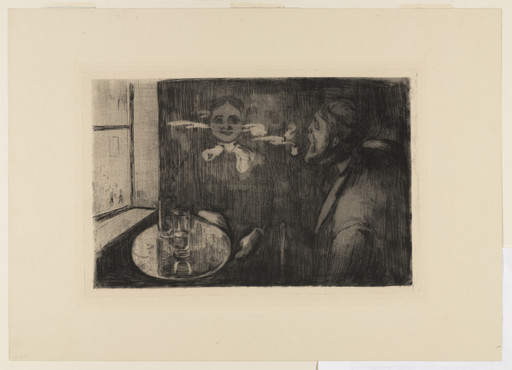
The practices of painting, drawing, and printmaking were intertwined for Munch as he reinvestigated the same themes throughout his career. Printmaking was particularly conducive to this practice since he could save his plates, stones, and woodblocks for reuse time and again. Working with professional printers, or availing himself of a press in his studio, he explored some seven hundred fifty subjects in prints, varying his imagery in nearly thirty thousand impressions. Such experimentation can be seen here in red and black examples of The Sick Child I, and in three versions of The Lonely Ones, interpreted in both woodcut and etching.
Munch sometimes used the same motif in a painting and a print, and a comparison of the two shows the print to be greatly simplified, achieving a sense of essence. Complex emotions are distilled into universal symbols by removing narrative references. Woodcut, in particular, lent itself to this approach. Munch's practice of cutting his blocks like a jigsaw puzzle in order to ink them in sections also enhanced a sense of isolation and abstraction. And the way in which he allowed the patterns of the wood grain to affect his compositions gave an indication of primordial significance. With this approach, the viewer senses artistic process as well as motif, something that would become an underlying component in much twentieth-century art.
Deborah Wye, Artists and Prints: Masterworks from The Museum of Modern Art, New York: The Museum of Modern Art, 2004, pp. 44-47.
Explore more
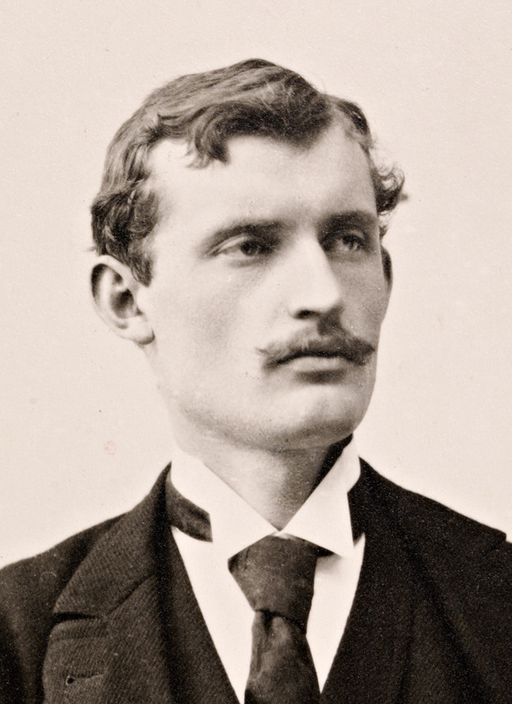
Edvard Munch
Norwegian, 1863–1944 73 works onlineFor Edvard Munch, 1893 was a year of screams. In the fall, the Norwegian artist produced two versions of The Scream , his now iconic image of personal and universal anguish. ” he later wrote.
Learn more →
From MoMA Design Store


Installation views
We have identified this work in the following photos from our exhibition history.
Provenance Research Project
This work is included in the Provenance Research Project, which investigates the ownership history of works in MoMA's collection.
Galerie Beyeler, Basel; sold to The Museum of Modern Art, New York, 1958.
Provenance research is a work in progress, and is frequently updated with new information. If you have any questions or information to provide about the listed works, please email [email protected] or write to:
Provenance Research Project
The Museum of Modern Art
11 West 53 Street
New York, NY 10019
Licensing
Artwork or archival images
If you would like to reproduce an image of a work of art in MoMA's collection, or an image of a MoMA publication or archival material (including installation views, checklists, and press releases), please contact Art Resource (publication in North America) or Scala Archives (publication in all other geographic locations).
Audio and film clips
MoMA licenses archival audio and select out of copyright film clips from our film collection. At this time, MoMA produced video cannot be licensed by MoMA/Scala. All requests to license archival audio or out of copyright film clips should be addressed to Scala Archives at [email protected]. Motion picture film stills cannot be licensed by MoMA/Scala. For access to motion picture film stills for research purposes, please contact the Film Study Center at [email protected]. For more information about film loans and our Circulating Film and Video Library, please visit Circulating Film and Video Library.
Text from a publication or the archives
If you would like to reproduce text from a MoMA publication, please email [email protected]. If you would like to publish text from MoMA's archival materials, please fill out this permission form and send to [email protected].
Feedback
This record is a work in progress. If you have additional information or spotted an error, please fill out this feedback form.