Standard-definition video (black and white and color, sound)
Not on view
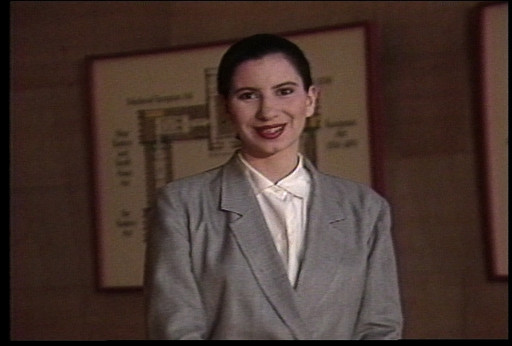
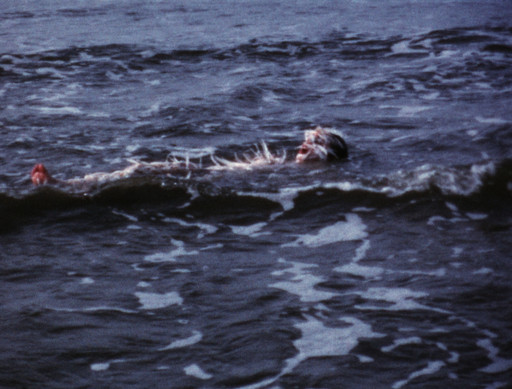
In 1992, Fusco and Guillermo Gómez-Peña toured the United States, Spain, England, and Australia as representatives of the fictional, “undiscovered” island of Guatinaui. Confined within a gilded cage, the duo performed made-up “traditional tasks,” such as lifting weights and watching television. Although the performance was intended as a satirical reenactment of ethnographic exhibitions of humans—a practice that reached its peak during nineteenth-century world’s fairs—many viewers believed they were real captives. Viewer responses, documented in this film, ranged from debates over the performance’s authenticity to calls to the Humane Society. Fusco later recorded some of the responses as engravings (also on view here), which reference early forms of mass media that popularized images of exoticized “others.”
2024
Explore more
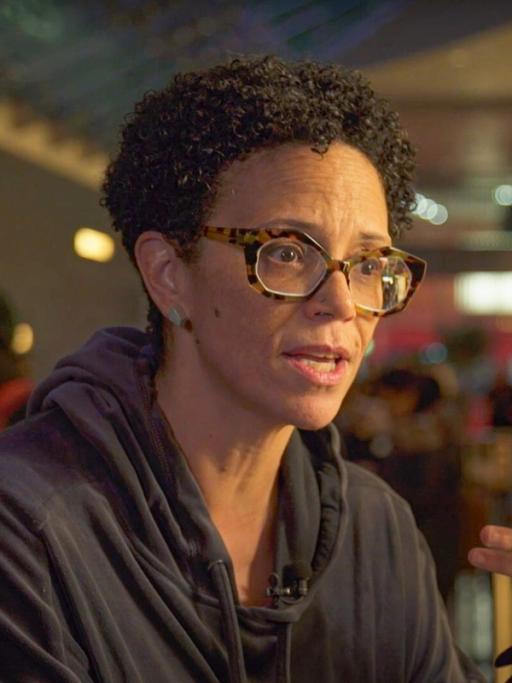
Coco Fusco
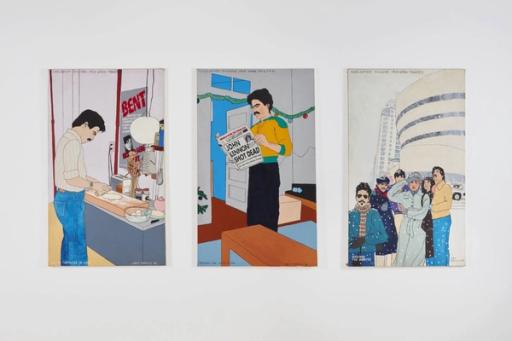
Cuban-American, born 1960 2 works onlineThe interdisciplinary force of Coco Fusco is as raw as it is necessary. Born in New York City in 1960, the Cuban American artist’s relationship with Manhattan, Cuba, and the world forms a transformative and critical dialogue.
Learn more →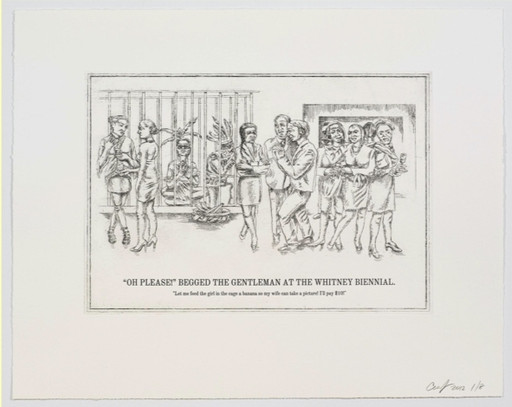
Institutional critique
A form of conceptual art, which emerged in the late 1960s, centered on the critique of museums, galleries, private collections, and other art institutions.
Learn more →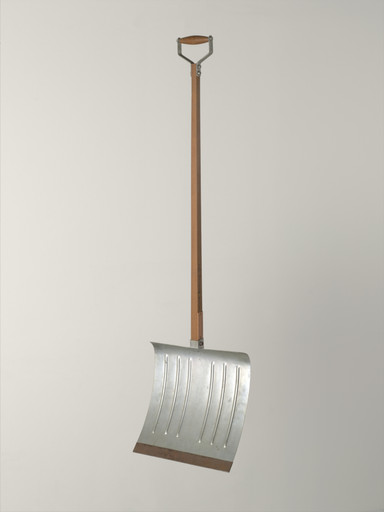
![Marcel Broodthaers. At your supplier (Vinegar of Eagles) ( Chez votre fournisseur [Le Vinaigre des Aigles] )](https://www.moma.org/media/W1siZiIsIjMyNDI0NSJdLFsicCIsImNvbnZlcnQiLCItcXVhbGl0eSA5MCAtcmVzaXplIDUxMng1MTJcdTAwM2UiXV0.jpg?sha=3d3e6638b1662764)

Migration and movement
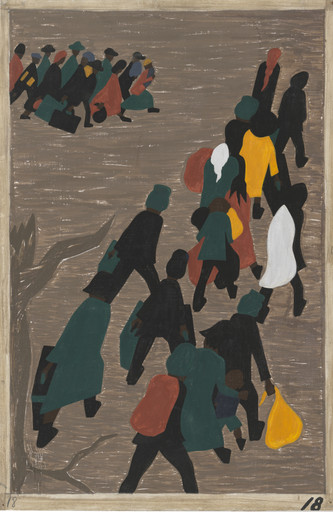
People have always moved around the world. Early humans were nomadic, traveling in search of food, shelter, and safety. Today, people move for many different reasons, including economic, political, cultural, religious, and environmental.
Learn more →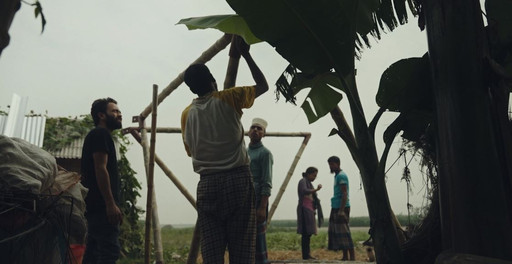



From MoMA Design Store


Licensing
Artwork or archival images
If you would like to reproduce an image of a work of art in MoMA's collection, or an image of a MoMA publication or archival material (including installation views, checklists, and press releases), please contact Art Resource (publication in North America) or Scala Archives (publication in all other geographic locations).
Audio and film clips
MoMA licenses archival audio and select out of copyright film clips from our film collection. At this time, MoMA produced video cannot be licensed by MoMA/Scala. All requests to license archival audio or out of copyright film clips should be addressed to Scala Archives at [email protected]. Motion picture film stills cannot be licensed by MoMA/Scala. For access to motion picture film stills for research purposes, please contact the Film Study Center at [email protected]. For more information about film loans and our Circulating Film and Video Library, please visit Circulating Film and Video Library.
Text from a publication or the archives
If you would like to reproduce text from a MoMA publication, please email [email protected]. If you would like to publish text from MoMA's archival materials, please fill out this permission form and send to [email protected].
Feedback
This record is a work in progress. If you have additional information or spotted an error, please fill out this feedback form.