Not on view
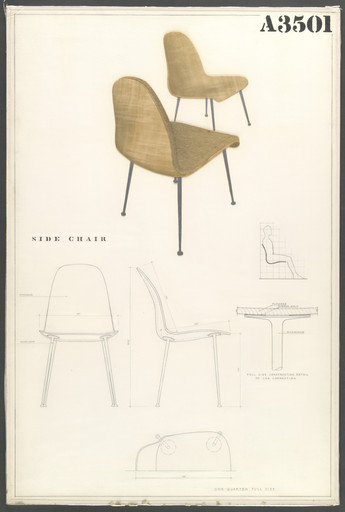
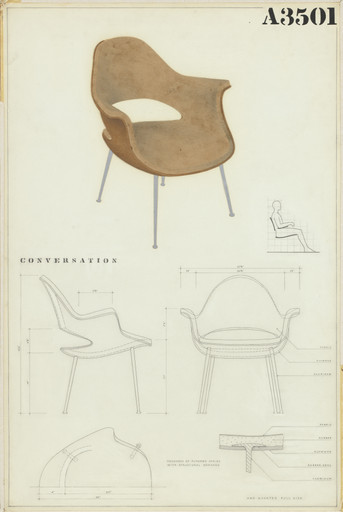
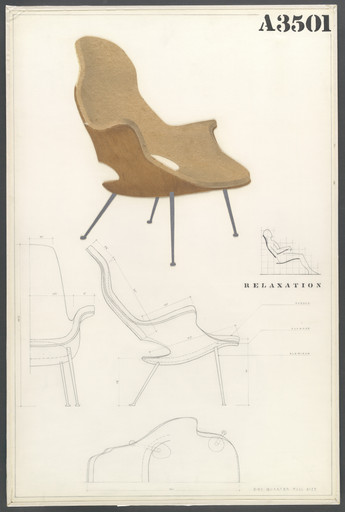
The Eameses often adapted industrial materials to bring affordable, mass-produced designs to American households. Designed for MoMA’s 1948 International Competition for Low-Cost Furniture Design, launched to respond to the needs of a burgeoning middle class in the postwar period, the RAR was originally made of stamped metal. The Eameses later turned to fiberglass, invented in the 1930s and used during WWII only for military applications. The chair was initially offered in three neutral colors—“parchment,” “elephant hide grey,” and “greige”—and with several different bases. At the time, it retailed for $9.88. A few decades later, the RAR remains in production as an evergreen icon of mid-century modern design.
Pirouette: Turning Points in Design, January 26, 2025–November 15, 2025
Explore more
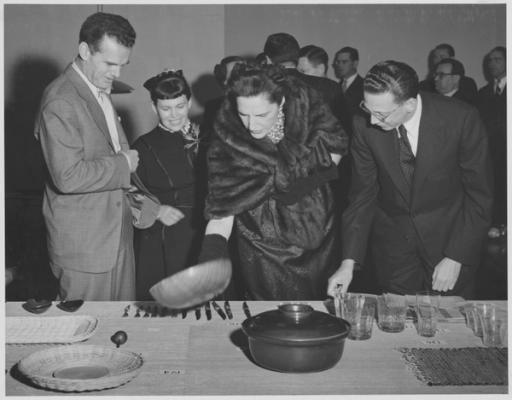
Charles Eames
American, 1907–1978 85 works onlineEverything was architecture to Charles and Ray Eames: the construction plans for a chair, the layout of an exhibition pavilion, the structure of a film, even the placement of silverware, plates, flowers, and objects on a dining table.
Learn more →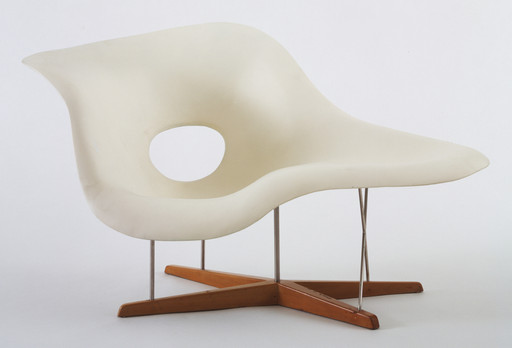
Ray Eames
American, 1912–1988 43 works onlineEverything was architecture to Charles and Ray Eames: the construction plans for a chair, the layout of an exhibition pavilion, the structure of a film, even the placement of silverware, plates, flowers, and objects on a dining table.
Learn more →




From MoMA Design Store


Licensing
Artwork or archival images
If you would like to reproduce an image of a work of art in MoMA's collection, or an image of a MoMA publication or archival material (including installation views, checklists, and press releases), please contact Art Resource (publication in North America) or Scala Archives (publication in all other geographic locations).
Audio and film clips
MoMA licenses archival audio and select out of copyright film clips from our film collection. At this time, MoMA produced video cannot be licensed by MoMA/Scala. All requests to license archival audio or out of copyright film clips should be addressed to Scala Archives at [email protected]. Motion picture film stills cannot be licensed by MoMA/Scala. For access to motion picture film stills for research purposes, please contact the Film Study Center at [email protected]. For more information about film loans and our Circulating Film and Video Library, please visit Circulating Film and Video Library.
Text from a publication or the archives
If you would like to reproduce text from a MoMA publication, please email [email protected]. If you would like to publish text from MoMA's archival materials, please fill out this permission form and send to [email protected].
Feedback
This record is a work in progress. If you have additional information or spotted an error, please fill out this feedback form.