Illustrated book with eleven lithographs
Not on view
This double-page spread from the book La Lunette farcie (The Stuffed Lunette) offers immediate immersion into the fanciful, haphazard world of Dubuffet. He created the atmospheric abstractions by chance, experimenting with a variety of "accidental" happenings to produce textures on the lithographic plates, which might include indiscriminate scratching and the random exposure of the plates to fire, liquid, dirt, or other elements. Otherworldly images are surrounded by the artist's nonsensical ramblings that consist of French words arranged more by sound or look than by meaning. The unpunctuated writing, reproducing the artist's own stenciled words, is placed in different orientations around the pages, making the text even more problematic. The inane title is virtually untranslatable. Dubuffet's relaxed, playful attitude reflects his admiration for children's art, the art of the insane, and that of the untrained. He was among the first artists to appreciate "visionary" or "outsider" art, which he called l'art brut (rough art).
La Lunette farcie was one of several books Dubuffet made with the poet–publisher Benoit. This man, whimsical by nature, would send blank etching or lithographic plates to artists such as Pablo Picasso and Max Ernst to tempt them to make images for his innovative publications.
The Museum of Modern Art , MoMA Highlights, New York: The Museum of Modern Art, revised 2004, originally published 1999, p. 262.
Publication excerpt from Deborah Wye, Artists and Prints: Masterworks from The Museum of Modern Art , New York: The Museum of Modern Art, 2004, p. 134.
It was not until he was forty-one, after a career in the wine business, that Jean Dubuffet turned decisively to art, and, during the next forty years he became a prolific painter, sculptor, printmaker, and experimental writer. With no systematic training, he railed against prevailing notions of good taste and official culture, preferring the spontaneous energy of graffiti and the art of children and the mentally ill. In postwar Paris, Dubuffet worked in a style called l'art brut, depicting fanciful figures in everyday activities that seem irrational, given his flattened perspectives, crude drawing, and unexpected juxtapositions.
Dubuffet began making prints in the mid-1940s, achieving a total output of some fifteen hundred works, many for illustrated books. In the process he revolutionized lithography. His experimentation with surface texture is visible even in the early Matière et mémoire of 1944-45 in which he scratched the lithographic stones with sandpaper, rubbed them with rags, and used other unconventional materials to achieve the varied effects he desired.
Dubuffet's unorthodox approach to lithography reached its zenith with the Phenomena series of 1957-62, comprising three hundred sixty-two compositions sorted into twenty-four albums. Here, working at five different workshops he maintained for the project, he created an alternative universe that seems to capture ever-changing forces of nature. Turning an established technique of drawing with crayon and brush into an improvisational event, he sought the effects of chance and accident by impressing dirt, fruit peelings, and leaves onto his printing surfaces, dragging across burning rags, and spilling chemicals onto them. He also cut up his Phenomena compositions, reassembling elements for new works such as Carrot Nose and La Lunette farcie seen here.
Although his active engagement with printmaking ended with the Phenomena series, Dubuffet eventually worked in screenprint to capture the imagery of his final L'Hourloupe phase. This invented word signified a schematic, jigsaw-puzzle-like figuration of black outlines discovered when the artist was doodling. An early manifestation in photolithography can be seen in the small illustrated book Trémolo sur l'oeil.
Deborah Wye, Artists and Prints: Masterworks from The Museum of Modern Art, New York: The Museum of Modern Art, 2004, p. 134.
Explore more
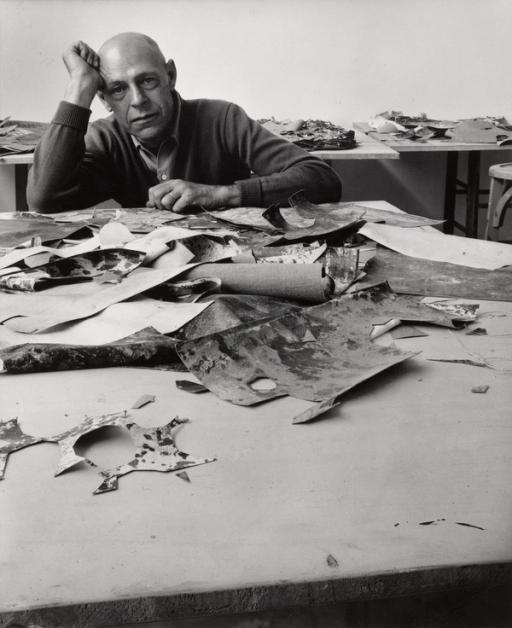
Jean Dubuffet
French, 1901–1985 752 works onlineJean Dubuffet’s work is marked by a rebellious attitude toward prevailing notions of high culture, beauty, and good taste. He began making art in earnest at age 41, after a stint in the army and a successful career as a wine merchant.
Learn more →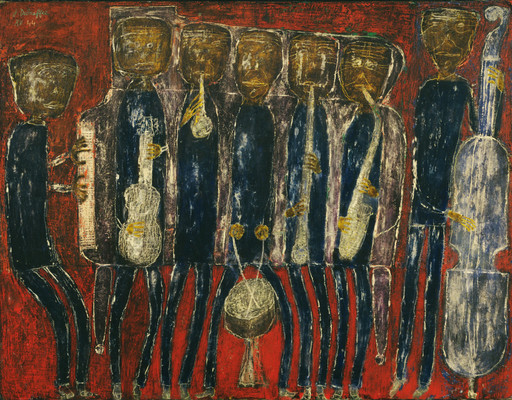
![Jean Dubuffet. Ler dla canpane [L’air de la campagne] (Country Air)](https://www.moma.org/media/W1siZiIsIjU3OTA1NCJdLFsicCIsImNvbnZlcnQiLCItcXVhbGl0eSA5MCAtcmVzaXplIDUxMng1MTJcdTAwM2UiXV0.jpg?sha=dda1f1fb5cc99cd3)
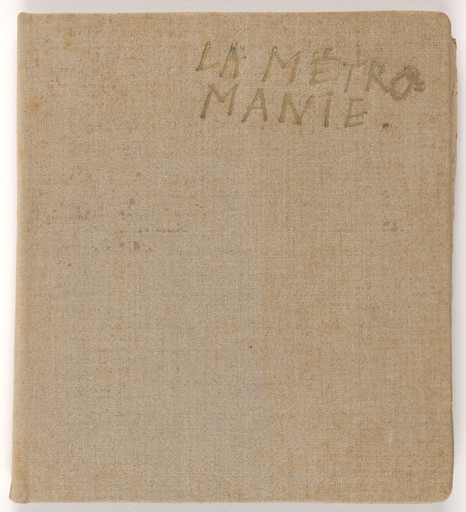
![Jean Dubuffet. Labonfam abeber par inbo nom [La bonne femme à Bébert par un bonhomme] (Bébert’s Gal by a Guy)](https://www.moma.org/media/W1siZiIsIjU4OTg5MCJdLFsicCIsImNvbnZlcnQiLCItcXVhbGl0eSA5MCAtcmVzaXplIDUxMng1MTJcdTAwM2UiXV0.jpg?sha=ea282772e8483e03)
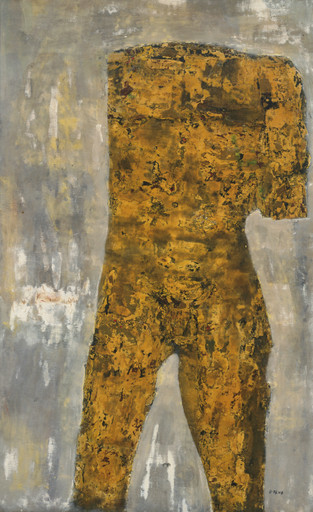
![Jean Dubuffet. Anvouaiaje par in ninbesil avec de zimaje [En voyage par un imbécile avec des images] (On a Journey by an Imbecile with Pictures)](https://www.moma.org/media/W1siZiIsIjU5MzgzMiJdLFsicCIsImNvbnZlcnQiLCItcXVhbGl0eSA5MCAtcmVzaXplIDUxMng1MTJcdTAwM2UiXV0.jpg?sha=6a70b83f0fe2b4b5)


From MoMA Design Store


Licensing
Artwork or archival images
If you would like to reproduce an image of a work of art in MoMA's collection, or an image of a MoMA publication or archival material (including installation views, checklists, and press releases), please contact Art Resource (publication in North America) or Scala Archives (publication in all other geographic locations).
Audio and film clips
MoMA licenses archival audio and select out of copyright film clips from our film collection. At this time, MoMA produced video cannot be licensed by MoMA/Scala. All requests to license archival audio or out of copyright film clips should be addressed to Scala Archives at [email protected]. Motion picture film stills cannot be licensed by MoMA/Scala. For access to motion picture film stills for research purposes, please contact the Film Study Center at [email protected]. For more information about film loans and our Circulating Film and Video Library, please visit Circulating Film and Video Library.
Text from a publication or the archives
If you would like to reproduce text from a MoMA publication, please email [email protected]. If you would like to publish text from MoMA's archival materials, please fill out this permission form and send to [email protected].
Feedback
This record is a work in progress. If you have additional information or spotted an error, please fill out this feedback form.