Neil M. Denari
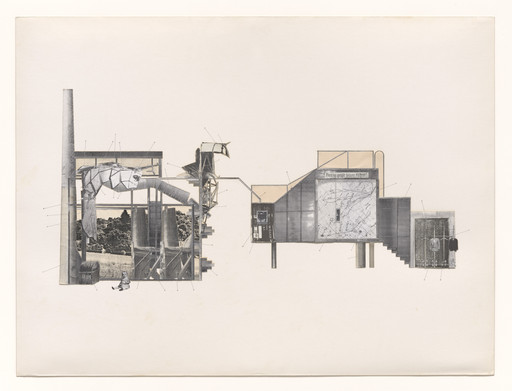
Prototype Architecture School No. 5, project, Los Angeles, California, Elevations
1992
Ink, airbrush, and cut-and-pasted printed self-adhesive polymer sheet on frosted polymer sheet
Not on view
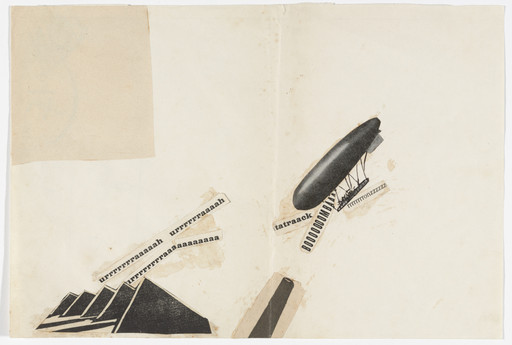
Imagined for a site on Wilshire Boulevard in Los Angeles, this is one of a number of important theoretical works Denari designed in the 1990s. Devoid of human figures or greenery, the drawing portrays a highly technological vision of architecture produced, ironically, not by machine but laboriously by hand. The heavy shadowing and stark surfaces suggest both the anxiety and the euphoria of the twentieth-century relationship with the machine, a love-hate dynamic still evident today. Denari’s project portrays the moment when the two worlds merge—when, in the words of Italian author Italo Calvino, “The iron machines still exist, but they obey the orders of weightless bits.”
Applied Design, March 2, 2013–January 31, 2014.
Publication excerpt from an essay by Terence Riley, in Matilda McQuaid, ed., Envisioning Architecture: Drawings from The Museum of Modern Art , New York: The Museum of Modern Art, 2002, p. 240.
These elevations of Neil Denari's School Prototype No. 5 are emblematic of the singular language of design and graphic expression that Denari has developed since establishing his office, COR-TEX, in New York in 1986. Designed for a site on Wilshire Boulevard, Los Angeles (the city to which COR-TEX relocated in 1988), the school project is one of a number of important theoretical works, including several competition entries, that Denari undertook in the 1990s. The building embraces a frank functional expressivity. Each space assumes an optimized shape, creating an architectural body whose organs are clearly identifiable.
Devoid of what may be called natural life—human figures or greenery—Denari's drawings portray a highly technological vision of architecture. Their airbrushed inks and Pantone colors are as cool as the metallic surfaces they portray. A rationalized vocabulary defines the two-dimensional space of the drawing as well: gridded backgrounds, metric devices, and other drafting conventions, many of them rather arcane to the casual viewer, create a dense text, a techno-incunabulum. Ironically, this visual lexicon is produced not by machine but by hand, and laboriously. Nor can the drawings be considered truly objective: the heavy shadowing and stark surfaces suggest both the anxiety and the euphoria of the twentieth century's love of the machine—a love-hate relationship certainly still evident in the cyberworld we inhabit today. Denari's project portrays the moment when the two worlds merge. In Italo Calvino's words, "The iron machines still exist, but they obey the orders of weightless bits."
an essay by Terence Riley, in Matilda McQuaid, ed., Envisioning Architecture: Drawings from The Museum of Modern Art, New York: The Museum of Modern Art, 2002, p. 240.
Explore more
Elevation drawing
An elevation or elevation drawing is a two-dimensional representation of one side of a building or space. It can depict one of the building’s facades or an interior surface from a straight-on viewpoint.
Learn more →

From MoMA Design Store


Installation views
We have identified this work in the following photos from our exhibition history.
Licensing
Artwork or archival images
If you would like to reproduce an image of a work of art in MoMA's collection, or an image of a MoMA publication or archival material (including installation views, checklists, and press releases), please contact Art Resource (publication in North America) or Scala Archives (publication in all other geographic locations).
Audio and film clips
MoMA licenses archival audio and select out of copyright film clips from our film collection. At this time, MoMA produced video cannot be licensed by MoMA/Scala. All requests to license archival audio or out of copyright film clips should be addressed to Scala Archives at [email protected]. Motion picture film stills cannot be licensed by MoMA/Scala. For access to motion picture film stills for research purposes, please contact the Film Study Center at [email protected]. For more information about film loans and our Circulating Film and Video Library, please visit Circulating Film and Video Library.
Text from a publication or the archives
If you would like to reproduce text from a MoMA publication, please email [email protected]. If you would like to publish text from MoMA's archival materials, please fill out this permission form and send to [email protected].
Feedback
This record is a work in progress. If you have additional information or spotted an error, please fill out this feedback form.