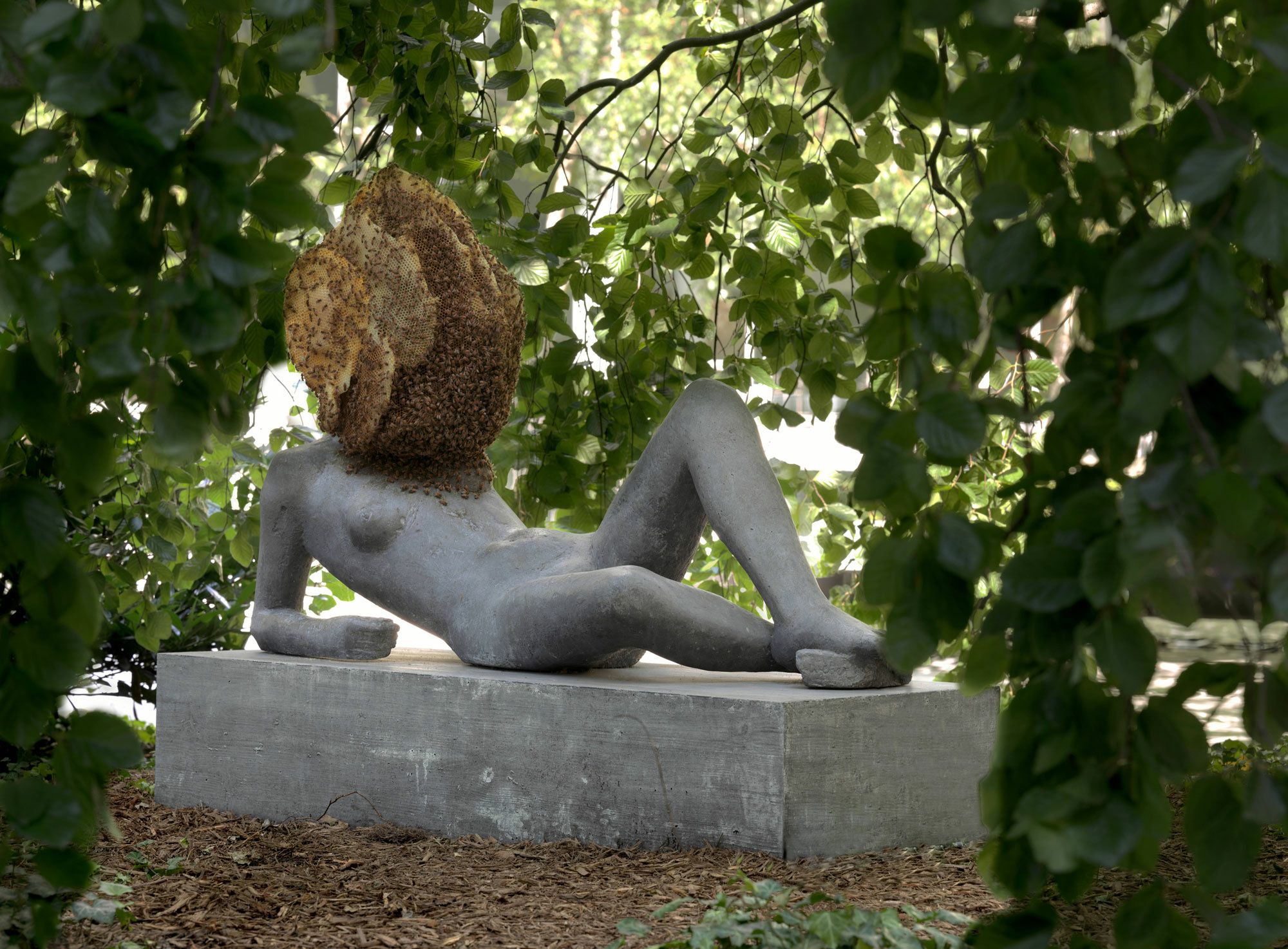
Concrete with beehive structure, wax, and live bee colony
Not on view
Untilled (Liegender Frauenakt) is a sculptural collaboration between human and insect. The work marries a concrete sculpture of a liegender Frauenakt (reclining female nude) with a self-generating natural system—a living beehive—that progressively covers the figure’s head. Untilled makes sly reference to the concepts of the “hive mentality,” or collective thought process, and self-organization. Mutating according to the life cycle of the bee colony and codependent on its environment, Untilled reimagines the notion of sculpture; rather than an inanimate object to be seen, it is a living organism to be experienced.
Since the early 1990s, Huyghe has created live situations, dynamic environments, objects, and films. His work investigates the physical and temporal experience of living beings, both human and animal—from bees to dogs to bacteria—and speculates on beings without life, such as those potentially present in evolving technologies. By letting “non-anthropocentric technics and behaviors” shape his work, Huyghe embraces what he identifies as “rhythms, automatisms . . . accidents and continuous changes.” For Huyghe, natural processes are not metaphors for creativity; they are examples of it in its most perfect form.
a text (adapted) that appears in MoMA Highlights: 375 Works from The Museum of Modern Art, New York (New York: The Museum of Modern Art, 2019)
Explore more

Pierre Huyghe
French, born 1962 12 works onlineOf what is unknown. I think that has somehow been a core of my work.” Pursuing interests in contingency and unpredictability, Huyghe creates art forms that incorporate living organisms, such as dogs, turtles, spiders, peacocks, ants, and bees.
Learn more →
Classicism
The effort to match classical antiquity—and especially the art of the ancient Greeks and Romans—in artistic style, material, or subject matter.
Learn more →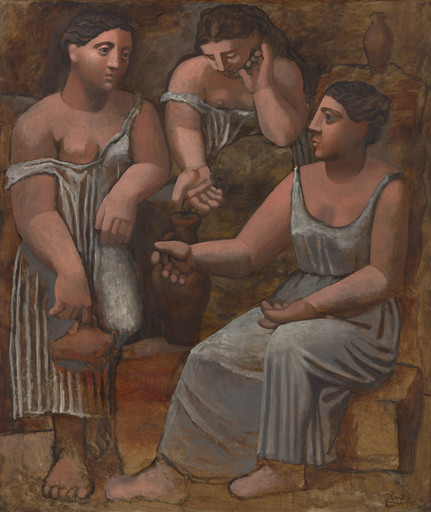
Relational aesthetics
A mode of art practice that establishes spaces, situations, or environments for a variety of social interactions. In essence, the social space or interaction becomes the work of art itself.
Learn more →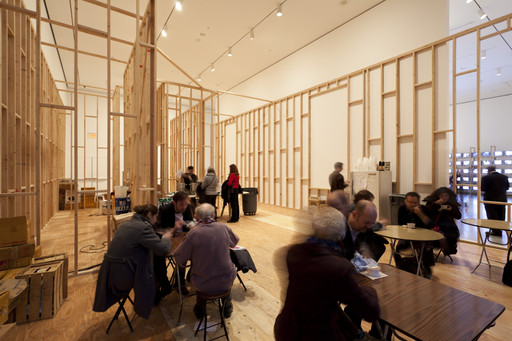




From MoMA Design Store


Installation views
We have identified this work in the following photos from our exhibition history.
Licensing
Artwork or archival images
If you would like to reproduce an image of a work of art in MoMA's collection, or an image of a MoMA publication or archival material (including installation views, checklists, and press releases), please contact Art Resource (publication in North America) or Scala Archives (publication in all other geographic locations).
Audio and film clips
MoMA licenses archival audio and select out of copyright film clips from our film collection. At this time, MoMA produced video cannot be licensed by MoMA/Scala. All requests to license archival audio or out of copyright film clips should be addressed to Scala Archives at [email protected]. Motion picture film stills cannot be licensed by MoMA/Scala. For access to motion picture film stills for research purposes, please contact the Film Study Center at [email protected]. For more information about film loans and our Circulating Film and Video Library, please visit Circulating Film and Video Library.
Text from a publication or the archives
If you would like to reproduce text from a MoMA publication, please email [email protected]. If you would like to publish text from MoMA's archival materials, please fill out this permission form and send to [email protected].
Feedback
This record is a work in progress. If you have additional information or spotted an error, please fill out this feedback form.