Gelatin silver prints mounted on panels, six parts
Not on view
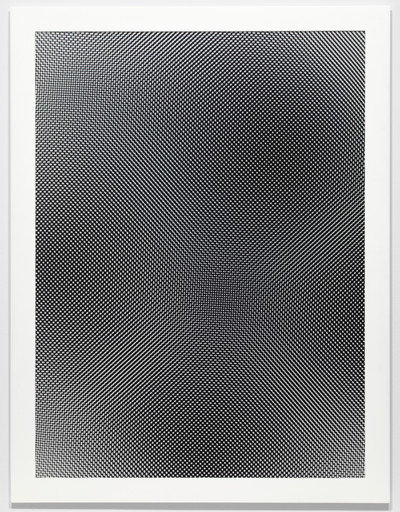
Deschenes's work expands upon photographic concepts, investigating the relationships between the mechanics of seeing, image-making processes, and modes of display. In Tilt/Swing (360° field of vision, version 1), the artist gives physical form to the concept illustrated in a 1935 drawing by Herbert Bayer, a Bauhaus-trained graphic designer, architect, and sculptor who designed The Museum of Modern Art's 1938 exhibition Bauhaus 1919–1928. In this diagram, Bayer imagined an arrangement of artworks on all six walls of a room, including the floor and ceiling, to create what he described as "an inclusive picture of all [viewpoint] possibilities," inviting the viewer to look in any direction, rather than simply straight ahead, as in a traditional gallery presentation.
Deschenes has brought Bayer's principle of "extended vision" to life with six photograms (photographic images made without using a camera) created by exposing photosensitive paper to the subtly varying light from the moon, stars, and surrounding buildings. The photograms act as hazy mirrors, reflecting fragments of their gallery setting back onto the other panels and onto the gallery itself, and at the same time accumulating traces of these settings as their surfaces oxidize in response to shifting atmospheric conditions. In this way, the work retains an ever-growing memory of the situations in which it is exhibited, belying the notion that a photograph represents a single moment that has passed.
Sites of Reason: A Selection of Recent Acquisitions, June 11–September 28, 2014.
Explore more
Cameraless photography
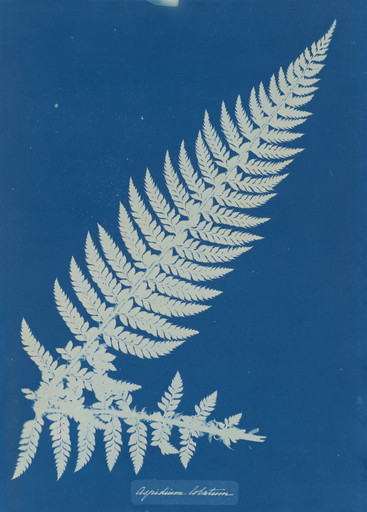
Cameraless photographs are created by manipulating light, radiation, and/or chemicals to leave an impression on photo-sensitive paper. Examples include techniques such as cyanotypes (commonly known as blueprints), radiographs (commonly known as X-rays), chemigrams, and photograms.
Learn more →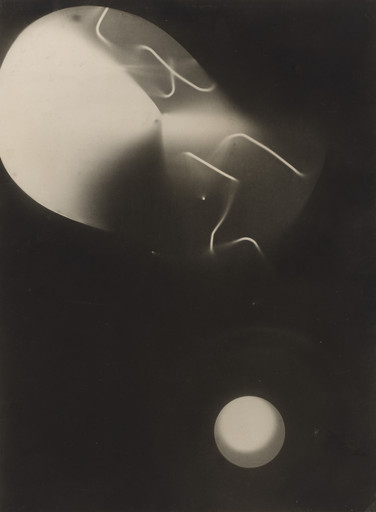
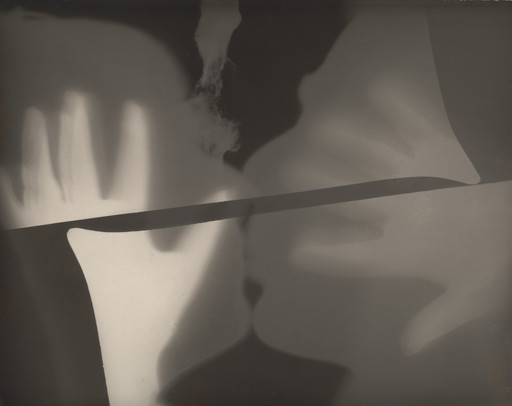
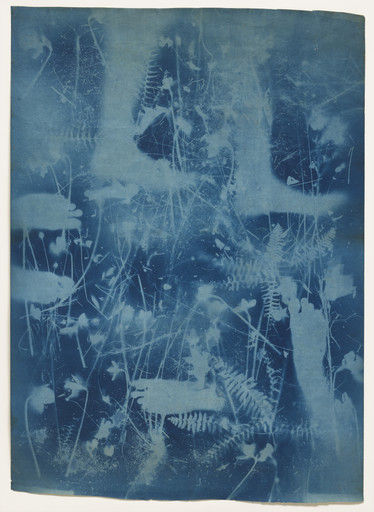
Photogram
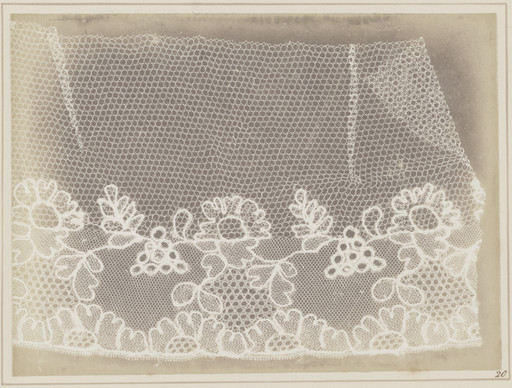
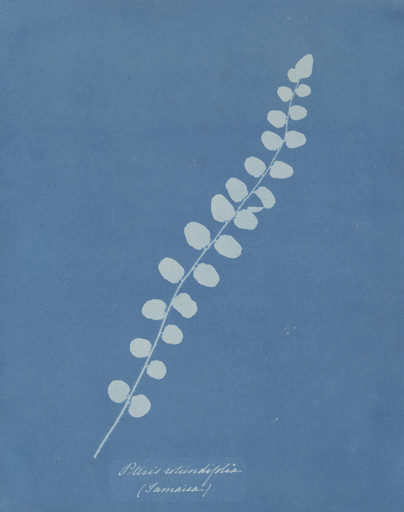
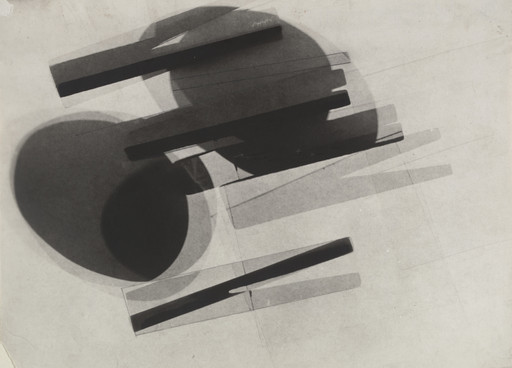
One of the earliest forms of photography, a photogram is a photograph produced without a camera, typically by placing an object directly onto a light-sensitive surface and exposing it to light.
Learn more →


From MoMA Design Store


Installation views
We have identified this work in the following photos from our exhibition history.
Licensing
Artwork or archival images
If you would like to reproduce an image of a work of art in MoMA's collection, or an image of a MoMA publication or archival material (including installation views, checklists, and press releases), please contact Art Resource (publication in North America) or Scala Archives (publication in all other geographic locations).
Audio and film clips
MoMA licenses archival audio and select out of copyright film clips from our film collection. At this time, MoMA produced video cannot be licensed by MoMA/Scala. All requests to license archival audio or out of copyright film clips should be addressed to Scala Archives at [email protected]. Motion picture film stills cannot be licensed by MoMA/Scala. For access to motion picture film stills for research purposes, please contact the Film Study Center at [email protected]. For more information about film loans and our Circulating Film and Video Library, please visit Circulating Film and Video Library.
Text from a publication or the archives
If you would like to reproduce text from a MoMA publication, please email [email protected]. If you would like to publish text from MoMA's archival materials, please fill out this permission form and send to [email protected].
Feedback
This record is a work in progress. If you have additional information or spotted an error, please fill out this feedback form.