MoMA presents the first complete North American retrospective of Romanian filmmaker Andrei Ujică, one of contemporary cinema’s finest film essayists. Whether in confronting his own nation’s dark history or in evoking his first magical encounters with the Beatles and World Cup football, Ujică—who will be present to introduce many of the screenings—interrogates the politics of image making and history writing, and the ways in which the popular culture of songs, sports, and movies insinuates itself into our collective unconscious, defines our national identities, and shapes our memories, desires, and apprehension of ourselves and the world around us. Standing as we do on a precipice of revolutionary change—change brought on by AI, a steady diet of TikTok reels, and media consolidation and collusion with agents of power—Ujică provides the intellectual honesty and moral ballast needed to counter our present-day confusion and mistrust of what we see and what we’re told.
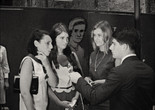
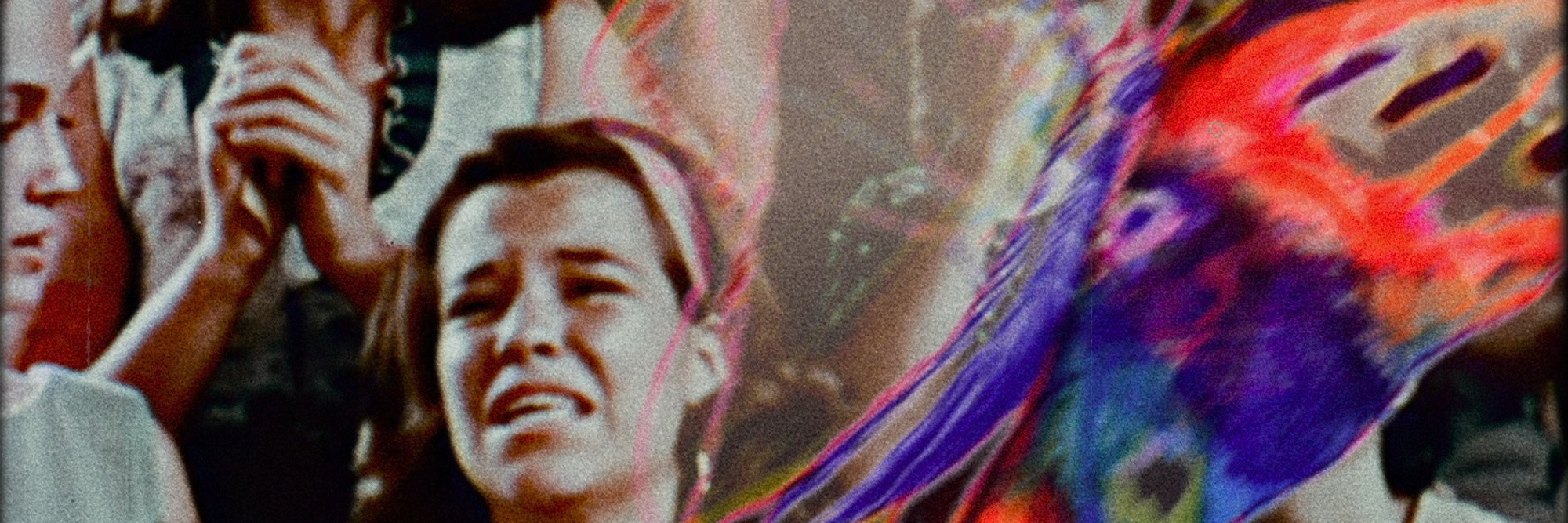
Highlights include the filmmaker presenting a work-in-progress excerpt from his latest film, Matches and Days, a meditation on how World Cup football has shaped the rhythms of his life and those of his son and grandchildren. Ujică also presents his most recent feature, TWST/Things We Said Today (2024), a personal reminiscence, created in collaboration with writer Geoffrey O’Brien, about a watershed cultural and political moment, the arrival of the Beatles in New York for their August 1965 concert at Shea Stadium. This, too, marked an inflection point in Ujică’s life as a teenager living in a Romanian village on the border of Yugoslavia, offering a transformative glimpse of freedom beyond the Iron Curtain and an epiphany about the power of art to transcend the soul-crushing drudgeries, lies, fears, and punishments of life under authoritarian rule.
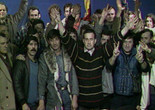
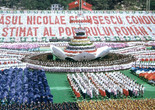
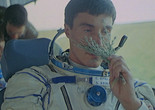
At the core of his so-called trilogy on the sudden collapse of the Soviet Union, Ujică’s magisterial The Autobiography of Nicolae Ceauşescu (2010) stitches together 24 years of state propaganda images of the Romanian dictator and his wife into an expansive vision of a nation in thrall to—and at the mercy of—a cult leader. Drawing on unseen archival material, Ujică illuminates the fissures and tensions that would lead to Ceauşescu’s downfall in December 1989. In his seminal collaboration with Harun Farocki, Videograms of a Revolution (1992), official broadcasts of the dictator’s iron rule seem an impotent sham in the face of on-the-ground, eyewitness accounts of his dramatic demise by ordinary citizens wielding video cameras. Out of the Present (1995) chronicles the 10-month orbital isolation of a Russian cosmonaut at the Mir space station while, back home, the Soviet Union imploded and a rave broke out at the Cosmonautics Pavilion of the Moscow Fair on New Year’s Eve 1991.
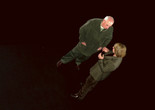
The retrospective also features 2 Pasolini (2021), which uses Pier Paolo Pasolini’s documentary Sopraluoghi in Palestina and a Tupac Shakur song to interrogate the making and remaking of history; and Unknown Quantity (2005), a theatrical version of a gallery installation in which French philosopher and cultural theorist Paul Virilio and Belarussian Nobel laureate Svetlana Alexievich, author of Voices from Chernobyl: Chronicle of the Future, grapple with the manmade tragedy of nuclear catastrophe and its implications for irrationality and fear in decision-making and technological innovation.
Organized by Joshua Siegel, Curator, and Olivia Priedite, Program Coordinator, Department of Film, The Museum of Modern Art.
Film at MoMA is made possible by CHANEL.
Additional support is provided by the Annual Film Fund. Leadership support for the Annual Film Fund is provided by The Contemporary Arts Council of The Museum of Modern Art, Agnes Gund through The International Council of The Museum of Modern Art, the Association of Independent Commercial Producers (AICP), and The Young Patrons Council of The Museum of Modern Art.
Support for Andrei Ujică is provided by the Romanian Cultural Institute.