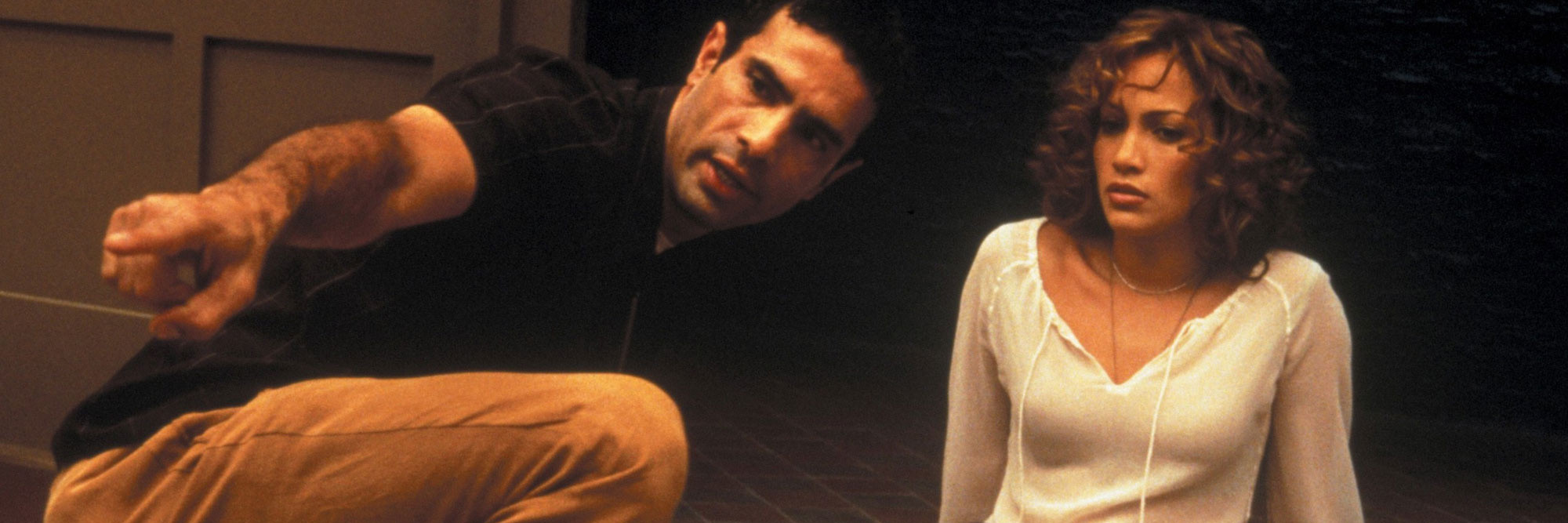
Nearly a decade after making a big small-screen splash with the video for R.E.M.’s “Losing My Religion” (which took home a whopping six MTV Music Video Awards), Tarsem Singh Dhandwar, best known by the mononym Tarsem, took the film scene by storm with his 2000 feature debut The Cell, an insinuating, operatic serial-killer thriller starring Jennifer Lopez and Vincent D’Onofrio that heralded the arrival of a major new auteur. Next came The Fall (2006), a sweeping, romantic fantasy-drama set in 1910s Hollywood, developed (and self-financed) by Tarsem over a 16-year period. Dreamlike, terrifying, and made almost entirely without the use of CGI, The Fall (which listed David Fincher and Spike Jonze among its producers) immediately acquired cult-film infamy. Tarsem’s subsequent takes on the sword-and-sandal epic (2011’s Immortals) and the tale of Snow White (2012’s Mirror Mirror) revealed a mischievous attitude toward well-trodden mythologies, while expanding his signature talent for jaw-dropping widescreen visuals, aided immensely by his long-standing collaboration with celebrated costume designer Eiko Ishioka.
This first-ever retrospective of Tarsem’s work includes his six feature films, culminating in the United States premiere of 2023’s Dear Jassi—a passion project for Tarsem, and his first Punjabi-language film. These features are presented alongside a selection of the music videos and commercials—including “Losing My Religion” and the 2004 “We Will Rock You” Pepsi ad starring Beyoncé, Pink, and Britney Spears—that cemented Tarsem’s reputation as one of the most idiosyncratic stylists working in moving images.
Organized by Dave Kehr, Curator, and Steve Macfarlane, Department Assistant, Department of Film.
Film at MoMA is made possible by CHANEL.
Additional support is provided by the Annual Film Fund. Leadership support for the Annual Film Fund is provided by The Contemporary Arts Council of The Museum of Modern Art, Agnes Gund through The International Council of The Museum of Modern Art, the Association of Independent Commercial Producers (AICP), and The Young Patrons Council of The Museum of Modern Art.