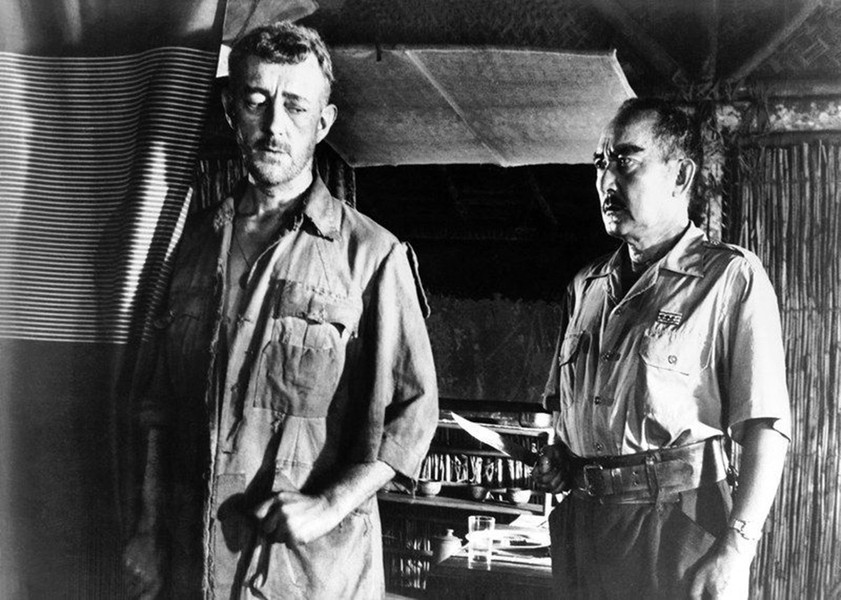
“East is East, and West is West, and never the twain shall meet.” Rudyard Kipling’s prophecy had existed for barely a generation when a 27-year-old from Chiba, Japan, proved it wrong. In February of 1914 (only days after the debut of Charles Chaplin), Sessue Hayakawa (1886–1973) appeared in O Mimi San, a two-reel short produced by Thomas Ince, capitalizing on the exotic appeal of Gilbert and Sullivan’s The Mikado. In the course of over 60 silent films, Hayakawa forged a career unparalleled in American cinema. Asian and Black actors and actresses were not permitted by Hollywood racial restraints to be sexually appealing and available to white actors of the opposite gender. The careers of talents such as Anna May Wong and Paul Robeson were blighted by a system that reflected the prejudice and ignorance of the larger society. Although Hayakawa was too often portrayed as sinister, he stood alone in managing to subvert prevailing attitudes, and, in fact, much of his success was attributed to his erotic appeal.
An actor of great intelligence and subtlety, Hayakawa used his own independent productions to bridge two cultures, presenting the West with an authentic portrayal of the East. After the advent of sound, he had a distinguished career in Japan and France (where he spent World War II) before returning to English-language films following the war. Daisuke Miyao, assistant professor of Japanese literature and film at the University of Oregon and author of Sessue Hayakawa: Silent Cinema and Transnational Stardom (Duke University Press), will introduce several films in this series.
Organized by Charles Silver, Associate Curator, Department of Film.
Special thanks to Daisuke Miyao. Thanks also to Mike Mashon (The Library of Congress), Caroline Yeager (George Eastman House), Martin Scorsese, Barry Allen (Paramount Pictures), and Mark McElhatten.