On June 10, 1915, the Astor Theater in Times Square presented the first documented public exhibition of three-dimensional motion pictures. In the century since, 3-D filmmaking has gone through at least three boom-and-bust cycles, but the process is still with us and, thanks to the new digital technologies, is in many ways better than ever.
Perhaps the most fertile of the 3-D fads was that of 1953—55, when an advance in technology (clear polarized lenses replaced the red and green filters of the first 3-D glasses) aligned with the desperate need of the studios to offer spectacles beyond the reach of the movies’ new rival, television. Fifty feature films and countless shorts were produced in those years, but just as 3-D was graduating from low-budget exploitation films (such as the notorious Robot Monster) to major studio productions with A-list stars and directors, the market evaporated—not because audiences disliked the new process (as the box office figures demonstrate) but because it was too difficult to keep two projectors in perfect synchronization, as the technology demanded.
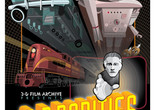
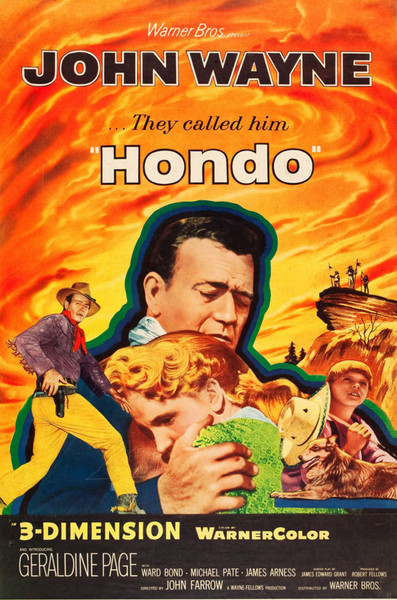
With digital projection, however, those problems have been largely eliminated. The last few years have seen a resurgence of “golden age” 3-D films, remastered from original dual-strip elements for digital presentation. Our centennial celebration begins with the New York digital "re-premiere" of perhaps the most sought-after of the golden age stereoscopic films, John Farrow’s 1954 Western Hondo, starring John Wayne and Geraldine Page, presented in a newly scanned DCP courtesy of Gretchen Wayne and Batjac Films. This series also includes a brand-new scan of George Sidney’s 1953 MGM musical version of Cole Porter’s Kiss Me Kate, as restored from the original Ansco Color negative by Ned Price and his associates at Warner Bros. Motion Picture Imaging; and three presentations of 3-D Rarities, a collection of historically significant and/or plain silly stereoscopic films newly preserved by Bob Furmanek and Greg Kintz of the 3-D Film Archive.
Organized by Dave Kehr, Adjunct Curator, Department of Film.
Special thanks to Gretchen Wayne, Ned Price, Bob Furmanek, and Greg Kintz.