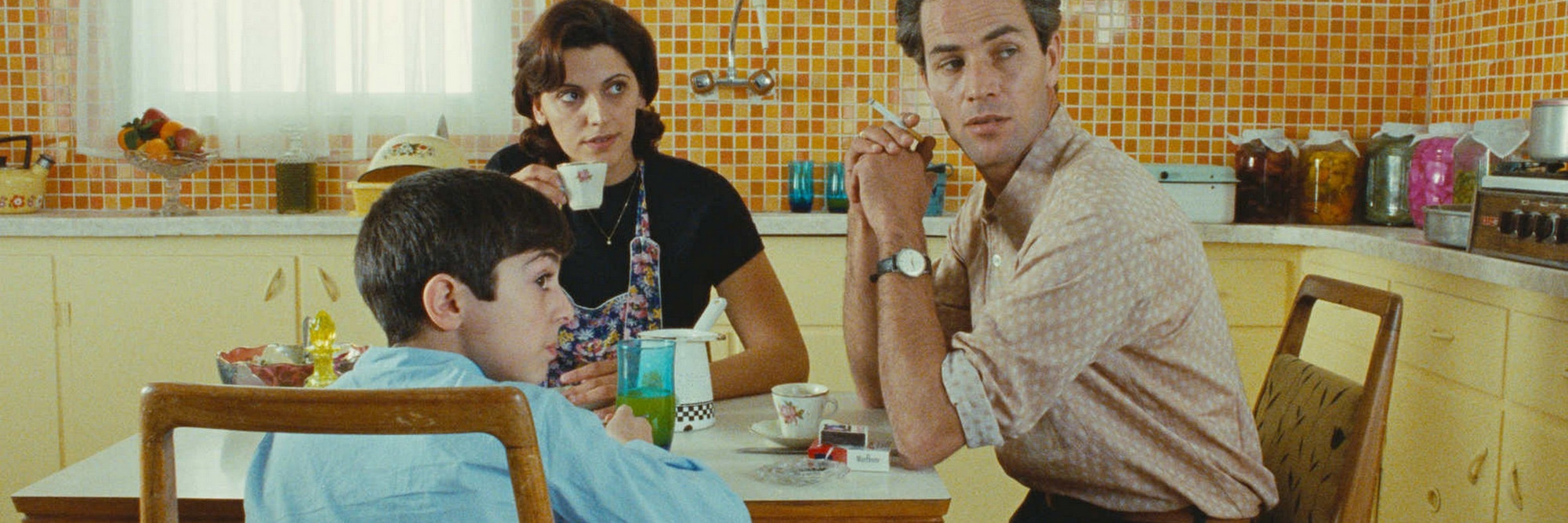
This three-part program aims to map the largely unknown heritage of personal, artistic, and sometimes experimental cinema from the Arab world. In the 1960s, galvanized by a broader global vanguard of countercultural experimentation in poetry, literature, and theater, filmmakers began to craft a language and form that broke away from established conventions and commercial considerations, ultimately clearing the ground for boldly subjective cinematic expressions. Much of the inventive, daring, and formally challenging filmmaking at work today in the Arab world has its roots—both acknowledged and not—in this pioneering drive to experiment with narrative, representation, and the production of images.
This first installment of Mapping Subjectivity is organized in clusters that reflect thematic and aesthetic kinship rather than considerations of chronology and geography, specifically highlighting intangible connections and conversations between works. Showcasing thematic areas that can loosely be described as “Mummies, Memories, and Mischief,” these films and videos—which hail from Algeria, Egypt, Iraq, Lebanon, Morocco, Palestine, and Syria—range from acclaimed masterworks to the rare and recently rediscovered. Together, they are sure to inspire new ways of thinking about and appreciating modernity in art and cinema from the Arab world. All films are in Arabic with English subtitles, unless otherwise noted.
This exhibition has been co-organized by The Museum of Modern Art and ArteEast. It is curated by Jytte Jensen, Curator, Department of Film, MoMA, and Rasha Salti, Curator and Artistic Director, ArteEast.
This exhibition is made possible through the generous support of averda.
The program is organized in association with the Abu Dhabi Film Festival. We are grateful for additional support from the Cultural Services of the French Embassy in the United States.
ArteEast receives additional funding from The Andy Warhol Foundation for the Visual Arts, the New York State Council on the Arts, and New York City’s Department of Cultural Affairs.