P.S.1 Contemporary Art Center's National Projects showcase the work of emerging artists distinguished by the site-specific, process-oriented, or interactive nature of their work. The 2005 fall season features five artists whose works will be on view from October 30, 2005 through February 2, 2006.
Dianna Frid (b. 1967, Mexico City) creates multimedia work influenced by systems of cartography, astronomy, botany, and geology. Using everyday materials such as tinfoil, masking tape, and cardboard to express these complex sciences, Frid emphasizes the malleability of such concrete ideas, transforming them into fragile, ephemeral objects. Apparent to the viewer is the manual work that goes into each of Frid's pieces, invoking a craft-like sensibility that contradicts the sleek technology associated with the scientific world. With Frid, however, this contradiction becomes a clear statement of the tenuous relationship between the factual and the imaginary, and the central idea behind her work.
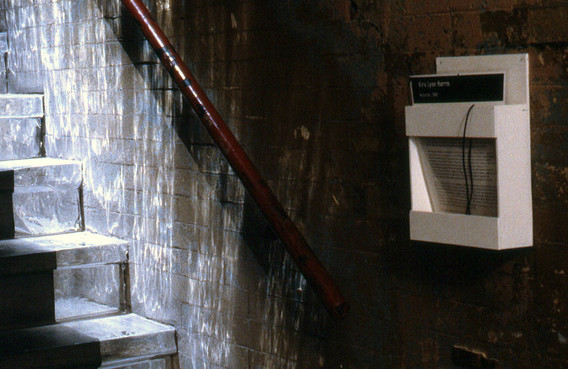
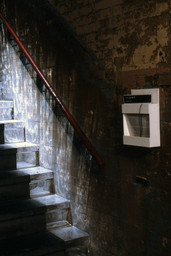
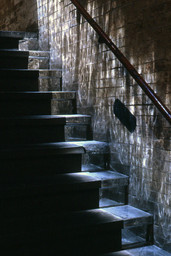
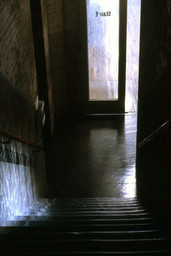
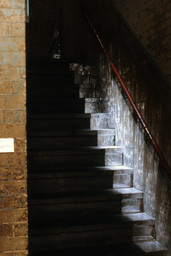
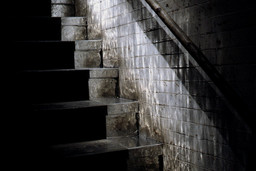
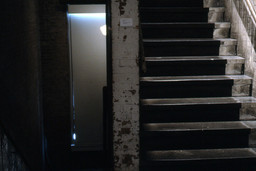
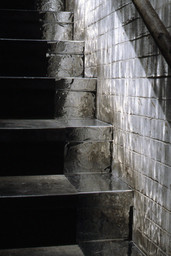
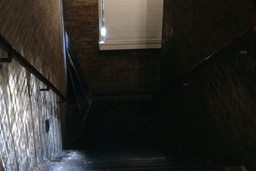
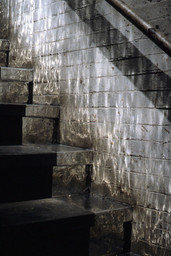
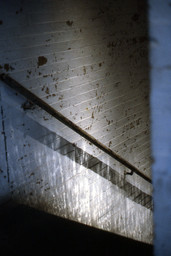
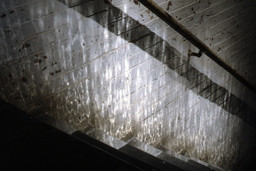
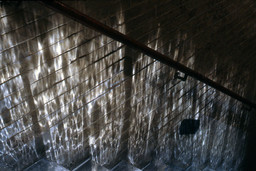
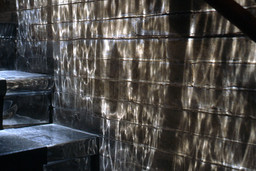
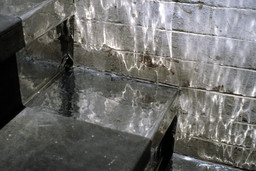
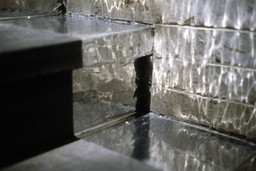
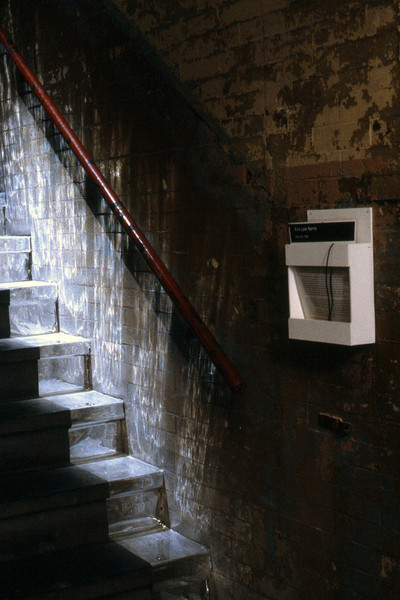
Kira Lynn Harris' (b.1965, Los Angeles) installation, Waterfall, is intended to call the viewer's attention to the building's native architecture. Located in P.S.1's south stairwell, the installation's silver Mylar streams down the steps to either side of the viewer, illuminated by simple track lighting from above. In the corners of the landings, strips of Mylar are clustered together to open and deepen otherwise terminal spaces. Notably, Harris' shiny, reflective materials highlight the building's signature brick walls, casting a new glow on history.
Mike Cloud (b.1974, Chicago) experiments with a wide variety of materials, forming a diverse body of paintings and photographs that incorporate unique elements of collage. Both abstract and representational, Cloud's collages sometimes reference the work of older artists. Recent works feature a series of abstract paintings exhibited alongside a selection of Diane Arbus hardcover catalogues, in which some of Arbus' most arresting imagery has been manipulated via Cloud's collage technique. For P.S.1, Cloud will show eleven works in the museum's second floor project galleries.
Jay Heikes (b. 1975, Princeton, New Jersey) makes drawings, videos, and sculptures that critically engage popular culture and art history with a viewpoint that is simultaneously nostalgic and ironic. In the installation at P.S.1, The Hill Upstairs, Heikes constructs a dropped, or false, ceiling composed of the standard grid-lattice and fiberboard tiles available at any home improvement store. The ceiling is incompletely filled with tiles so that, at one edge, the grid-lattice allows a view above up to the actual, permanent ceiling. Between the actual ceiling and his incomplete dropped addition, Heikes has wired a simple, standard florescent light, which spills bluish light out the incomplete sides of the dropped section. Aside from the visual play between light and structure, the most prominent aspect of this piece is a stain, made from pouring coffee and beet juice on the tiles from above, which will pollute the pristine, white ceiling.
Johannes VanDerBeeks' (b. 1982, Baltimore) sculptures delicately combine representations of real and imagined actions, bodies, and sites. A fascination with event perception pervades his constructions—culturally readable signs, symbols, and forms are reconfigured to produce an impossible reality, but one that captures the sense of mystery behind the lived realities in which we firmly believe. VanDerBeek's project at P.S.1 comprises a large-scale investigation into the multidimensionality of events. Titled Newspaper Ruins (2005), the piece is a vast model of architectural ruins created from newspaper. From a distance, the mass of paper appears to be a pile of trash, but upon closer inspection, intricate networks of collaged images begin to read as walls, and rolled-up bodies of text form columns and other support structures in a state of erosion and collapse.