Rania Stephan

Oct 15, 2011–Jul 1, 2012

MoMA PS1

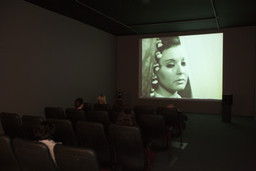
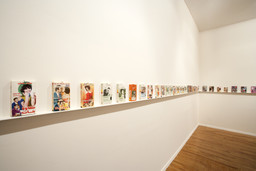
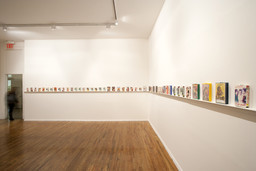
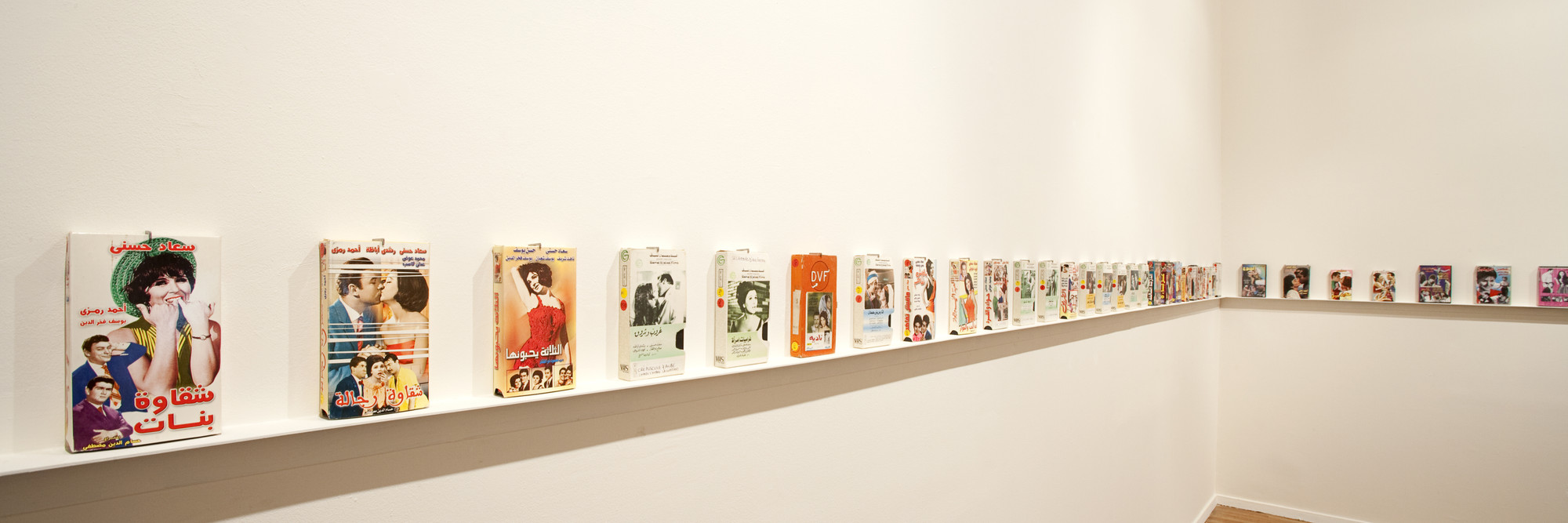
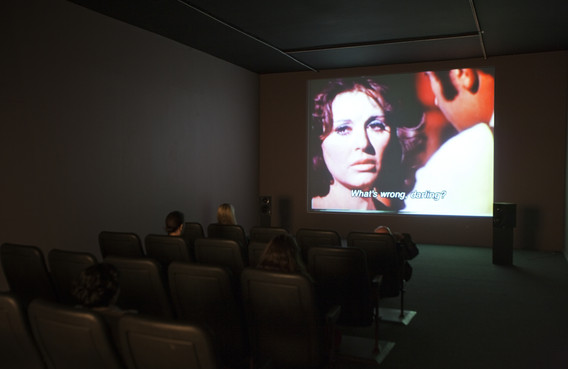
Installation view of Rania Stephan at MoMA PS1, October 15, 2011–July 1, 2012. Photo: Matthew Septimus

Rania Stephan (Lebanese, b. 1960) has been working with film for the last two decades. Stephan's body of work may at first appear perplexingly heterogeneous—ranging from video art to raw documentary—yet its underlying coherence stems from her country of origin, Lebanon, which stands at a crossroads of cultures and influences, East and West, and remains a place of both exile and return. Stephan focuses on what she calls "the archaeology of images, identity, and memory."

This presentation of Stephan's most recent work, The Three Disappearances of Soad Hosni (2011), is the first in a New York institution, following its premier at the 10th Sharjah Biennial (2011), where it won The Artist Prize. It is an elegiac installation about the career and mythology of the renowned Egyptian actress and star Soad Hosni (1943-2001)—who, in 2001, allegedly committed suicide in London. Structured like a three-act classical tragedy, The Three Disappearances of Soad Hosni appropriates footage from more than sixty VHS copies of the feature films in which Hosni starred between 1959 and 1991. By montaging scenes from the format in which most of Hosni's fans experienced her films, Stephan proposes a singular and poetic rewriting of a lost golden age of Egyptian cinema. Irreverent, playful, and serious, Stephan's work reexamines the legacy of complex representations of the modern Arab woman.

Rania Stephan is organized by Klaus Biesenbach, Director, MoMA PS1 and Chief Curator at Large, The Museum of Modern Art.
The Three Disappearances of Soad Hosni was commissioned by Sharjah Art Foundation, produced by AFAC, JOUN Films, The Post Office, and Forward Productions with the support from the CNC, FIDLAB, and Serpentine Gallery, London.

Artist

Installation images

How we identified these works

In 2018–19, MoMA collaborated with Google Arts & Culture Lab on a project using machine learning to identify artworks in installation photos. That project has concluded, and works are now being identified by MoMA staff.

If you notice an error, please contact us at [email protected].

Licensing

If you would like to reproduce an image of a work of art in MoMA’s collection, or an image of a MoMA publication or archival material (including installation views, checklists, and press releases), please contact Art Resource (publication in North America) or Scala Archives (publication in all other geographic locations).

MoMA licenses archival audio and select out of copyright film clips from our film collection. At this time, MoMA produced video cannot be licensed by MoMA/Scala. All requests to license archival audio or out of copyright film clips should be addressed to Scala Archives at [email protected]. Motion picture film stills cannot be licensed by MoMA/Scala. For access to motion picture film stills for research purposes, please contact the Film Study Center at [email protected]. For more information about film loans and our Circulating Film and Video Library, please visit https://www.moma.org/research/circulating-film.

If you would like to reproduce text from a MoMA publication, please email [email protected]. If you would like to publish text from MoMA’s archival materials, please fill out this permission form and send to [email protected].

Feedback

This record is a work in progress. If you have additional information or spotted an error, please send feedback to [email protected].