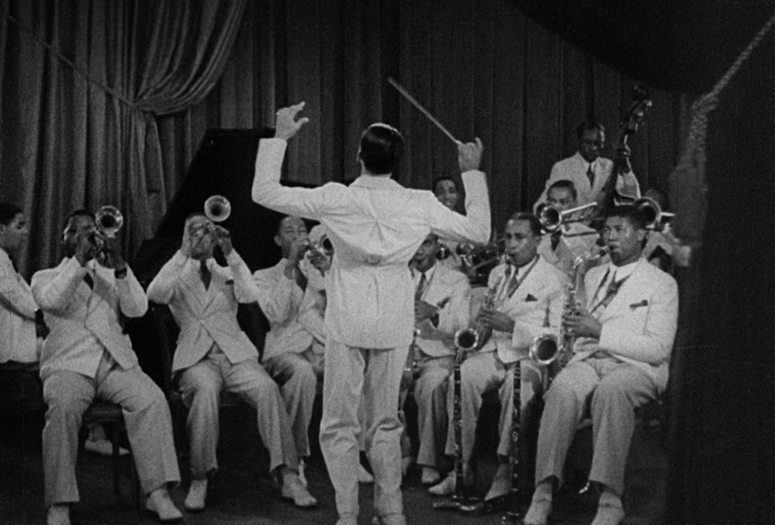
Screen Song – Popular Melodies. 1932. DCP. 8 min.
Brotherly Love. 1936. DCP. 6 min.
When Yuba Plays the Rhumba on the Tuba. 1932. DCP. 8 min.
The Old Man of the Mountain. 1933. DCP. 6 min.
Time On My Hands. 1934. DCP. 7 min.
A Language All My Own. 1935. DCP. 6 min.
Honest Love and True. 1938. DCP. 8 min. (Restored by Lobster Films)
After the Rotoscope, Max Fleischer’s most successful invention was the “follow the bouncing ball” technique that he created for the “Screen Song” series of cartoons and patented in 1926. Audiences sang along with lyrics that appeared on-screen as a white dot bounced above the words to help them keep the tempo. Although the bouncing ball faded away in the late 1930s, the studio maintained its association with jazz musicians and pop performers, such as the Mills Brothers (When Yuba Plays the Rhumba on the Tuba), Cab Calloway (The Old Man of the Mountain), and Ethel Merman (Time on My Hands). Betty Boop, voiced by Mae Questel, even handles a chorus in quite respectable Japanese in the 1935 A Language All My Own.