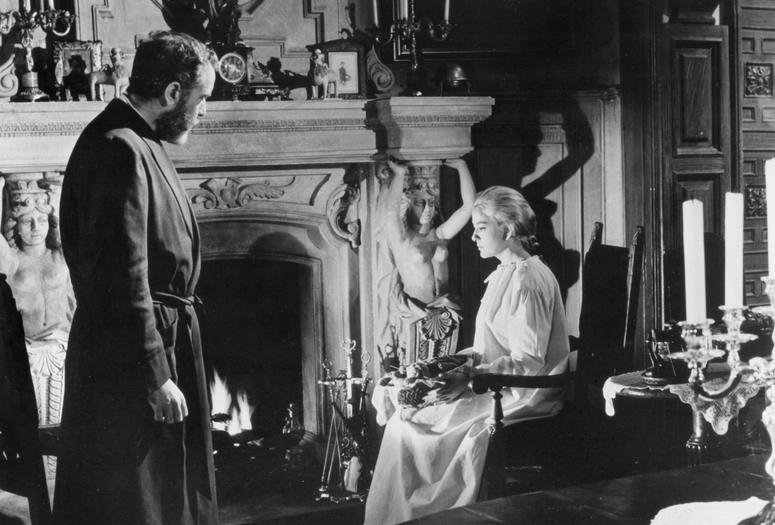
Viridiana. 1961. Spain/Mexico. Directed by Luis Buñuel. Screenplay by Buñuel, Julio Alejandro. With Silvia Pinal, Francisco Rabal, Fernando Rey. In Spanish; English subtitles. 35mm. 95 min.
In one of Buñuel’s masterpieces, a novice nun’s efforts to provide sanctuary for the less fortunate on her wealthy uncle’s estate brings her in contact with the corrosive realities of poverty and the perils of sexual desire. “Along with Nazarin, this is Buñuel’s indictment of the condescension of charity. In both works, Buñuel creates Sadean parables about impossibly altruistic souls interacting tragically with a world full of appetite and impulse” (Guillermo del Toro).
In 1960, Buñuel accepted General Franco’s offer to make a film in Spain for the first time since his exile in the 1930s, and of course he repaid him by creating the most violent assault on the institutions of his native country imaginable. The Mexican star Siliva Pinal (the film was produced by her husband, Gustavo Alatriste) plays the title character, a novice nun who is summoned to the country home of her reclusive uncle (Fernando Rey, in his first appearance for Buñuel). He plans an elaborate assault on her but loses his nerve and kills himself, leaving his estate divided between Viridiana and his illegitimate son Jorge (Francisco Rabal). Inviting the local poor to share in the wealth, Viridiana sees an occasion for Christian charity; Francisco summons up a bacchanal that concludes with a studiously profane version of Leonardo’s Last Supper – a scene that didn’t go down well with the Vatican, which promptly condemned the film as blasphemous. Franco banned the film in Spain, where it was not shown until 1977. “An ugly, depressing view of life,” Bosley Crowther, New York Times