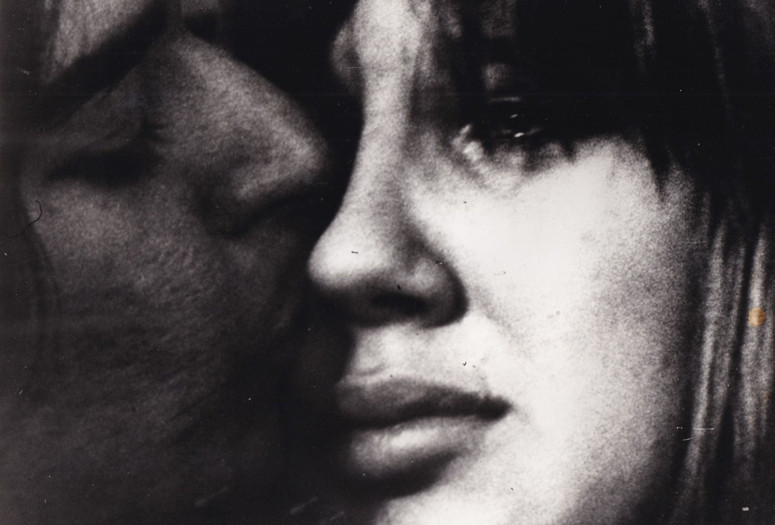
Warrendale. 1967. Canada. Directed by Allan King. 16mm. 105 min.
King’s award-winning documentary, about a residential treatment center for emotionally disturbed children in a suburb of Toronto, Canada, was shot over a five-week period in 1966 and edited from 40 hours of footage. Stating that “the satisfaction and the purpose of filmmaking is to discover for myself the meaning of a given experience,” the director came to view the controversial Warrendale facility as “both an experiment and a frontier.” Embedding themselves with the young people “whose lives have gone off the tracks…so far from the normal that it is impossible for them to live in the usual family community,” and the staff tending to them, the filmmakers produced a celebrated landmark of cinéma vérité.
The film was presented in a series titled Selections from the Robert Flaherty International Film Seminar in October 1967. In her introduction, Mancia declared, “We have not singled out Warrendale only because it has an important, shattering story to tell us. Nor just because it is a model of the best in the technique of direct cinema. We feel that the film goes beyond its subject matter and technique. Jean-Luc Godard once wrote, ‘My starting point is documentary, to which I try to give the truth of fiction.’ A revealing insight into the work of Godard but also a statement which, I feel, applies to the work of Allan King. From the facts of Warrendale, Mr. King has given us a film of memorable images, about beautiful, tortured young people, whose anxieties and despair we can all relate to. Warrendale is a powerful human document. I hope all of you will find your own personal, intimate meaning.” Following the screening, Warrendale was acquired for the Museum’s collection.