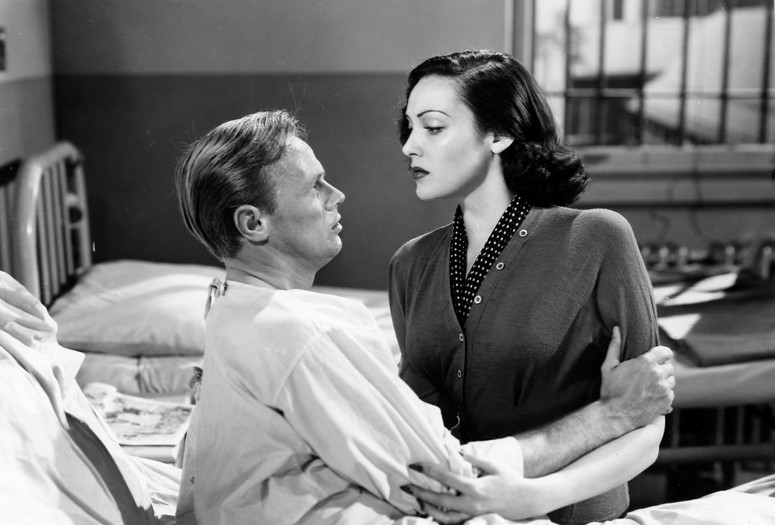
No Way Out. 1950. USA. Directed by Joseph L. Mankiewicz. Written by Joseph L. Mankiewicz and Lesser Samuels. With Richard Widmark, Linda Darnell, Stephen McNally, Sidney Poitier. DCP. 106 min.
Fascinating both in its courage and its compromises, Joseph L. Mankiewicz’s 1950 film was by far the most impassioned denunciation of racism to come out of a Hollywood studio up until its time, though it gets bogged down in plot mechanics meant to appeal to white audiences. In his feature film debut, Sidney Poitier is a young doctor appointed to a Chicago prison ward as his first assignment; when a neighborhood tough (top-billed Richard Widmark) wounded in a hold-up refuses to be treated by him, the tension escalates into violence. Mankiewicz adds a white identification figure—a senior doctor played by Stephen McNally—who is another of those smug explainers who mar many of his films, and Linda Darnell has been brought in seemingly as some kind of love interest, though who’s interest she’s supposed to be is left quite vague. Darnell, though, offers an even tougher version of her calculating postwar character: the cynical beauty from the wrong side of the tracks. The film’s most original scene, reportedly suggested by screenwriter Philip Yordan, shows Poitier at home with his mother (Mildred Joanne Smith), sister (Ruby Dee), and brother (Ossie Davis), establishing a social and familial context routinely denied Black characters.