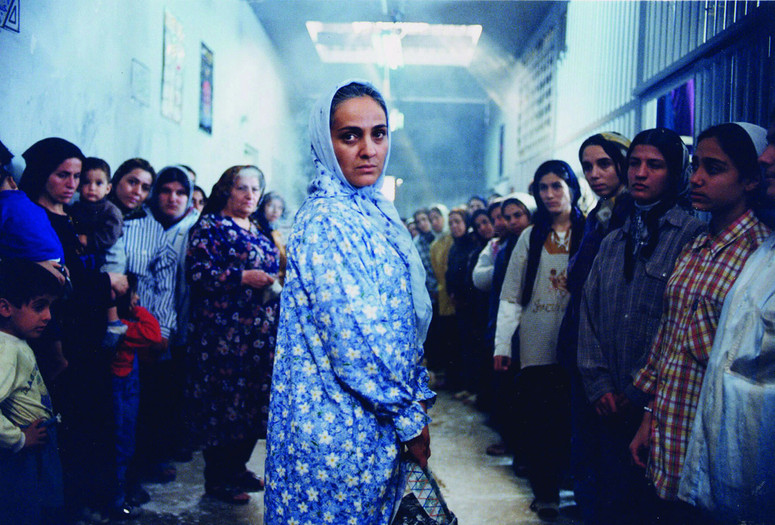
This work is by an artist from a nation whose citizens were being denied entry into the United States, according to a presidential executive order issued on January 27, 2017. This is one of several such artworks from the Museum's collection installed throughout the fifth-floor galleries and in the Agnes Gund Garden Lobby, and presented in our theaters, to affirm the ideals of welcome and freedom as vital to this Museum, as they are to the US.
Zendan-e zanan (Women’s Prison). 2002. Iran. Directed by Manijeh Hekmat. Screenplay by Farid Mostafavi. In Persian; English subtitles. 106 min.
With Roya Nonahali, Roya Taymourian, Pegah Ahangarani. Manijeh Hekmat based her directing debut on the harrowing stories of Iranian women prisoners who were abused by their husbands and stepfathers; who endured rape, prostitution, and drug abuse; who experienced devastating personal loss during the Iran-Iraq war; and who were persecuted for their political beliefs after the Revolution. Deemed too controversial, Women's Prison was banned for more than a year by Iranian authorities, who even forbade its screening to foreigners at Tehran's 2002 Fajr Film Festival. Hekmat risked her own imprisonment by smuggling copies of her director's cut to international festival programmers, and the film had its world premiere in competition at the Venice Film Festival. As Alissa Simon reported in Senses of Cinema in 2002, "With pressure from reformists in the Iranian government and support from many members of the Majlis and President Khatami himself, a censored version of Women’s Prison finally opened in Tehran on August 7, 2002. In spite of not being allowed to have television teasers, the film set new box office records for an opening in the post-Revolutionary era."