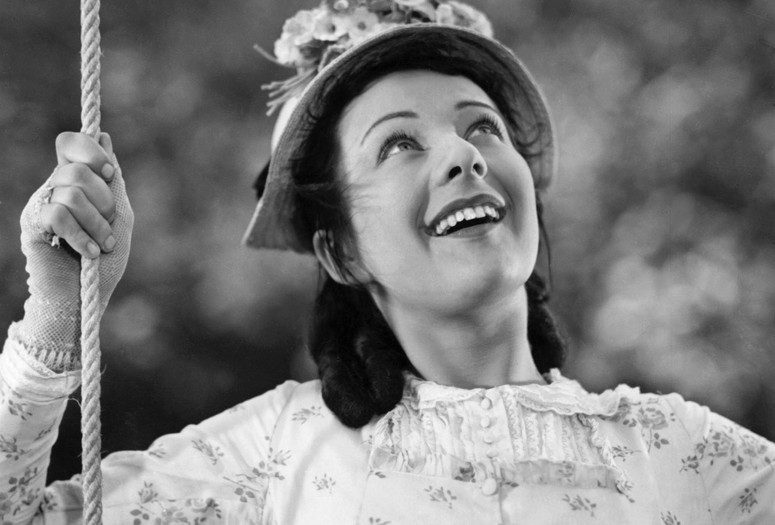
Partie de campagne (A Day in the Country). 1946. France. Directed by Jean Renoir. Screenplay by Renoir, based on a story by Guy de Maupassant. With
Sylvia Bataille, Georges D’Arnoux, Jane Marken, André Gabriello, Jacques B. Brunius. 2K digital restoration. In French; English subtitles. 40 min.
A Day in the Country is one of Jean Renoir’s masterpieces, as much a tribute to the Impressionist paintings of his father, Pierre-Auguste, as it is to the Guy de Maupassant short story on which it’s based. A bittersweet pastoral in which two young men romance a mother and daughter during a picnic on the outskirts of Paris, the film was left unedited in 1936 when Renoir moved on to shoot The Lower Depths. It wasn’t until 10 years later, in 1946, that Renoir’s collaborators shaped the film from the existing material, thanks to the perseverance of his producer, Pierre Braunberger. By then, to audiences recovering from the Occupation and the war, this idyllic image of France must have seemed a distant dream. Braunberger would call A Day in the Country “one of the films that, of all my work, is undoubtedly closest to my heart....This film is a true love story. Renoir was deeply in love with the actress Sylvia Bataille, and he was my best friend....Many talented people worked on [the production]: Yves Allégret, Jacques Becker, Claude Heymann, Henri Cartier-Bresson as set photographer, Luchino Visconti as assistant, and Claude Renoir as cinematographer.”
Un tournage à la campagne. 1994. France. Directed by Alain Fleischer. With Jean Renoir, Sylvia Bataille, Jane Marken. DCP. In French; English subtitles. 80 min.
A vital record of prewar French cinema production and of Jean Renoir at work, this film was constructed from some four and a half hours of outtakes from A Day in the Country that were deposited at the Cinémathèque française in 1962. Producer Pierre Braunberger would observe that, in 1936, when the film was shot (though left unfinished), “Renoir, at that time, was a nobody. This may seem unimaginable today, now that he is recognized as a great artist. Film criticism, as we understand it today, practically didn’t exist. There was only one kind of cinema: so-called commercial cinema. The other kind of cinema—Renoir’s—didn’t officially exist....Renoir was no more than what the New Wave was in its very early days.”