Charlotte et son Jules (Charlotte and Her Boyfriend). 1958. France. Written and directed by Jean-Luc Godard. With Jean-Paul Belmondo, Anne Collette. 2K digital restoration. In French; English subtitles. 13 min.
Jean-Paul Belmondo, making his movie debut, plays Jules, the vain and agitated lover who goes on a ridiculous tirade when his ex-girlfriend (played by Jean-Luc Godard’s then-girlfriend Anne Collette) shows up at his cheap Parisian hotel room. Pierre Braunberger, who would later produce Vivre sa vie, recalled, “I was the one who had suggested Belmondo to Godard. For that screenplay, I wanted a very masculine guy. I’d seen Belmondo play a Molière at the Conservatoire or the Théâtre Édouard VII. I was thrilled and told Godard, ‘That’s the man we need.’ It was because he was late [to the set] that Godard recited the Charlotte and Her Boyfriend monologue in his place. Belmondo had a narrow escape—he might not have ended up starring in Breathless and Pierrot le Fou! I immediately realized that in Jean-Luc Godard, I was dealing with a truly remarkable creator.”
Tous les garçons s’appellent Patrick (All the Boys Are Called Patrick). 1959. France. Directed by Jean-Luc Godard. Screenplay by Éric Rohmer. With Jean-Claude Brialy, Nicole Berger, Anne Colette. 2K digital restoration. In French; English subtitles. 20 min.
All the Boys Are Called Patrick, the film that almost ruined Jean-Luc Godard’s friendship with Éric Rohmer (owing to the radical changes he made to Rohmer’s script), stars Jean-Claude Brialy as a pickup artist who seduces two young Parisian women in rapid succession in Luxembourg Gardens, unaware that Charlotte (played by Godard’s then-girlfriend Anne Collette) and Véronique (played by producer Pierre Braunberger’s stepdaughter Nicole Berger) are roommates. The film is rife with quotation, as Godard biographer Richard Brody noted, from Hegel’s Aesthetics and “Mizoguchi Kurosawa” to a Matisse postcard: “All the Boys Are Called Patrick initiates the vast array of inside jokes, the personal museum of private associations, that would play a surprisingly large role in Godard’s major films to come.” The following year, Braunberger would produce another of Godard’s short films, Charlotte et son Jules, again starring Collette.
Vivre sa vie (My Life to Live). 1962. France. Written and directed by Jean-Luc Godard. With Anna Karina, Sady Rebbot, André S. Labarthe, Brice Parain. 35mm. In French; English subtitles. 85 min.
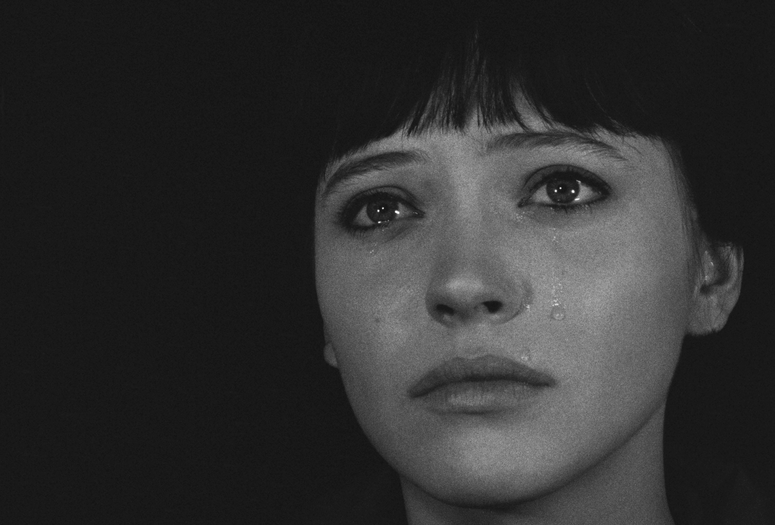
In a letter to Helen Scott, François Truffaut wrote, “I saw Vivre sa vie again the other day and, my God, I don’t often cry in the cinema.” In early 1962, a few months after their playful cameo as silent film comedians in Agnès Varda’s Cléo from 5 to 7, Jean-Luc Godard and Anna Karina teamed up for the fourth time on Vivre sa vie, a radical departure from seemingly lighter work like Breathless and A Woman Is a Woman. Shot in less than a month, the film is a luminous and melancholic meditation on prostitution and exploitation, with Karina playing the Zolaesque Nana—an anagram of Anna, as critic Richard Brody pointed out—in a series of naturalistic tableaux vivants that mark her passage from amateur sex worker to tragic figure, and in long, deliberately composed portrait shots that do for Karina what Jean Renoir did for Catherine Hessling in Nana (1927) and what Carl Theodor Dreyer did for Maria Falconetti in The Passion of Joan of Arc (1928).
Program approx. 118 min.