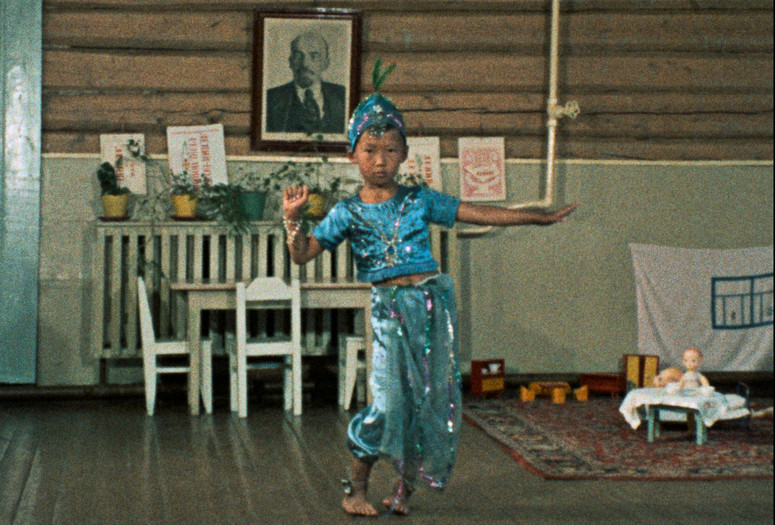
Imperium. 2026. Germany/Italy/France/Lithuania. Written and directed by Sergei Loznitsa. North American premiere. DCP courtesy Coproduction Office. In Russian, Ukrainian, Kazakh, Uzbek, Georgian, other indigenous languages of the Eastern Soviet Union; English subtitles. 175 min.
MoMA presents the North American premiere of Imperium, Sergei Loznitsa’s newest work, an epic vision of the Soviet Union drawn from footage shot in the early 1970s by an Italian communist film crew. Films across the century—including Dziga Vertov’s A Sixth Part of the World (1926), Mikhail Kalatozov’s Salt for Svanetia (1930), and Uldis Brauns, Biruta Veldre, and Laima Zurgina’s 235 000 000 (1967)—have tried to capture the vast and diverse empire that was the Soviet Union, from the Saami people in the icy northern climes to the heat-tortured Uzbek in the landlocked south. Intending to make a monumental television series as a corrective to the Western image of the USSR, the film crew, perhaps by virtue of their Leninist-Marxist bona fides, was granted access to the farthest reaches of the territory by Soviet authorities, from the Arctic Circle and the Caucasus Mountains to the deserts of Central Asia. (Somehow the gulags were closed off to them.) In the end, only a few episodes were broadcast, and only now, 55 years later, has Loznitsa mined the archives for a more multifaceted vision of “A Sixth Part of the World,” the bombastic phrase coined by Imperial Russians and then taken up after the First World War by a “newer,” “more efficient,” and “happier” Soviet empire. Imperium is a densely woven tapestry of contrasts and contradictions that allows subtle critiques of colonialism, collectivization, and basic human want to creep in: the expression of Indigenous folkloric traditions and languages in the face of cultural erasure (including Ukrainian speech, as Loznitsa wryly notes), of fashion shows and department stores offering unattainable luxury goods, and of Christmas ceremonies in Russian Orthodox churches and prayer in Islamic mosques despite the official policy of atheism in this supposedly “godless utopia.” What astonishes is not so much that the Kremlin was able to hold it all together for so long but that ancient customs and peoples stubbornly resisted some 75 years of forced labor, dogma, and terror. Russia today is another story altogether.