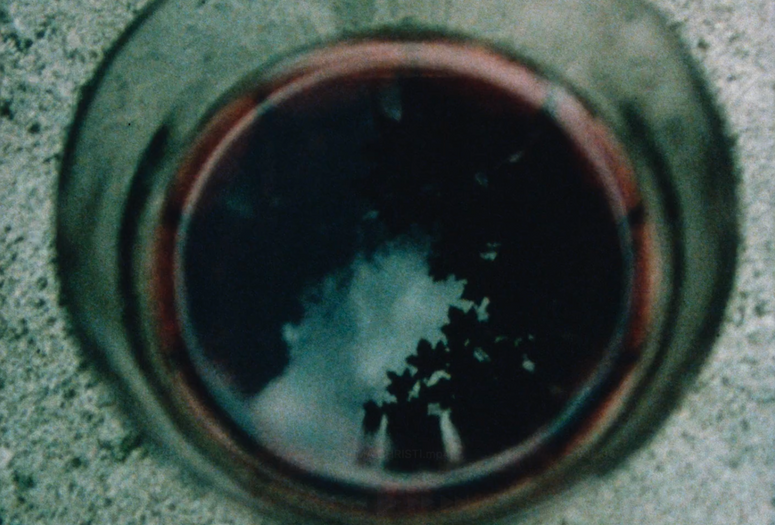
Lacrima Christi. 1978–79. France. Directed by Teo Hernández. Super 8 mm transferred to 16 mm. Courtesy Mnam/Cci Centre Pompidou. 128 min.
“Lacrima Christi makes people dizzy, and that’s because there are many tears in it. Those tears are mine. This film is also a dance, my dance, joined to that of the other participants. The entire film was improvised. We arrived at the shooting location without knowing what would be filmed. That dance took place in the void” (Teo Hernández). Part three of The Body of the Passion tetralogy, the film takes as its starting point a series of objects—cups, pearls, candles—found in Belleville’s flea market that are presented as the Grail and other relics from the Last Supper, along with bread and wine. Unlike its preceding films, Lacrima Christi is entirely shot in the filmmaker’s new, relentlessly accelerated, axisless filming style, but its purpose is identical: to reactivate myth through the body’s ecstatic intensities. Objects proliferate, dissolve, and recombine in convulsive rhythms, as the camera’s sweeping, centrifugal force binds gesture to intoxication.
This screening may include flashing and flickering images that can impact people who are sensitive to blinking lights.