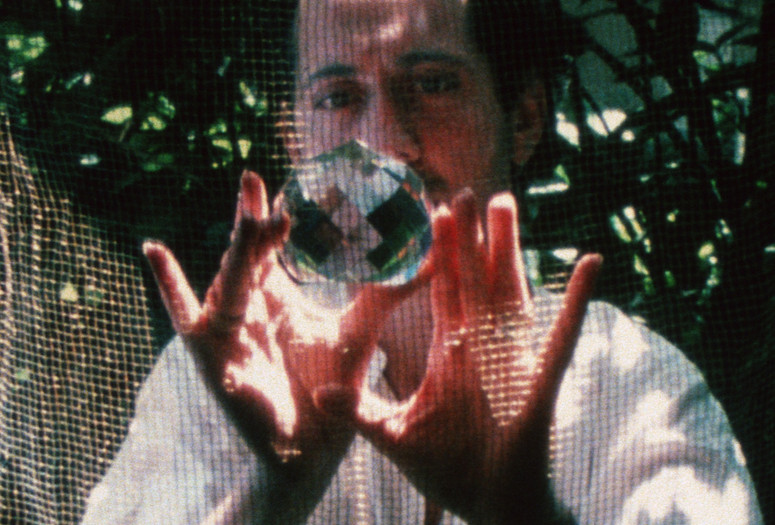
Cristaux. 1979. France. Directed by Teo Hernández. Super 8 mm transferred to 16 mm. Courtesy Mnam/Cci Centre Pompidou. 85 min.
“Cristaux is a vision/version of paradise. A masculine Adam and Eve. Two Adams in paradise and their final expulsion. The crystal sphere is the apple, the forbidden fruit, knowledge, awareness, the true problem at the heart of the biblical story” (Teo Hernández). Cristaux is the second installment in The Body of the Passion tetralogy, and may be seen as a negative double of the preceding film, Cristo. Conceived as an immersive chamber work, the film plunges into a cavernous darkness where bodies, projections, and refractive surfaces generate an unstable field of metamorphosis. Time dilates as gestures intensify, in perhaps the filmmaker’s most acute rendering of suspended movement. However, Cristaux also represents a radical shift in Teo Hernández’s filming style, as the quiet nocturnal intensity builds toward a threshold of blinding daylight and an explosive break from perspectival representation, triggering the camera into centripetal and centrifugal movements that draw a dividing line between two ecstatic worlds.