Pour Febe Elisabeth Velasquez, El Salvador. 1991. Belgium/France/Switzerland. Written and directed by Chantal Akerman. With Catherine Deneuve. Courtesy Amnesty International. In French; English subtitles. 4 min.
On October 31, 1989, Febe Elisabeth Velasquez, a 30-year-old trade unionist and mother of three, was murdered in a bomb attack at the headquarters of the FENASTRAS union federation in San Salvador, a crime that to this day has never been fully investigated. In this short film for Amnesty International, shot on a deserted street at night and set to the plaintive cello music of Sonia Wieder-Atherton, Catherine Deneuve delivers Chantal Akerman’s stirring tribute to Velasquez, who remains an internationally recognized leader in the Salvadoran social movement.
De l'autre côté (From the Other Side). 2002. Belgium. Written and directed by Chantal Akerman. DCP courtesy Icarus Films. In Spanish; English subtitles. 99 min.
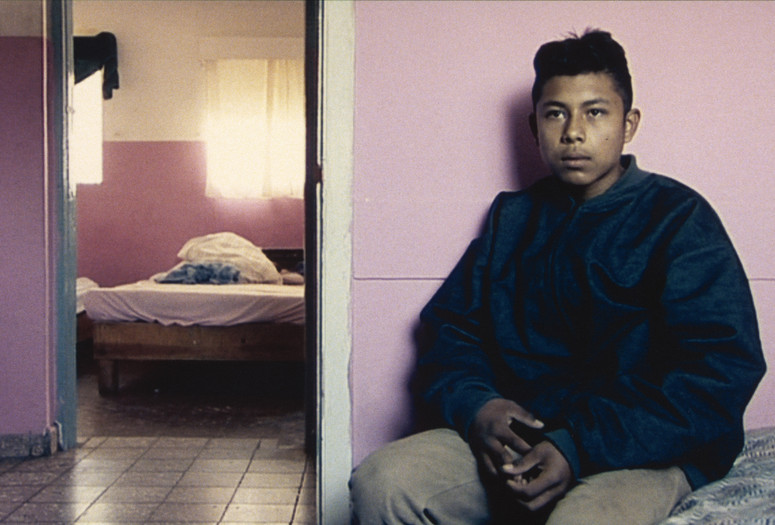
The third documentary, together with D’Est and Sud, in Chantal Akerman’s loose trilogy about history, landscape, and trauma, From the Other Side was provoked by an article in which “I had read a few lines, not about the border but about the ranchers who hunted ‘illegals,’ as they say, with Magnums…. [T]hey said: ‘They bring dirt,’ and when I read the word ‘dirt,’ I thought, ‘dirt, dirty, dirty Jews’.... On the ground, the project took shape, became more precise.” In 2002, in the months between 9/11 and the creation of Homeland Security, Chantal Akerman, assisted by Robert Fenz, observed conditions on both sides of the Mexican-American border. Against a Sonoran Desert landscape of dust, corrugated tin, and big sky, Mexicans speak directly into the camera as they describe family separations and violence in their quest for a better life “El Norte,” while American landowners assert their right to shoot trespassers, and a sheriff eulogizes a fellow officer who has died on “the front lines of this daily war.” Helicopters conduct night sorties and a patrol unit stalks the brush, their incriminating searchlights and infrared cameras stopping “invaders” in their tracks. One boy relates the story of a coyote who left his brother to die in the desert, another languishes in an orphanage. Akerman herself describes a woman who made her way to Los Angeles and then simply disappeared. Stoic in the face of poverty, loneliness, and fear, a young man concludes, “From nothingness we come, to nothingness we shall return. That is all.”