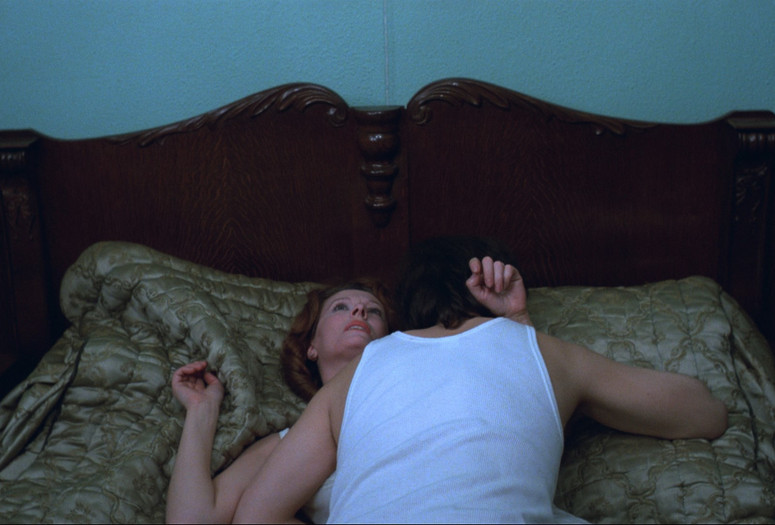
Jeanne Dielman, 23, quai du Commerce, 1080 Bruxelles. 1975. Belgium/France. Written and directed by Chantal Akerman. With Delphine Seyrig, Jan Decorte, Henri Storck, Jacques Doniol-Valcroze, Yves Bical. Digital restoration from the original 35mm color negative by Royal Film Archive of Belgium — CINEMATEK and Fondation Chantal Akerman; DCP courtesy Janus Films. In French; English subtitles. 201 min.
Chantal Akerman would likely have been bemused to learn that Jeanne Dielman had knocked Citizen Kane and Vertigo off their decades-long perch atop Sight & Sound’s “Greatest Films of All Time” poll in 2022. In Jeanne Dielman, Akerman revolutionized the way we construct meaning out of cinematic time, space, and confounded expectations, shattering every convention of narrative storytelling—even the climax happens seven minutes before the film ends—as she charts the inexorable disintegration of an obsessively ordered life over three intensely mundane days. A magnificently impenetrable Delphine Seyrig is the middle-aged, bourgeois Belgian hausfrau (ménagère might be a more appropriate, “Akermanian” word for it), widowed mother, and part-time prostitute who manages her clients with the same impersonal, clockwork efficiency with which she washes potatoes. But in 1975, Marguerite Duras walked out of the Cannes premiere and proceeded to publicly trash the film (conveniently, in favor of her own India Song, also starring Seyrig). Contemporary critics, wrestling with the experience of watching women’s work unfold in real time, either dismissed it as sadistically tedious (one male reviewer smugly wrote that “the film’s time-span covers a Tuesday (stew and potatoes), Wednesday (wiener schnitzel), and heady Thursday (meat loaf…)”) or pigeonholed Akerman as the great emancipator of second-wave feminism. (One female reviewer called it “the best feature I have ever seen made by a woman,” and even as recently as 2022, Laura Mulvey extolled “the extraordinarily daring cinema of a great woman director.”) However inspiring it was to Gus Van Sant, Tacita Dean, Apichatpong Weerasethakul, and countless others, a bemused Akerman would confide that her intentions in making the film were of a more personal and intimate nature: Jeanne Dielman was a gesture of love for her mother, whose parents were murdered in Auschwitz, and a testament to the ancient tradition of lighting candles on Sabbath, a vanishing world of Jewish devotion, ritual, and remembrance that the recent death of her paternal grandfather, a father figure, had summoned forth. The film’s careful color scheme, lost in most circulating prints, was restored digitally from the original 35mm color negative by the Royal Film Archive of Belgium in collaboration with Akerman herself.