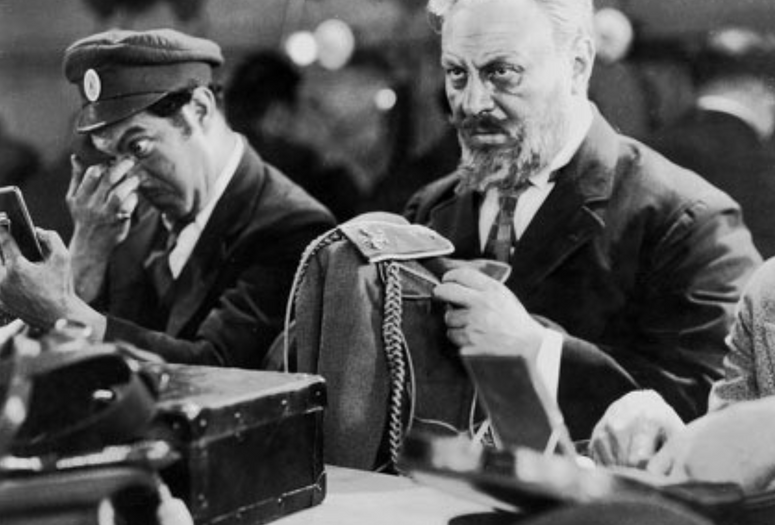
Chess Fever. 1925. USSR. Directed by Vsevolod I. Pudovkin. Screenplay by Pudovkin, Nikolai Shpikovsky. With Jose Capablanca, Zakhar Darevsky, Natalie Glan. 35mm. Silent, with musical accompaniment. English main and intertitles. 35mm. 20 min.
The Museum of Modern Art’s film department was formed in 1935, with Iris Barry as its first curator, and MoMA started showing films in its own theater in 1939. Serving in the position until 1951, Berry pioneered the Museum’s efforts to collect and program film, which she called “the only new art-form of modern times.” Barry and assistant curator Jay Leyda championed Soviet cinema; of the ingeniously edited short comedy Chess Fever - made during an international tournament in Moscow and including an appearance by world champion José Raul Capablanca - Barry wrote, “the film has a fund of simple satire and movie wit.”
The Last Command. 1928. USA. Directed by Josef von Sternberg. Story by Lajos Biró, adapted by John F. Goodrich. With Emil Jannings, Evelyn Brent, William Powell. 35mm. Silent, with musical accompaniment. 88 min.
In building MoMA’s film collection, Iris Barry showed a deep appreciation of Hollywood artistry. The Last Command, a favorite of hers, is a romantic melodrama about a retired general from Czarist Russia who becomes a Hollywood extra in a film about the Revolution. In her film note, Barry wrote, “Distinguished, like all the films directed by Josef von Sternberg, for its painstaking photographic quality. The Last Command was inspired by a real-life occurrence. It gives a fairly accurate idea of the conditions under which films at the time were produced and is one of the few pictures in a serious mood ever to have presented a study of life behind the scenes in a studio. The pathos inherent in the careers of the many extra and small-part players of Hollywood, especially the aging ones, lent itself admirably to the popular conception of the sort of role Emil Jannings should play.”