DocTalks is a series dedicated to ongoing investigations by doctoral, postdoctoral, or early-career researchers into the expansive entanglement of architecture and the natural environment. These sessions are meant to create an intercollegiate cohort of scholars who workshop writing, share research findings, and experiment with methodological tools while engaging with the vision and investigations of the Ambasz Institute.
These Doc Talk sessions are intended for scholars or architecture history and theory, but scholars in related fields and the general public are welcome to attend.
Miracles in Europe’s Orchard
Speaker
Dámaso Randulfe, Royal College of Art
Exactly 13 years after the Spanish Catholic Monarchs conquered the city of Al-Mariyyāt, a swirl of otherworldly lights appeared off its shores at the break of dawn. A premonition struck the coastal guards. Drawn towards the light, they were met by the divine figure of the Virgin Mary. From that moment, the city’s inhabitants have sought the protection of the Most Holy Virgin of the Sea against plagues, earthquakes, droughts, and other disasters afflicting this area of the Mediterranean.
This presentation travels between the Marian apparition of 1502 and the so-called “plastic miracle” that took place in 20th-century Almería, when a vast geo-engineering experiment following Francoist internal colonization plans transformed Europe’s only desert into its leading exporter of vegetables. Fueled by the intensive exploitation of natural resources and precarized migrant labour, Almería’s operational landscapes are a well-established case study of the excesses of supply chain capitalism and its global infrastructures. Analyses of this agripole depict it either in a perpetually present tense as a blooming desert devoid of history, or as the culmination of a historical sequence of extractive cycles and territorial transformations. However, the region’s pasts—spanning land inscriptions and extractions, internal and international colonial enterprises, fascist massacres, and radioactive pollution—also infiltrate this global agro-industrial enclave in eerily convoluted ways. Occurring across vastly different temporalities and degrees of visibility, these intrusions elude customary narrative and imaging strategies. To spell these spectral contaminations, this presentation charts not a sequence of events but a field of resonances, moving backward and forward while tracing two attendant trajectories: a surface-led inquiry of Almería’s fields as distributed sentient assemblages, and a depthward exploration of the subterranean consistencies haunting these landscapes today.
Dámaso Randulfe is a PhD candidate working at the School of Architecture, Royal College of Art. They are a senior lecturer and Critical and Contextual Studies coordinator at the School of Art, Architecture and Design, London Metropolitan University, and have previously taught at the Royal College of Art and University of the Arts London. Randulfe is also an editor of Migrant Journal, a publication series on the spatial politics of more-than-human migrations. Their work spanning architecture, film, and image-making has been presented at the Oslo Architecture Triennale, Triennale Milano or Index Biennial of Art and Technology. Randulfe’s doctoral research is funded by the UK’s Arts and Humanities Research Council.
Respondent
Dr. Manuel Saga Sánchez García, Escuela Técnica Superior de Arquitectura de Madrid, Technical University of Madrid (ETSAM - UPM)
The City and the River: Origin and Evolution of Lisbon’s Riverfront
Speaker
João Cruz, Faculdade de Ciências Sociais e Urbanas da Universidade Nova de Lisboa, Instituto Universitário de Lisboa (ISCTE)
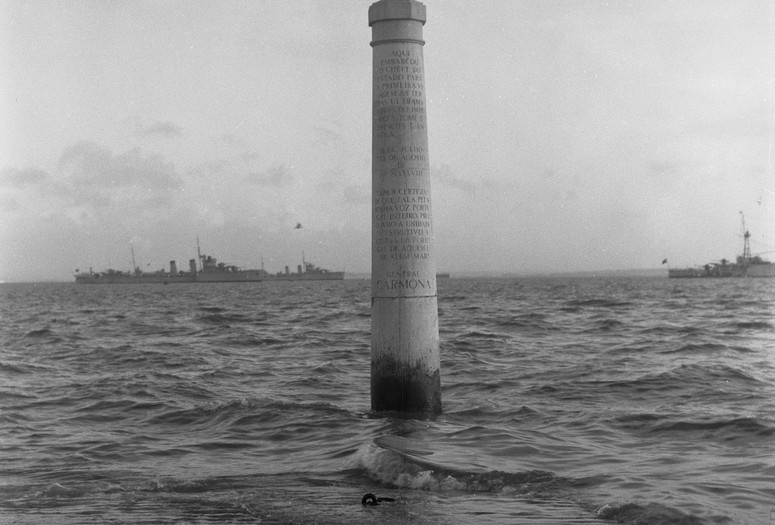
In Lisbon, over the centuries, man has conquered the waters of the Tagus. Today, after the various landfills, the riverfront of the city is a consolidated strip of land, topped by walls that, against the “undulation” of the Tagus, define an expanded area that welcomes an intense port activity.
It was in this strip by the river that an important part of Lisbon’s history took place, since the Roman and Muslim occupations, and also particularly during the period of the Discoveries, the post-earthquake Pombaline reconstruction and the industrial boom of the 19th century. Some of these historical moments are reflected in the numerous plans, charts, and maps available in this study, from the “Plan of the City of Lisbon: 1650,” by João Nunes Tinoco, to the “Port of Lisbon Improvement Plan,” from 1946. In these plans, but also in handwritten letters, period reports, engravings, and old photographs—largely unpublished documents—which this research work proposes to map this territory, making original drawings that allow a new look at its growth processes and consolidation.
Thus, this study reconciles all these elements, constituting a complete analysis that focuses on the evolution of Lisbon’s riverfront and that allows discovering numerous aspects until here unknown, helping to answer the question that arises today: in the face of the scenario that the current port is going through, how can Lisbon recover its ancient relationship with the river?
João Cruz was a collaborator at the studio of João Luís Carrilho da Graça (2015–2021), where he participated in the preparation and assembly of the exhibition Carrilho da Graça: Lisbon, inaugurated at the Centro Cultural de Belém in Lisbon (2015), and in the itinerancy of this exhibition, coordinating its assembly in Tomar, Madrid, Paris, and Mexico City. Over these six years, he participated in the various stages of development of numerous architectural projects, as well as in the organization of Carrilho da Graça’s work, within the scope of his first major retrospective, presented in 2022 at Casa da Arquitetura, in Matosinhos. Since 2021, Cruz has collaborated at Frederico Valsassina’s studio and is a doctoral student in the Urban Studies Course at the Faculty of Social and Urban Sciences of the Universidade Nova de Lisboa and at ISCTE - Instituto Universitário de Lisboa.
Respondent
Dr. Braden Scott, Incoming Assistant Professor of Early Modern Art & Architecture, University of Manitoba’s School of Art