Giovanni Anselmo
- Introduction
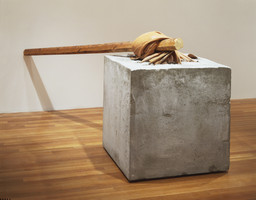
- Giovanni Anselmo (born 1934 in Borgofranco d'Ivrea, Province of Turin, Italy) is an artist who emerged in Italy after World War II within the art movement called Arte Povera. His most famous artwork is Untitled (Sculpture That Eats) (1968), a piece of art representing time and nature.
- Wikidata
- Q637274
- Introduction
- Known for his works that employ organic and inorganic materials to refer to the elemental laws and forces of nature (e.g. gravity, tension, magnetism). Anselmo participated in the first Arte Povera exhibition ("Arte povera-Im spazio") at the Galleria La Bertesca in Genoa in 1967. In 1995 and 1996 there was a retrospective exhibition of his work in Santiago de Compostela, Spain and in Nice, France.
- Nationality
- Italian
- Gender
- Male
- Roles
- Artist, Painter, Sculptor
- Name
- Giovanni Anselmo
- Ulan
- 500053922
Exhibitions
-
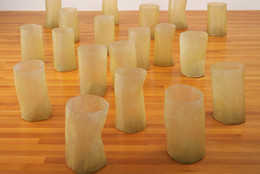
413: Breaking the Mold
Fall 2019–Fall 2020
MoMA
Collection gallery
-
From the Collection:
1960–1969 Mar 26, 2016–Mar 19, 2017
MoMA
-
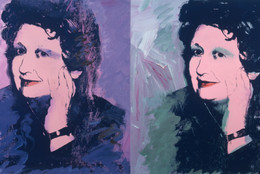
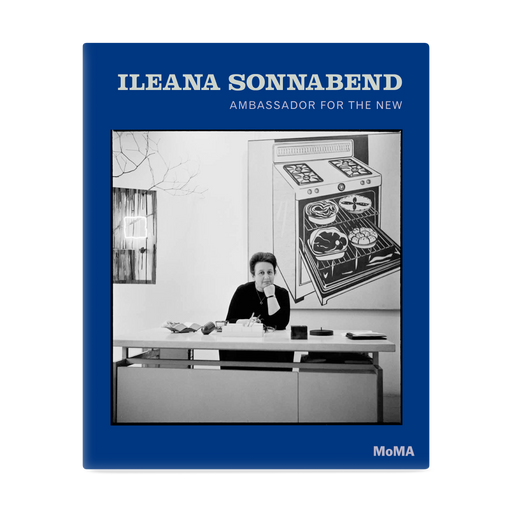
Ileana Sonnabend: Ambassador for the New
Dec 21, 2013–Apr 21, 2014
MoMA
-
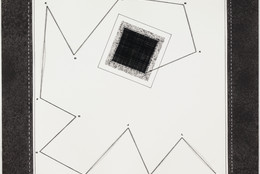
On Line: Drawing Through the Twentieth Century
Nov 21, 2010–Feb 7, 2011
MoMA
-
Compass in Hand: Selections from The Judith Rothschild Foundation Contemporary Drawings Collection
Apr 22, 2009–Jan 4, 2010
MoMA
-
Giovanni Anselmo has
12 exhibitionsonline.
If you would like to reproduce an image of a work of art in MoMA’s collection, or an image of a MoMA publication or archival material (including installation views, checklists, and press releases), please contact Art Resource (publication in North America) or Scala Archives (publication in all other geographic locations).
All requests to license audio or video footage produced by MoMA should be addressed to Scala Archives at [email protected]. Motion picture film stills or motion picture footage from films in MoMA’s Film Collection cannot be licensed by MoMA/Scala. For licensing motion picture film footage it is advised to apply directly to the copyright holders. For access to motion picture film stills please contact the Film Study Center. More information is also available about the film collection and the Circulating Film and Video Library.
If you would like to reproduce text from a MoMA publication, please email [email protected]. If you would like to publish text from MoMA’s archival materials, please fill out this permission form and send to [email protected].
This record is a work in progress. If you have additional information or spotted an error, please send feedback to [email protected].