Woodcut
Not on view
Otto Dix aggressively implies in this portfolio that sex is the force driving all men. In Apotheose (Apotheosis), fragmented body parts and leering faces orbit a grotesquely distorted prostitute, whose outsize genitalia mark the center of the composition. Dix believed in the utter incompatibility of men and women. He borrowed imagery conveying the epic conflict of the sexes from philosopher Friedrich Nietzsche's Thus Spoke Zarathustra, such as the juxtaposed moon and sun in Mann und Weib (Nächtliche Szene) (Man and woman [nocturnal scene]) and the cats slinking over moonlit roofs in Katzen (Cats). On the streets, meanwhile, traditional order—both moral and pictorial—breaks down. Die Prominenten (Konstellation) (The celebrities [constellation]) reveals Dix's skepticism toward exuberant promises of a better future: four ideologues share a single body, espousing a manifesto of love, fatherland, order, and Dada.
Although still indebted stylistically to the Expressionist techniques of distortion, the Futurist fracturing of picture planes, and the Cubist use of collage, Dix has already discovered the power of scathing social critique in these early woodcuts, which count as some of his first prints. He made woodcuts only briefly, between 1919 and 1920, and then gave up the medium entirely.
Heather Hess, German Expressionist Digital Archive Project, German Expressionism: Works from the Collection. 2011.
Explore more
Otto Dix
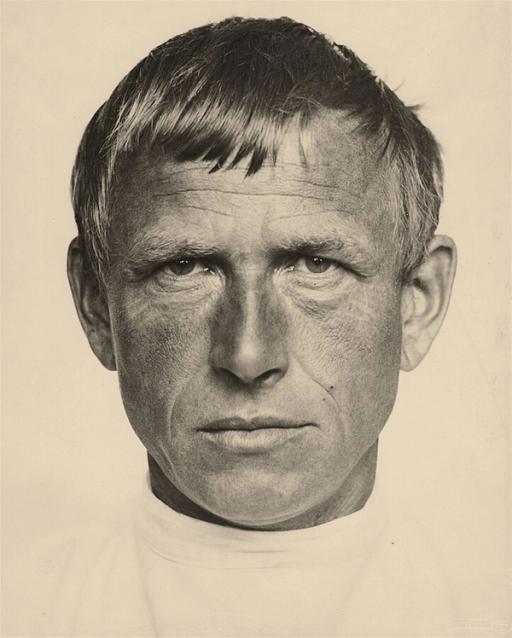
German, 1891–1969 94 works onlineGerman artist Wilhelm Heinrich Otto Dix is best known for paintings and prints filled with anguished, exploited human figures representing the turmoil of his time.
Learn more →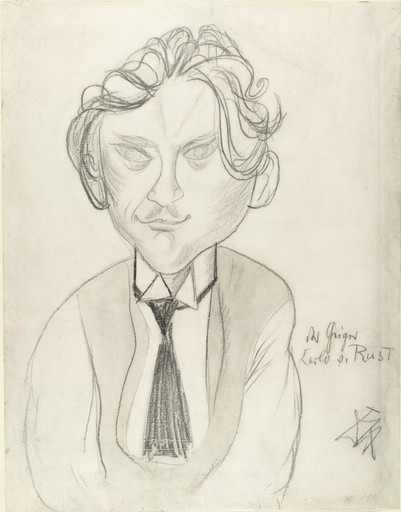

From MoMA Design Store


Provenance Research Project
This work is included in the Provenance Research Project, which investigates the ownership history of works in MoMA's collection.
William S. Lieberman, New York; given anonymously to The Museum of Modern Art, New York, 1951
Provenance research is a work in progress, and is frequently updated with new information. If you have any questions or information to provide about the listed works, please email [email protected] or write to:
Provenance Research Project
The Museum of Modern Art
11 West 53 Street
New York, NY 10019
Licensing
Artwork or archival images
If you would like to reproduce an image of a work of art in MoMA's collection, or an image of a MoMA publication or archival material (including installation views, checklists, and press releases), please contact Art Resource (publication in North America) or Scala Archives (publication in all other geographic locations).
Audio and film clips
MoMA licenses archival audio and select out of copyright film clips from our film collection. At this time, MoMA produced video cannot be licensed by MoMA/Scala. All requests to license archival audio or out of copyright film clips should be addressed to Scala Archives at [email protected]. Motion picture film stills cannot be licensed by MoMA/Scala. For access to motion picture film stills for research purposes, please contact the Film Study Center at [email protected]. For more information about film loans and our Circulating Film and Video Library, please visit Circulating Film and Video Library.
Text from a publication or the archives
If you would like to reproduce text from a MoMA publication, please email [email protected]. If you would like to publish text from MoMA's archival materials, please fill out this permission form and send to [email protected].
Feedback
This record is a work in progress. If you have additional information or spotted an error, please fill out this feedback form.