 |
||
During World War II, images of patriotic celebrities--in uniform, entertaining American troops, or selling war bonds--were circulated widely to bolster morale and further the war effort on the home front. An idea that became popular during the rise of the postwar consumer culture was that in a democracy, the famous were "just folks" too. As the American population shifted away from urban centers toward new and more isolated suburbs, the mass media--and most notably television--used images of fame and celebrity to draw people together and to the new medium. Images of the famous on TV were free and the new stars of news, entertainment, self-improvement shows, and commercials were human-scale. Early television stars frequently portrayed middle-class or working-class characters, "normal" people easier to accept and welcome into homes. Shows featured celebrities who crossed over from radio or had guest appearances by actors who appeared as themselves on shows like Person to Person and This Is Your Life. Interview and talk shows and programming like Queen for a Day implied a new intense, albeit false, intimacy that kept audiences glued to the TV set busily scrutinizing the telegenic winners and losers.
  |
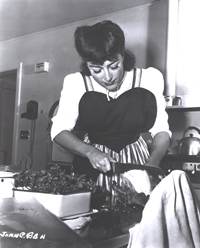
| Warner Brothers publicity photograph of Joan Crawford, captioned "Lunchtime rolls around and Warner Bros., star Joan Crawford, soon to start work on Mildred Pierce, has to prepare it. The star, due to the acute servant problem, does all her own housework." 1946. The Museum of Modern Art, New York select image for enlarged view |