MoMA
Posts tagged ‘photography’
July 29, 2010  |  Collection & Exhibitions
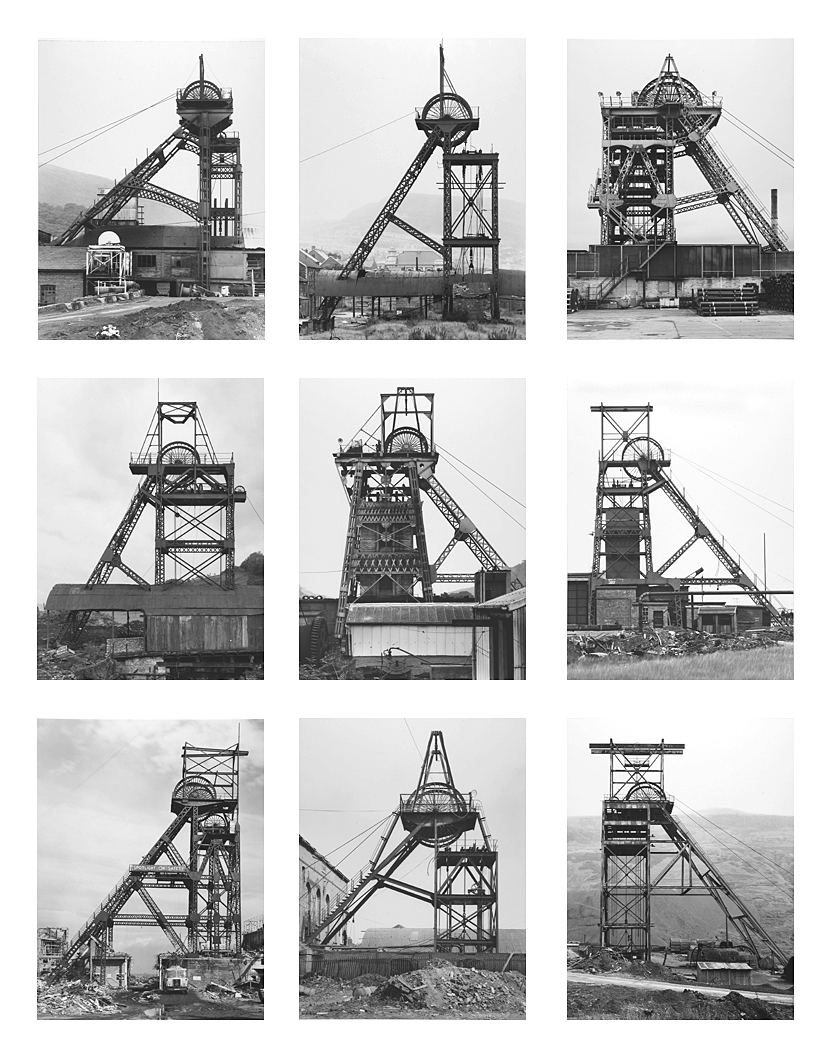
Recent Acquisition: Bernd and Hilla Becher’s Winding Towers

Bernd and Hilla Becher. Winding Towers. 1966-97. Nine gelatin silver prints, overall. The Museum of Modern Art. Acquired in honor of Marie-Josée Kravis through the generosity of Robert B. Menschel. © 2010 Hilla Becher

The addition of a major work to the collection is always an exciting event at MoMA. Bernd and Hilla Becher’s nine-part photographic work Winding Towers (1966–97) is one such highlight among recent acquisitions in the Department of Photography.

June 28, 2010  |  MoMA PS1
Xaviera Simmons: Image Builder

In this video, mixed-media artist Xaviera Simmons talks about her work and her striking new photo installation, Superunknown (Alive In The), currently on view in Greater New York, MoMA PS1‘s quinquennial showcase of works made in the past five years by artists and collectives living and working in the metropolitan New York area.

June 9, 2010  |  Artists, Collection & Exhibitions
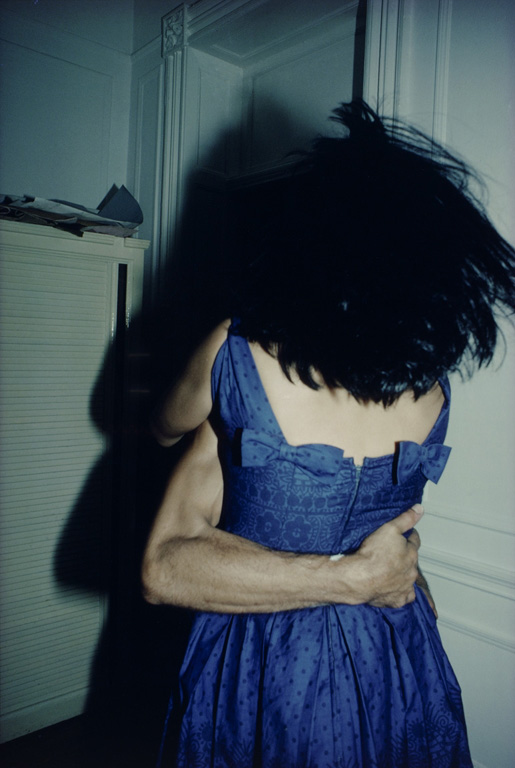
Live Through This: Nan Goldin in Pictures by Women: A History of Modern Photography

Nan Goldin. The Hug, New York City. 1980. Silver dye bleach print, printed 2008. The Museum of Modern Art. Purchase. © 2010 Nan Goldin

Sometimes, after I encounter a great work of art, I feel like I’ve been punched in the gut. And that’s a good thing—the work touches and evokes something deep inside that lingers for months, even years. I had this experience when I first saw Nan Goldin’s The Ballad of Sexual Dependency, a 45-minute slide show of some 700 color pictures set to a soundtrack.

June 2, 2010  |  Artists, Collection & Exhibitions
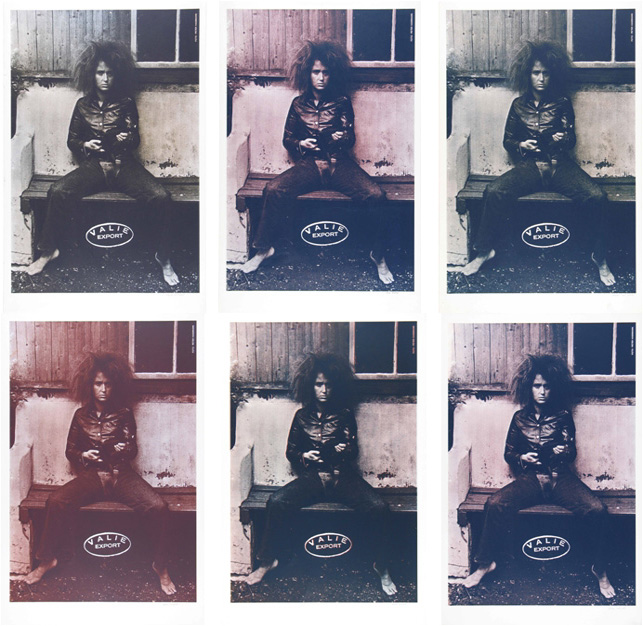
Action Pants: Genital Panic

VALIE EXPORT. Action Pants: Genital Panic. 1969. Screenprints. Photographed by Peter Hassmann. The Museum of Modern Art. Acquired through the generosity of Sarah Peter. © 2010 VALIE EXPORT

I met with VALIE EXPORT about three months ago at MoMA when she came to New York to preview her friend Marina Abramović’s exhibition. It was a sunny morning in March, and we sat down outside the staff cafe sipping glasses of grapefruit juice and talking about her signature work, Action Pants: Genital Panic.

May 26, 2010  |  Collection & Exhibitions
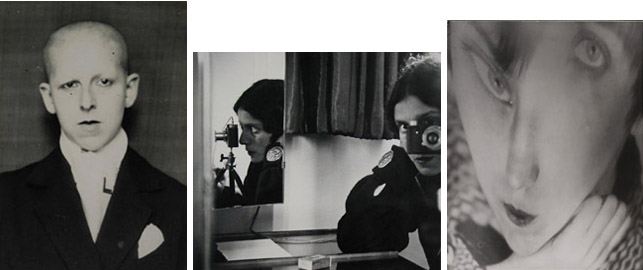
Pictures OF Women

From left: Claude Cahun. Untitled. c. 1921. Gelatin silver print. Thomas Walther Collection. Purchase; Ilse Bing. Self Portrait in Mirrors. 1931. Gelatin silver print. Joseph G. Mayer Fund. © 2010 The Ilse Bing Estate/Courtesy Edwynn Houk Gallery; Berenice Abbott. Portrait of the Artist as a Young Woman. Negative c. 1930/Distortion c. 1950. Gelatin silver print. Frances Keech Fund in honor of Monroe Wheeler. © 2010 Berenice Abbott/Commerce Graphics, Ltd., New York. All works in the collection of The Museum of Modern Art

In each gallery of the recently opened Pictures by Women: A History of Modern Photography, you will encounter a wall of photographs (sometimes two) with only pictures of women. This is not because women focused their cameras primarily on their female peers—there are plenty of exceptional landscapes and photographs of other subjects in the Museum’s collection, and a select smattering of these are now on view—but rather because I, along with my colleagues and co-curators Eva Respini and Roxana Marcoci, were fascinated by how these groups of pictures of women and by women suggest, in their diversity, the plasticity of both photography and female identity.

Visitor Viewpoint: MoMA’s Mystery Man
</p>

</strong>

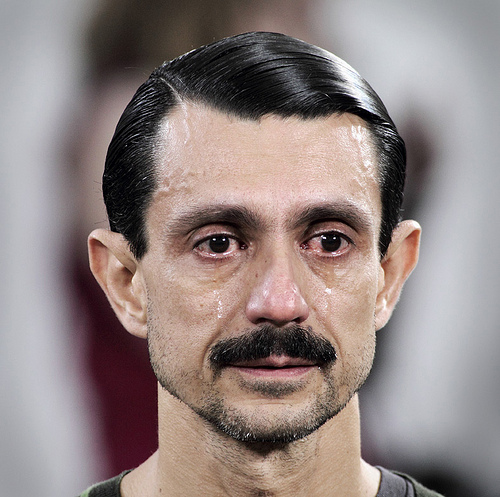
Those of you who have clicked through the visitor portraits in our Marina Abramović: The Artist Is Present Flickr gallery, taken by Marco Anelli, probably noticed some familiar faces. Apart from a few celebrities in the mix (Sharon Stone, Rufus Wainwright, Isabella Rossellini, to name a few), there are a number of less famous faces that repeat day in and day out, almost as often as Marina herself. These Marina devotees have become micro-celebrities in their own right, at least around the Museum; the guards know them by name, and fellow visitors waiting their turn to sit with Marina regard them with an air of what may best be described as reverence.

Paco Blancas, a NYC-based make-up artist, is one such visitor. After seeing his portrait a number of times on Flickr, I found myself wondering, “Who is this mystery man? Why does he keep coming back? Why is he crying in so many of these photos?” I wanted to know his story. As luck would have it, last week I spotted him seated in the Marron Atrium, back for his fourteenth sitting with Marina. He shared a few words about his experiences with the piece and what compels him to keep coming back.

May 3, 2010  |  Artists, Collection & Exhibitions
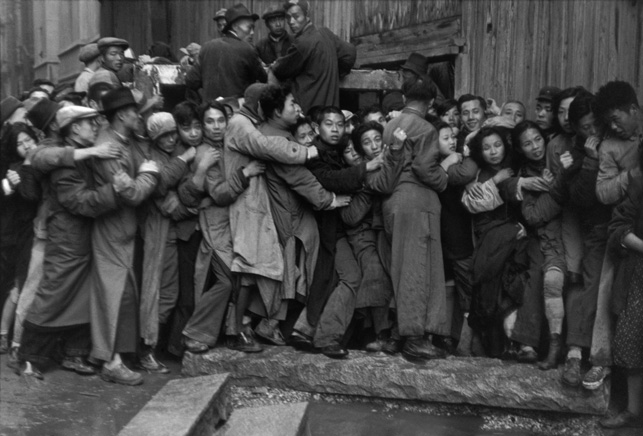
At Home Everywhere: The Travels of Henri Cartier-Bresson

Henri Cartier-Bresson. Shanghai. 1948. Gelatin silver print, printed 1971. The Museum of Modern Art. Acquired through the generosity of Robert B. Menschel. © 2010 Henri Cartier-Bresson/Magnum Photos, courtesy Fondation Henri Cartier-Bresson, Paris

I tracked Henri Cartier-Bresson (1908–2004) from England to India to Indonesia and back. He was in England for the coronation of King George VI; he was in India when Gandhi was assassinated; he was in Indonesia as the nation gained independence from the Dutch. He was seemingly everywhere.

I know because it was my job to compile all of Cartier-Bresson’s photo captions, notes, datebooks, and correspondence from his travels, which covered the better part of the 50 years he was actively working as a photographer. I then had to transform this into a comprehensive yet comprehensible chronology that would appear in the catalogue of the exhibition Henri Cartier-Bresson: The Modern Century.

April 30, 2010  |  Artists, Collection & Exhibitions, Tech
Marina Abramović: A Gallery of Portraits

If you happen to witness—or, for the intrepid, participate in—Marina Abramović‘s new work The Artist Is Present, you may notice a well-equipped photographer quietly documenting each daily performance. The artist has asked photographer Marco Anelli to take portraits of every visitor who participates in the piece. The results, as you can see below and on the exhibition website, are captivating.

Check back frequently, as the images are updated regularly. At this point there are over eight hundred portraits!

</embed>

January 14, 2010  |  Artists, Collection & Exhibitions
What’s in a Portrait? Rineke Dijkstra’s Almerisa
combo copy

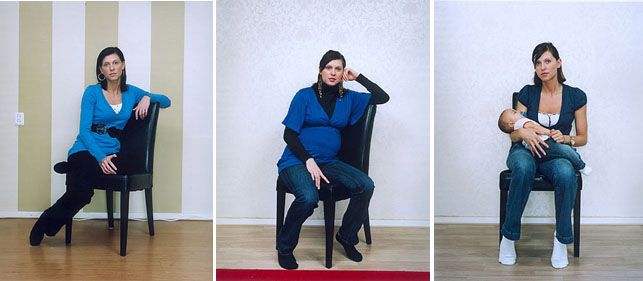
Rineke Dijkstra. From left: Almerisa, Zoetermeer, The Netherlands. March 24, 2007; Almerisa, Zoetermeer, The Netherlands. January 4, 2008; Almerisa, Zoetermeer, The Netherlands. June 19, 2008

One of the reasons I like Rineke Dijkstra’s photographic portraits so much is because of how she manages to convey the vulnerable side of her subjects, caught at a decisive moment of transition in their lives, usually from adolescence to incipient adulthood. Dijkstra was trained at the Gerrit Rietveld Academie in Amsterdam, and since the mid-1990s she has gained international acclaim for her penetrating pictures of teenagers and young adults. Using a 4×5-inch field camera with a standard lens and a tripod, she creates exacting portraits—frontal views, centered in the frame, posed against a minimal background—that offer remarkable observation and emotional force. Her subjects gaze directly at the camera, combining brooding psychological intensity with the formal classicism of seventeenth-century Dutch portraits by painters such as Johannes Vermeer.

December 9, 2009  |  Collection & Exhibitions
Q&A with Carter Mull for New Photography 2009
NP42_Mull_LATIMES Feb 23

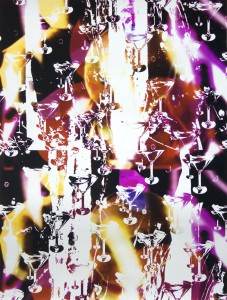
Carter Mull. Los Angeles Times, Monday February 23, 2009. 2009. Chromogenic process print, 49 x 37" (124.5 x 94 cm). Collection Dr. Dana Beth Ardi, New York. Courtesy Marc Foxx, Los Angeles. © 2009 Carter Mull

Carter Mull‘s work in New Photography 2009 is full of vibrant color and patterns. Beyond the surface is a body of work that explores language, our relationship to images in an image-saturated world, and the spectre of the death of print media and chemical photography. In the following Q&A, Carter talks to me in detail about his work.

Eva Respini: How did you become interested in the Los Angeles Times as the starting point for the body of work on view in New Photography 2009?

Carter Mull: Initially, I was drawn to a question about the psychological impact of an image. Journalism and the media had been in the background of my thinking for a number of years—and I was curious about the question of how one responds to an image of distant trauma, contextualized within the framework of the local newspaper. Also, the very material—the literal placement of advertising next to news—was an intriguing reality.

ER: The title for this series is Triggers for Everyday Fiction, and you refer to these photographs as “triggers” and “responses.”  I like thinking about the relationship between the pictures as a kind of call and response. Can you talk a little bit more about that?

CM: The project began about two years ago with the initial program of considering a media site, in this case the Los Angeles Times, as a point of departure. I wanted to treat the lead image of the paper as a generator of sorts—and the output of the works as a whole as somehow governed by the grammar of the idea. The terms you refer to work as a nomenclature to designate points within the body of work. At the moment, I think about the images taken together as a series of passages—and as an active cognitive process.