
MoMA
Posts tagged ‘film’
November 19, 2012  |  Artists, Film
Mapping Subjectivity: A Conversation with Filmmaker Ali Cherri

In the video interview above, artist Ali Cherri describes the conceptual approach framing his exhibition Bad, Bad, Images, that opened this past winter in Paris. Pipe Dreams was “extracted” from this exhibition installation, and here the artist explains how he came to transform a two-channel video installation into single-channel video.
November 16, 2012  |  Behind the Scenes, Film
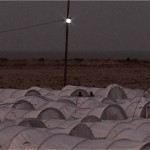
Mapping Subjectivity: A Conversation with Filmmaker Youssef Chebbi

In the video interview above, filmmaker Youssef Chebbi shares some of the behind-the-scenes stories around Babylon, the feature-length non-fiction film he co-directed with ismaël [sic] and Ala Eddin Slim.

November 13, 2012  |  An Auteurist History of Film
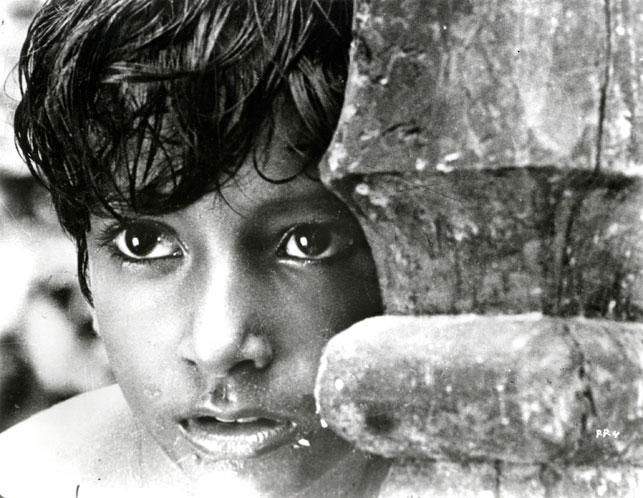
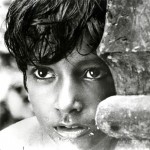
Satyajit Ray’s Pather Panchali

Pather Panchali. 1955. India. Written and directed by Satyajit Ray

These notes accompany screenings of Satyajit Ray’s Pather Panchali on November 14, 15, and 16 in Theater 2.

“Third World” cinema was pretty much nonexistent for Western audiences until the 1950s. In 1951, with Akira Kurosawa’s Rashomon, Japanese films began to appear on a very limited basis.

November 9, 2012  |  Artists, Collection & Exhibitions
Mapping Subjectivity: A Conversation with Director Damien Ounouri

In the video interview above, filmmaker Damien Ounouri talks about his film Fidaï, which inaugurated the film exhibition Mapping Subjectivity: Experimentation in Arab Cinema from the 1960s to Now, Part III

November 6, 2012  |  An Auteurist History of Film
Ida Lupino’s Never Fear (The Young Lovers)

These notes accompany screenings of Ida Lupino’s Never Fear (The Young Lovers) on November 8, 9, and 10 in Theater 3.

Ida Lupino (1918–1995) played a nearly unique role in the history of film directing.

October 30, 2012  |  An Auteurist History of Film
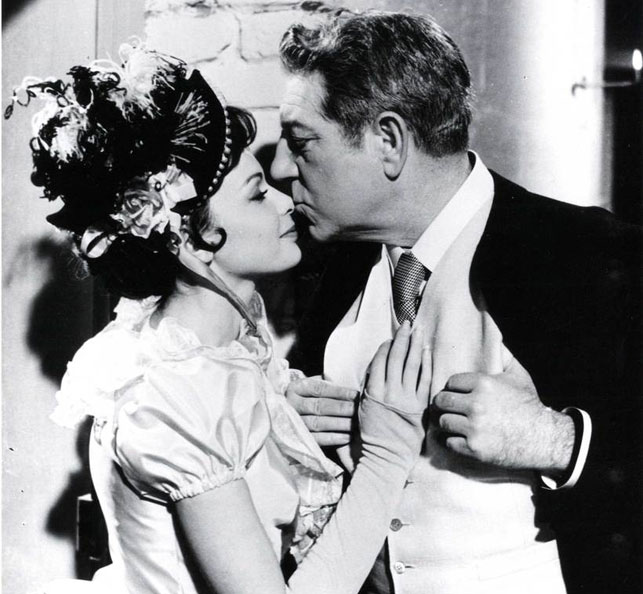
Jean Renoir’s French Cancan

French Cancan. 1955. France. Directed by Jean Renoir

These notes accompany screenings of Jean Renoir’s French Cancan on October 31 and November 1 and 2 in Theater 3.

As regular followers of this series know, I can’t get enough of Jean Renoir. I feel a stronger emotional kinship with him than with any other filmmaker, except possibly Charles Chaplin or John Ford.

October 23, 2012  |  An Auteurist History of Film
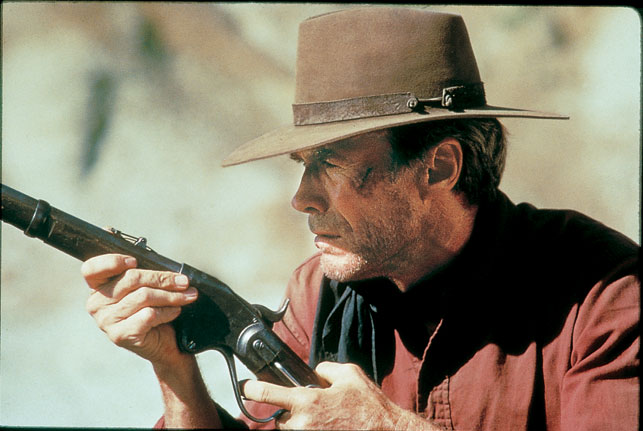
Clint Eastwood’s Unforgiven

Unforgiven. 1992. USA. Directed by Clint Eastwood

These notes accompany screenings of Clint Eastwood’s Unforgiven on October 24, 25, and 26 in Theater 3</a>.

Clint Eastwood’s diverse acting performances and directing accomplishments in Western films have earned him a solid place high in the pantheon of such genre artists as Ford, Hawks, Wayne, Cooper, Fonda, and Stewart

October 16, 2012  |  An Auteurist History of Film
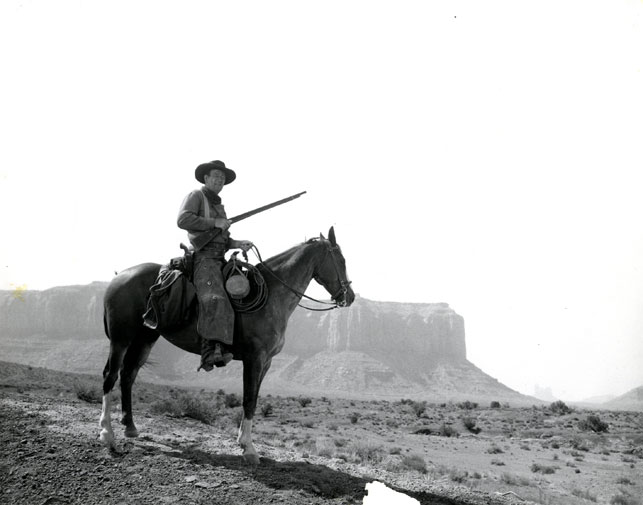
John Ford’s The Searchers

The Searchers. 1956. USA. Directed by John Ford

These notes accompany screenings of John Ford’s The Searchers on October 17, 18, and 19 in Theater 3</a>.

The Searchers and [The Man Who Shot] Liberty Valance are the two masterpieces within Ford’s later project of disclosing the dark underbelly of the American West’s progress from wilderness to civilization

October 9, 2012  |  An Auteurist History of Film
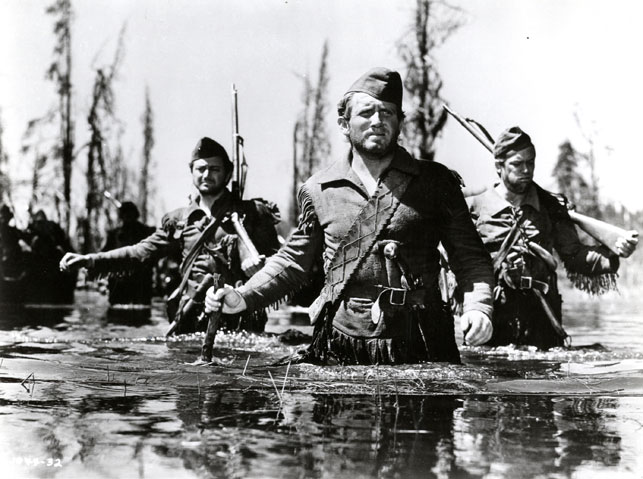
King Vidor’s Northwest Passage

Northwest Passage. 1940. USA. Directed by King Vidor

These notes accompany screenings of King Vidor’s Northwest Passage on October 10, 11, and 12 in Theater 3</a>.

An especially intriguing example of a high-quality, landscape-oriented “A” Western of the World War II era is King Vidor’s Northwest Passage

October 4, 2012  |  Artists, Collection & Exhibitions, Film
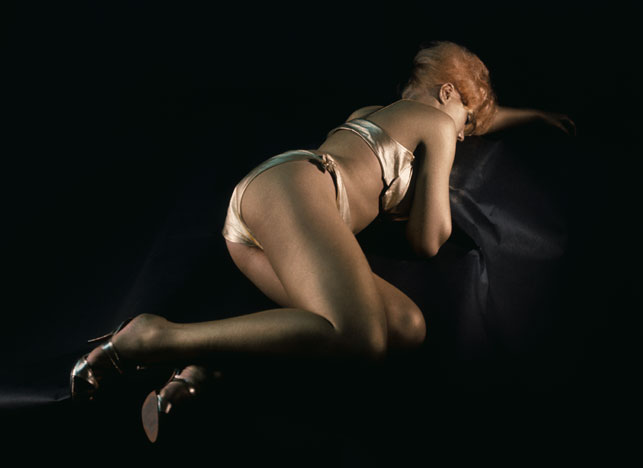
Goldfinger: A Convergence at MoMA

Robert Brownjohn. Preparatory study for Goldfinger title sequence. 1964. Silver-gelatin print. Photograph by Herbert Spencer. The Museum of Modern Art, New York. Gift of Don Goeman. © 2012 Eliza Brownjohn

The 1964 James Bond film Goldfinger is not only an exhilarating classic of the spy genre, but also a recurring influence in art and popular culture. During the month of October, visitors to MoMA can experience the Goldfinger phenomenon in a variety of distinct configurations.