
MoMA
Posts tagged ‘auteurist’
February 22, 2011  |  An Auteurist History of Film
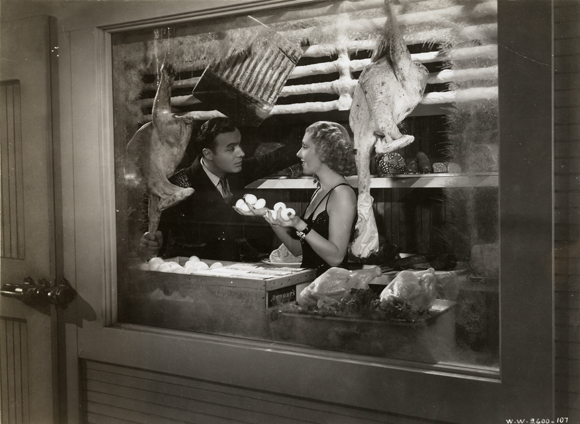
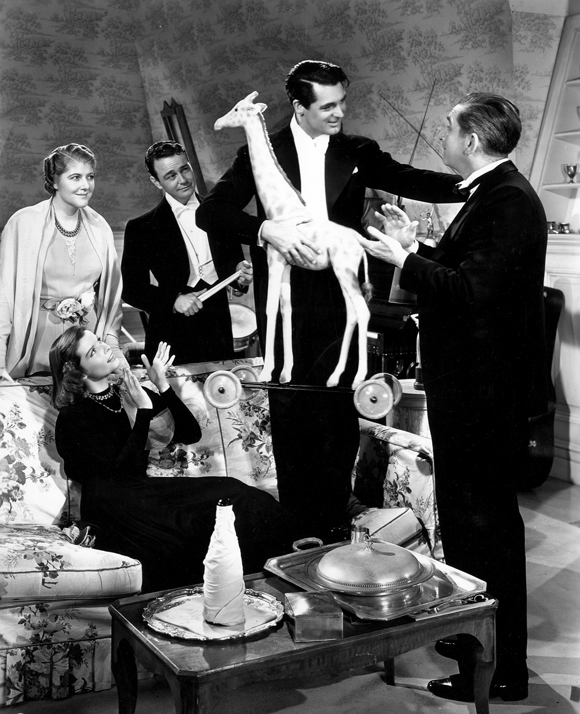
George Cukor’s Holiday
February 15, 2011  |  An Auteurist History of Film
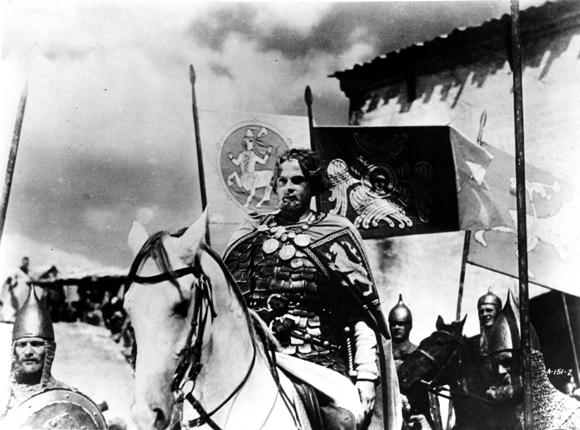
Sergei Eistenstein’s Bezhin Meadow and Alexander Nevsky

Alexander Nevsky. 1938. USSR. Written and directed by Sergei Eisenstein

Alexander Nevsky. 1938. USSR. Written and directed by Sergei Eisenstein

These notes accompany the screenings of Sergei Eisenstein’s </i>Bezhin Meadow and Alexander Nevsky</a> on February 16, 17, and 18 in Theater 3.</p>

Sergei Eisenstein was born in 1898 and died, at the age of 50, 63 years ago last week. By the age of 30 he was world-renowned for his theory of montage, as applied to his youthful masterpieces Strike, Battleship Potemkin, and October (Ten Days That Shook the World). These films found heroics in collectives (among workers, sailors, or, in the case of his 1929 Old and New, farmers) and in stick-figure commemoration of the Bolshevik Revolutionaries. In 1930, he was invited to come to Hollywood by Paramount Pictures, and during his time there he pursued several aborted projects, including a film version of Theodore Dreiser’s An American Tragedy (which was finally made in 1931 by Josef von Sternberg, vacationing from Marlene Dietrich). To delay returning to Russia, Eisenstein persuaded Upton Sinclair and his wife to finance the intended epic Que Viva Mexico!

February 1, 2011  |  An Auteurist History of Film
Abel Gance’s J’Accuse (1938)

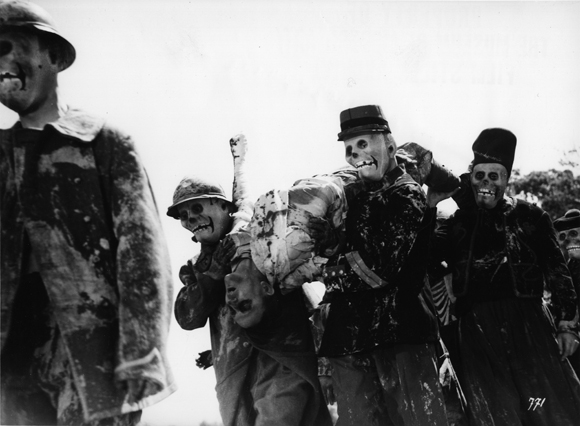
Jaccuse. 1938. France. Written and directed by Abel Gance

J'accuse. 1938. France. Written and directed by Abel Gance

These notes accompany the screenings of Abel Gance’s </i>J’Accuse </a> on February 2, 3, and 4 in Theater 3.</p>

The 1937 version of Abel Gance’s (1889–1981) J’Accuse is hardly the director’s best film, but I thought it would it would make an interesting and instructive companion piece to the 1919 silent version, which we showed in the recent To Save and Project festival. (Gance’s La Roue is familiar to Museum audiences, and we were unable to screen Napoleon because of the restoration work currently in progress.) The 1937 film begins at almost the end of World War I, after the male protagonists in the story’s love triangle have been reconciled. The original, a peculiar but impassioned antiwar epic, was mostly taken up with the rivalry of the two for the heroine, which was finally interrupted by the coming of the war. So the 1937 film is only partially a remake.

January 25, 2011  |  An Auteurist History of Film
An Abel Gance Program

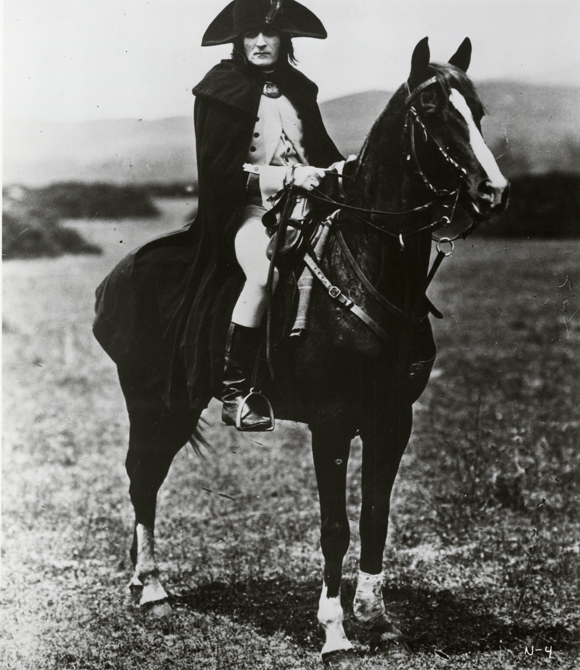
A scene from Abel Gance's Napoleon (1927)

A scene from Abel Gance's Napoleon (1927)

These notes accompany the Abel Gance program on January 26, 27, and 28 in Theater 3.

Over the course of film history, there have been directors who chafed at the restrictions the medium seemed to impose on itself. D. W. Griffith established a revolutionary but enduring film grammar and enjoyed enormous success, albeit tainted by its subject matter, with The Birth of a Nation (1915). This encouraged him to envision the film fugue Intolerance (1916), which was too advanced for its time, too far outside the envelope for audiences to comfortably comprehend.

January 18, 2011  |  An Auteurist History of Film
Jean Renoir’s La Marseillaise
January 11, 2011  |  An Auteurist History of Film
Fritz Lang’s You Only Live Once

You Only Live Once. 1937. USA. Directed by Fritz Lang

You Only Live Once. 1937. USA. Directed by Fritz Lang

These notes accompany the screening of Fritz Lang’s </i>You Only Live Once</a> on January 12, 13, and 14 in Theater 3.</p>

The American-made films of Viennese-born Fritz Lang (1890–1976) will be the subject of a comprehensive retrospective at New York City’s Film Forum from January 28 through February 10. A number of his German classics appear in our own Weimar Cinema, 1919–1933: Daydreams and Nightmares exhibition, and a restored Metropolis (1926) recently had a run at Manhattan’s largest movie house. So it would be hard to argue that Lang is a forgotten director.

January 4, 2011  |  An Auteurist History of Film
Frank Borzage’s History Is Made at Night

History Is Made at Night. 1937. USA. Directed by Frank Borzage

History Is Made at Night. 1937. USA. Directed by Frank Borzage

These notes accompany the screening of Frank Borzage’s </i>History Is Made at Night</a> on January 5, 6, and 7 in Theater 3.</p>

Frank Borzage (1893–1962) (like last week’s subject, Leo McCarey) was a great romanticist who deserves to be better remembered. In the silent period, after a decade-long apprenticeship as a director and sometime actor, he made such visually striking, stylish, and deliriously romantic films as Seventh Heaven (winner of the very first Oscar for directing), Street Angel (which we looked at last spring), The River, and Lucky Star, all starring Charles Farrell and Janet Gaynor (except for the forgettable Mary Duncan in The River.) Borzage’s career took a few strange turns in the sound period, especially for a former minor silver miner from Salt Lake City.

December 28, 2010  |  An Auteurist History of Film
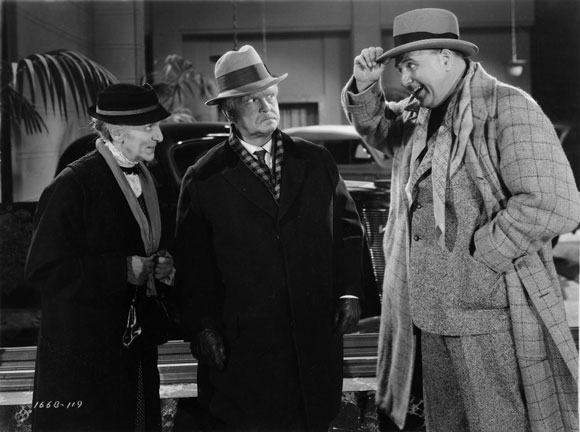
Leo McCarey’s Make Way for Tomorrow
December 21, 2010  |  An Auteurist History of Film
George Cukor’s Camille

These notes accompany the screening of George Cukor’s </i>Camille</a> on December 22, 23, and 24 in Theater 3.</p>

Of all the major film directors of the classical Hollywood period, only two were local New York City boys. Although one of them, Raoul Walsh, romanticized the city in several of his films, he was a cowboy at heart. George Cukor (1899–1983), on the other hand, seemed to bring the city’s cosmopolitan culture to his career. I don’t mean to suggest that natal geography is destiny, but being close to Broadway as a child and becoming a stage manager there at 20 was bound to have an impact.

December 14, 2010  |  An Auteurist History of Film
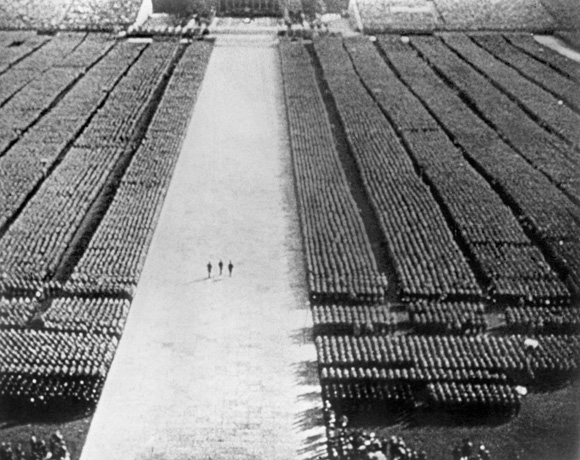
Fascism on the March

Triumph of the Will. 1935. Germany. Produced, directed, and edited by Leni Riefenstahl

Triumph of the Will. 1935. Germany. Produced, directed, and edited by Leni Riefenstahl

These notes accompany the Fascism on the March program on December 15, 16, and 17 in Theater 3.

It was inevitable that the movies, as the most popular and influential medium of propaganda in history, would respond on many levels as the relative calm produced by the 1919 Treaty of Versailles gave way to the madness that arose out of the worldwide Depression. The Hollywood studios, which were somewhat dependent on the European market, approached the political and economic issues very gingerly. Even Confessions of a Nazi Spy (1939), released only four months before the invasion of Poland, tiptoed around anti-Semitism. By then the handwriting on the wall should have been evident to everyone, but 18 months later, Charles Chaplin was under pressure not to release The Great Dictator.