Posted by
Janelle Grace, Publicity Coordinator, Department of Communciations
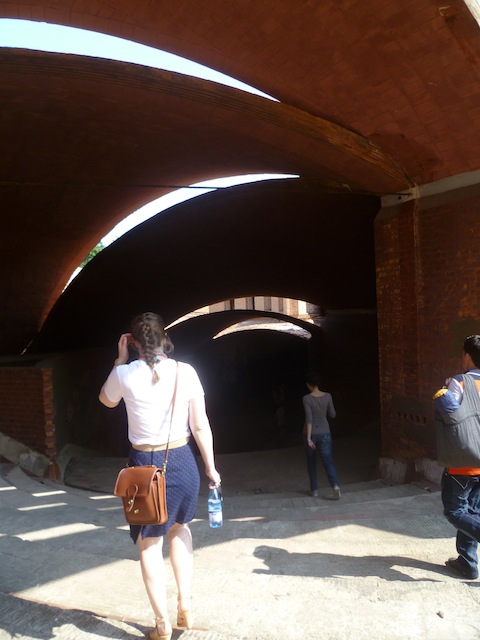
Ellen leads the way as we descend into the ruins of the ballet school
After our cab driver takes us what feels far away from the city center of Havana—past brightly colored houses, ominous government buildings, and a circus tent—Ellen and I finally arrive at the Instituto Superior de Artes (ISA), or Higher Institute of Art.
Posted by
Allison Tepper, 12-Month Fluxus Intern, Department of Prints and Illustrated Books
Sitting before a large glass window at Narita International Airport, en route back home to New York, I contemplated endings. For the past two weeks I had been traveling across Japan on a travel grant, researching Japanese performance and print culture from the historical avant-garde to the contemporary.
Posted by
Lotte Johnson, Curatorial Assistant, Department of Drawings and Prints
“The world is one, a seamless whole, for those who can see it; for those who can learn to observe, to regard, to understand.”—Donald Richie
The hallway leading into Kurenboh, a "meditation gallery" attached to the Chohouin Buddhist Temple of Kuramae, Tokyo
As I emerged from Kurenboh, a gallery tucked away in the Kuramae area of Tokyo, the words of Donald Richie, former Curator of Film at MoMA (1969–72), resonated in my mind.
Posted by
Mia Curran, Twelve-Month Intern, Department of Architecture and Design
Abandoning the New York chip on my shoulder, I headed towards sunny Los Angeles ready to take in whatever the city threw my way. I had never been to the City of Angels, and the coincidence of Pacific Standard Time with the annual College Art Association (CAA) conference provided the perfect opportunity for me to learn more about the history of art and design in the region, while exploring the contemporary L.A. art scene.
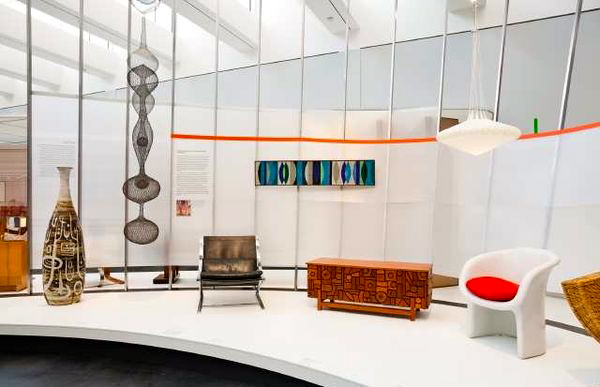
Living in a Modern Way: California Design 1930–65 is the first major exhibition of mid-century modern design in California. From the first Barbie Dream House to the Studebaker Avanti car to a full reconstruction of the Eames House living room, the show examines the objects, environments, and attitudes that defined West Coast style and living at mid-century. A large curved metal armature, designed by architects Craig Hodgetts and Ming Fung weaves through the exhibition, creating intimate enclaves within the open-plan galleries while permitting visitors sightlines through the successive galleries. Framed by this structure are myriad seemingly disparate objects—a shiny Airstream trailer, the Eameses’ molded plywood LCW chair, Ruth Asawa’s abstract wire sculptures—that collectively define a modernism that is lighter, brighter, and more relaxed than its staid European counterparts.
Installation view of California Design showing Ruth Asawa’s wire sculpture, Paul Tuttle’s Z Chair, and Evelyn and Jerome Ackerman’s Ellipses mosaic. Photo courtesy LACMA
In association with the exhibition, I attended a panel discussion with graphic designer Lou Danziger, architect Ray Kappe, and designer Gere Kavanaugh (all three have work in the show), who collectively looked back on Los Angeles as a land of opportunity, a working environment uninhibited by the past and brimming with artists and designers full of idealistic visions of the future. This idealism and sense of hope was palpable in the exhibition, but I wondered to what extent it remained today.
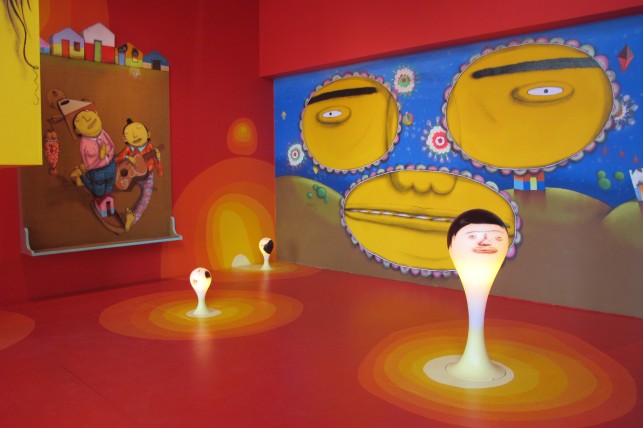
My friend Donielle invited me to a preview tour of Miss You, an exhibition of work by the Brazilian street artists Os Gemeos, led by the artists and MOCA director Jeffrey Deitch for the Contemporaries, a premier membership group for young people in the arts. For the exhibition, the identical twin brothers created an immersive fantasy world with paintings, light installations, textiles, and an interactive video. Every inch of the gallery was transformed. The red walls bled into the floors and ceilings, creating a womb-like environment from which amoebic light-heads emerged and illuminated the room. Along the perimeter of the space hung portraits of the yellow-skinned inhabitants of the brothers’ fantasy world. They described the characters like family members, noting things about their personalities and lifestyles not shown in the paintings. The artists’ real family was part of the exhibition as well. They assisted with the installation of the exhibition, and a series of small textiles on the second floor was created by the brothers’ mother especially for Miss You.
Installation view of Miss You at Prism Gallery. Photo: Kyle Raymond Fitzpatrick
During the tour, Deitch discussed tensions inherent to exhibiting street art in a museum or gallery setting (a challenge he has faced many times, most recently in his Art in the Streets exhibition at MOCA). In most instances, museums represent street art with fragments or severely decontextualized recreations of original murals or graffiti works. For street artists, the entire urban environment is fair game, so the fragments often sit uncomfortably in the governed gallery environment. The success of Miss You lay in the complete control that Os Gemeos were given over the gallery space.
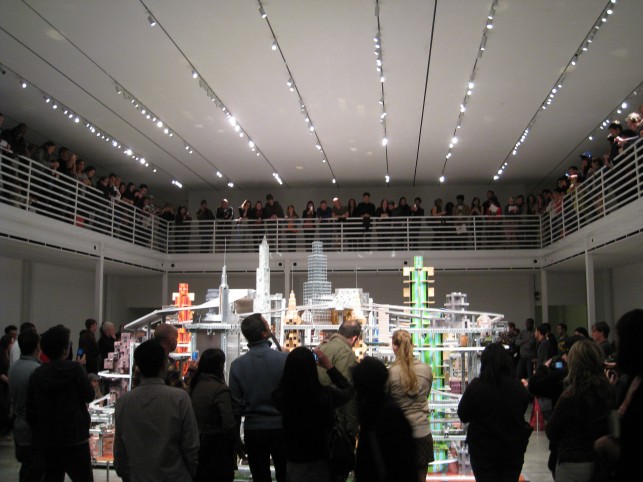
The next stop on my trip was Chris Burden’s Metropolis II, on view at the Broad Contemporary Art Museum at LACMA. The large kinetic sculpture is made up of approximately 1,200 miniature Hot Wheels cars that speed through a dense network of buildings at 240 scale miles per hour. Burden estimates that every hour, 100,000 cars pass through the city along the curving, tiered, multilane highways. The frenetic, noisy, crowded city is familiar (was I back in New York?) but not identifiable. It is a hybrid city with an Eiffel Tower lookalike, a mosque, a cathedral, and towers created with the Eames’ House of Cards—all connected by a network of monorail trains. As the museum neared closing time, huge crowds gravitated toward Burden’s work on their way out. The flashes of iPhones and digital cameras added to the delightful frenzy of the environment.
Visitors crowd around Chris Burden’s Metropolis II at LACMA
It was not until later, undistracted by the whirring of toy cars but conscious of the gridlock of real cars around me, that I wondered about the implications of Metropolis II. Is Burden’s a utopian or dystopian vision? Metropolis II is supremely regimented; the driverless cars never crash and the train is always on time. This particular future could not have felt more distant than during my trip to L.A., where my driver’s-license-less self depended on perpetually late buses and grumpy taxi drivers.
A number of young people who I encountered throughout my trip assured me that I didn’t need a car to get around L.A., calling my attention to the bike movement sweeping the city. Their enthusiastic idealism reminded me of the energy described by Danziger, Kappe, and Kavanaugh as characterizing the design community 50 years earlier. Is L.A. still the golden land of opportunity for young people in the arts? My friend and LA culture blogger Kyle explains, “The energy of the art world in Los Angeles is very untamed…it is limitless, endless, without judgment, and full of opportunity for creation and collaboration…the idea of the wild, wild West exists.” In a city known for its superficiality, I was taken aback by the openness of the art scene. There is room for experimentation and whimsy in the creation, presentation, and consumption of art in L.A., a quality that I find is all too distant in the New York art establishment.
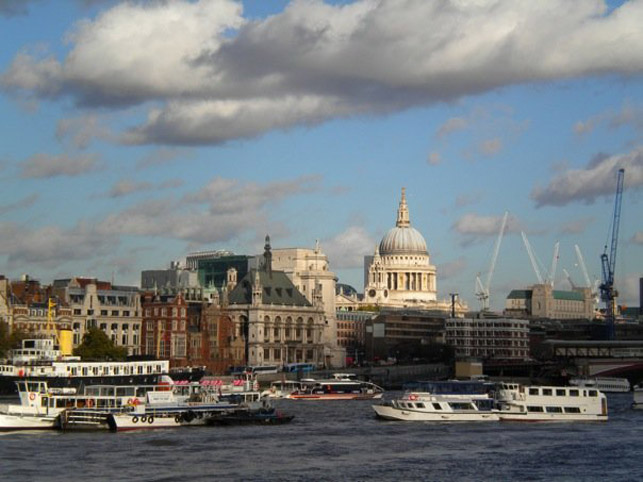
Outfitted with my heavily detailed itinerary, an exhaustive list of current exhibitions, and at least one pair of “sensible walking shoes,” I boarded my plane to London. As a 12-month intern at MoMA, I had received a travel grant to broaden my understanding of a specific area of the museum world.
Posted by
Alexander Fang, The Louise Bourgeois Twelve-Month Intern, Department of Prints and Illustrated Books
Old Havana, Cuba
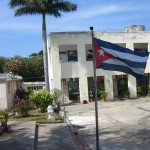
Admittedly, I was extremely anxious about traveling to Cuba. But now, having returned from a trip to Havana made possible through MoMA’s 12-month internship program, I feel enlivened. Although complicated politics still surround Cuban-American relations, Cuba has much to offer. The beaches are as beautiful as the vistas in Old Havana. Music and dance can be heard and seen in the city as well as in its surrounding regions, making for a lively experience despite the visibility of poverty. Havana’s charmingly dilapidated urban landscape is speckled with a mix of Lada automobiles from the 1970s and modern Peugeots. And while Cuba’s backdrop may sometimes seem a little dated, its arts culture, and more specifically its contemporary printmaking scene, is far beyond its time.
Posted by
Colleen Brogan, Digital Learning Project Coordinator
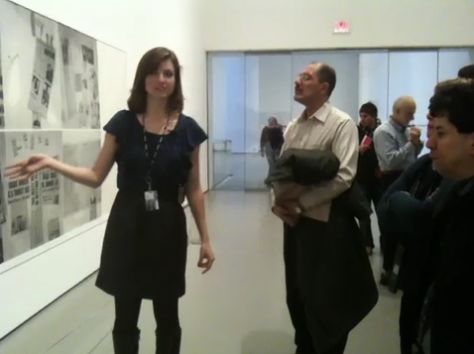
Leading Museum visitors through a Gallery Conversation
Part of the 12-month internship program is the opportunity to facilitate a Gallery Conversation, a one-hour guided tour of the galleries for the public. As a 12-month intern, I was given the opportunity to pick any topic or works I loved and research diligently—but what I have learned is that when I speak to the public, the research is less important than the conversation.
Posted by
Ross Jordan, 12-month Intern in the Department of Painting and Sculpture
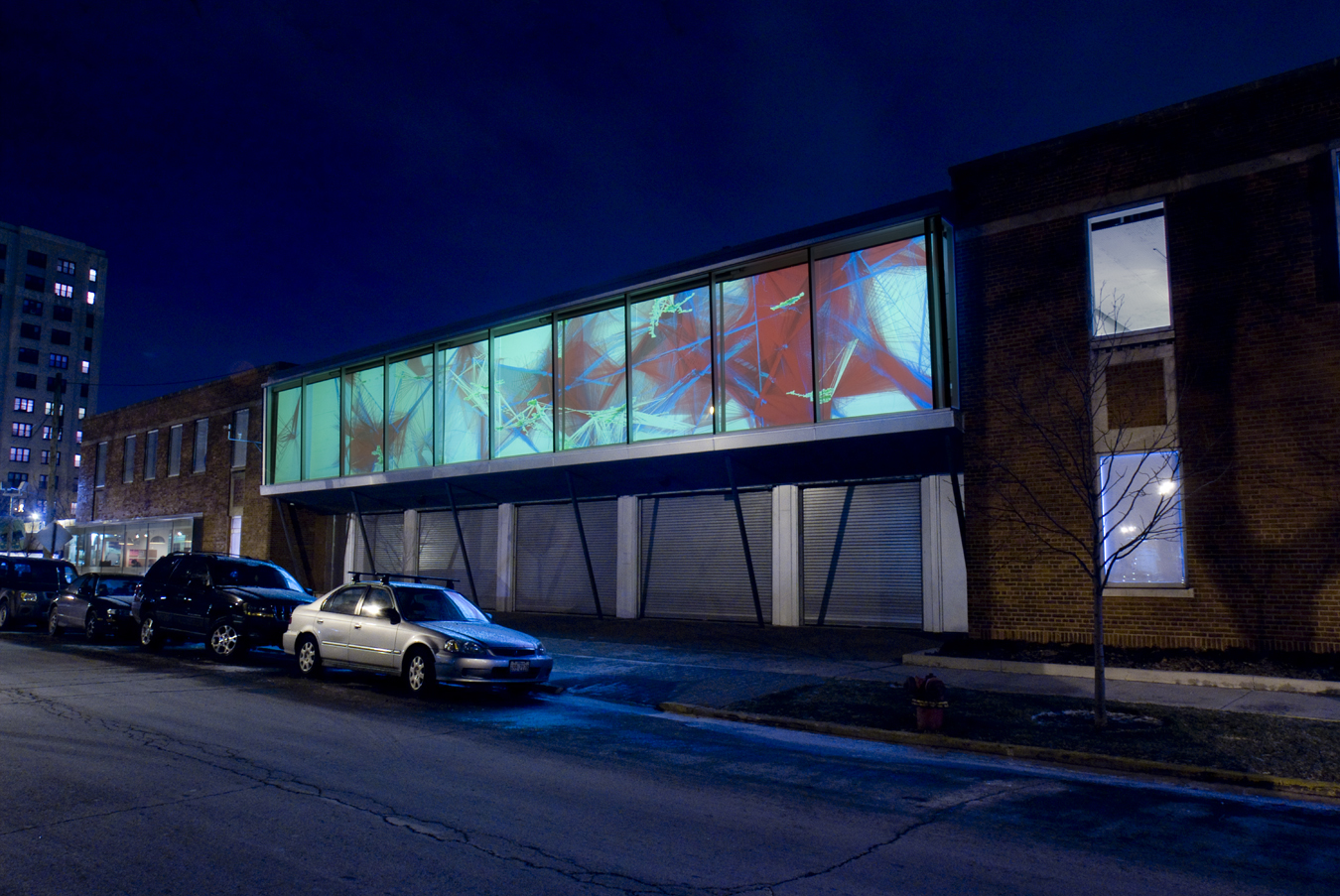
Hyde Park Art Center's facade displays art for the community after hours
In my last post we visited Street Level Youth Media and talked to Steven Evans about how his nonprofit empowers and supports Chicago’s young artists by introducing them to new digital media. Today’s post is all about adults and the arts. How do arts organizations engage artists and communities? One place I think has good answers is Hyde Park Art Center (HPAC), one of Chicago’s oldest and best-known arts organizations.
Posted by
Ross Jordan, 12-month Intern in the Department of Painting and Sculpture
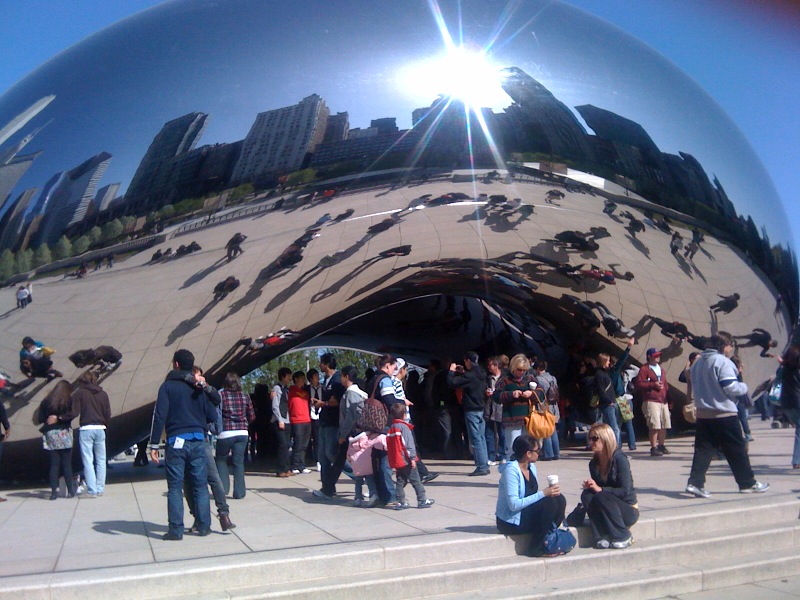
Anish Kapoor's Cloud Gate in Chicago's Millennium Park gives the city a chance to reflect on itself
I’m interested in the big picture. How do arts organizations function and build support, survive and thrive? During a recent visit to Chicago I had the opportunity to sit down with four nonprofit leaders working at different levels of the city’s art scene. At a time of financial rollercoasters, shifting demographics, and a globalizing world, I was interested to see how these art organizations continued to reach out to changing communities and tap in to the creative energy they have to offer.
Posted by
Sarah Kennedy, Associate Educator, Public and Studio Programs
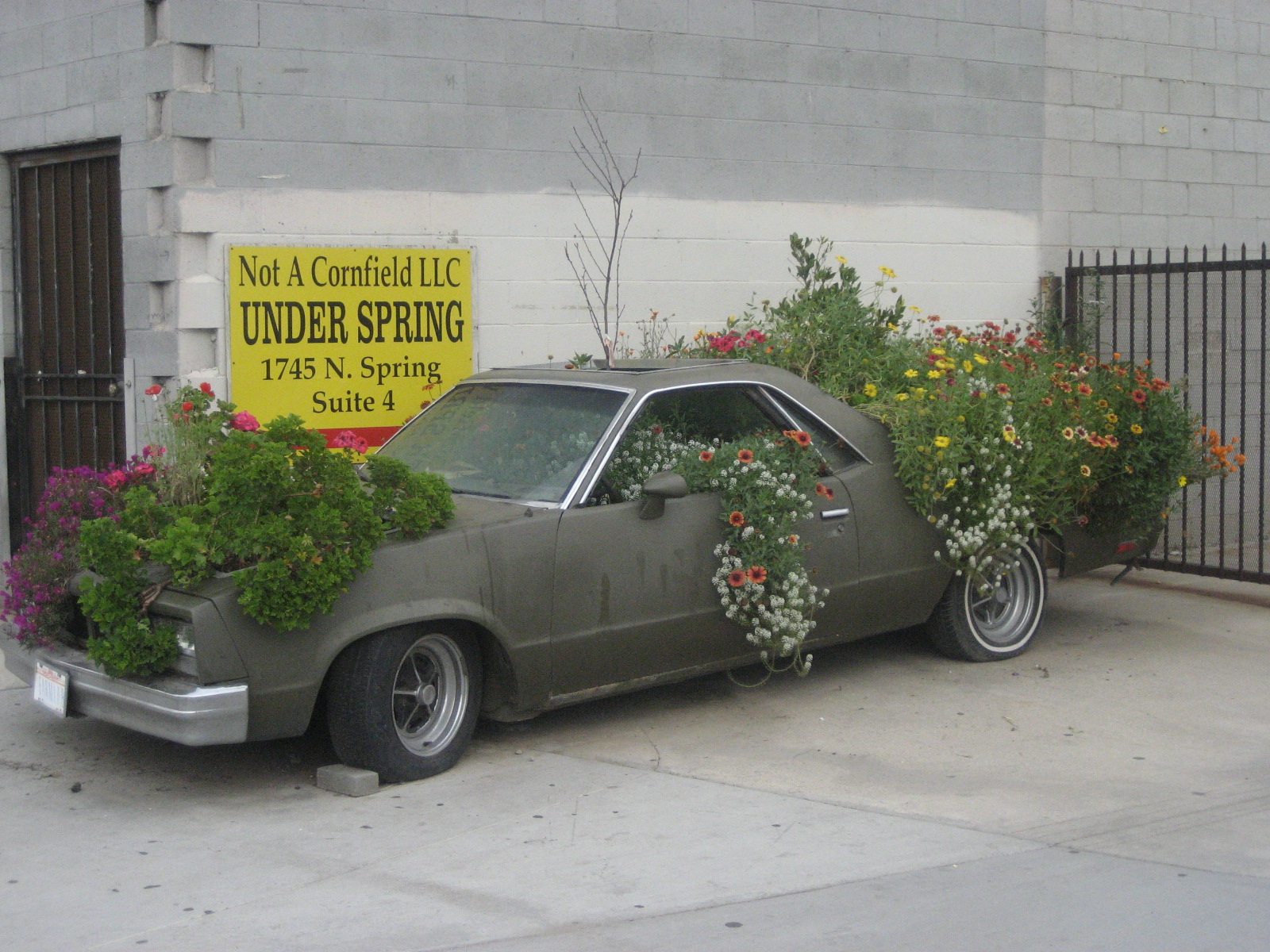
An automobile planter at the entrance to The Metabolic Studio, in downtown Los Angeles
During my first solo trip to the West Coast, which I wrote about in my first blog post, I continued to cover ground across Los Angeles and visited several of the many city museums. In addition to a walk through the LACMA collection and the Hammer Museum, I also managed to visit MOCA where I met up with Ed Giardina, one of five people in the Los Angeles–based collective Finishing School.
If you are interested in reproducing images from The Museum of Modern Art web site, please visit the Image Permissions page (www.moma.org/permissions). For additional information about using content from MoMA.org, please visit About this Site (www.moma.org/site).
Welcome to MoMA.org. To take full advantage of all the site’s features, including the option to save works in the collection, please upgrade your browser to Firefox,
Google Chrome, Safari, or Internet Explorer 9.
See our help page for more information.