
MoMA
Posts in ‘Artists’
July 31, 2014  |  Artists, Collection & Exhibitions
MoMA’s Tiniest Drawing: A Max Ernst Microbe
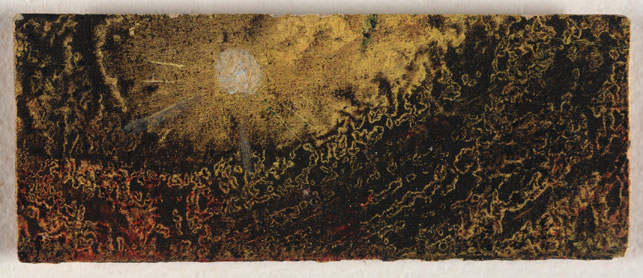
Max Ernst (French, born Germany. 1891–1976). Adam and Eve Expelled from the Garden of Eden. 1946–47. Gouache on cardstock, 1/2" x 1 3/8" (1.4 x 3.6 cm). The Museum of Modern Art, New York. Gift of Pierre Matisse in memory of Patricia Kane Matisse. © 2014 Artists Rights Society (ARS), New York/ADAGP, Paris

Max Ernst (French, born Germany. 1891–1976). Adam and Eve Expelled from the Garden of Eden. 1946–47. Gouache on cardstock, 1/2″ x 1 3/8″ (1.4 x 3.6 cm). The Museum of Modern Art, New York. Gift of Pierre Matisse in memory of Patricia Kane Matisse. © 2014 Artists Rights Society (ARS), New York/ADAGP, Paris

One of the great privileges of being a curator at MoMA is firsthand access to the works that make up our outstanding collection. Yet, even in the case of the Drawings collection, with its share of easily handled, two-dimensional works, this access often begins with an exploration of our digital database. The basic information on a work—artist, title, date, etc.—is readily available here, and makes it an invaluable resource for early research on any project.
July 24, 2014  |  Artists, Collection & Exhibitions
“But Is It Art?” Constantin Brancusi vs. the United States

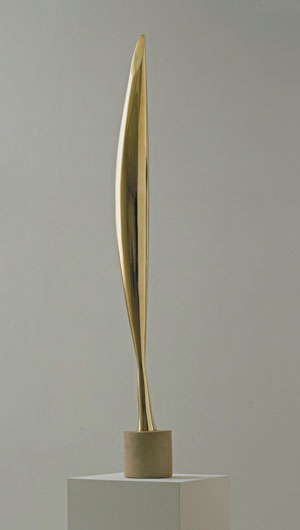
Constantin Brancusi. Bird in Space. 1928. Bronze, 54 x 8 1/2 x 6 1/2" (137.2 x 21.6 x 16.5 cm). Given anonymously

Constantin Brancusi. Bird in Space. 1928. Bronze, 54 x 8 1/2 x 6 1/2″ (137.2 x 21.6 x 16.5 cm). Given anonymously

Have you ever puzzled over a work of art that bears little or no resemblance to its title? In 1926, the disparate relationship between an artwork and its textural description led to one of the most significant clashes of art and law in history: the case of Brancusi v. United States.

Constantin Brancusi (1876–1957) was born in Romania, but from 1904 he lived and worked as a sculptor in Paris.

June 30, 2014  |  Artists, Intern Chronicles
Art in the Landscape: Exploring Marfa, TX

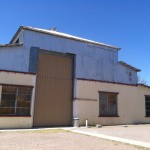
This May, I had the opportunity to travel to Marfa, Texas, using a generous travel stipend that is one of the fantastic perks of my internship. I’d always wanted to go to Marfa, a small town in West Texas that’s home to site-specific installations by Donald Judd, Claes Oldenburg and Coosje van Bruggen, Ilya Kabakov, Dan Flavin, and Roni Horn, among others.

June 23, 2014  |  Artists, Collection & Exhibitions
The Subway and the City: Massimo Vignelli, 1931–2014
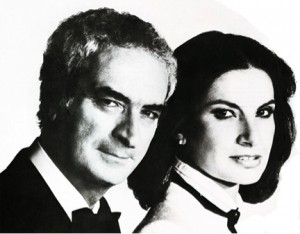
Massimo and Lella Vignelli.  Photograph by Barry McKinley. Courtesy AIGA

Massimo and Lella Vignelli. Photo: Barry McKinley. Courtesy AIGA

When Massimo Vignelli, one of the greatest graphic designers of the 20th century, was close to death in mid-May, his son Luca informed the whole design community—at Vignelli’s request—so we could say goodbye with our thoughts and with a letter.

June 12, 2014  |  Artists, Collection & Exhibitions
Tapping the Subconscious: The Hypnotic Art of Matt Mullican
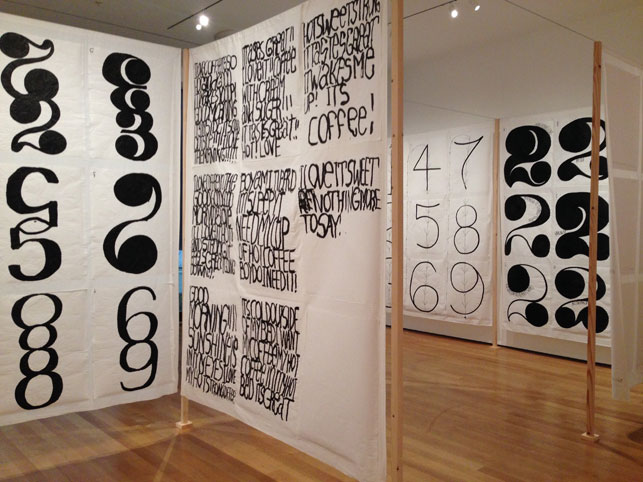
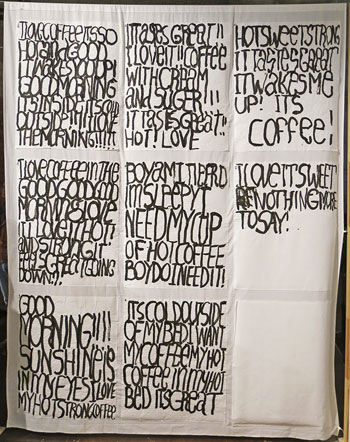
Matt Mullican. Untitled (Learning from That Person's Work: Room 1). 2005. Installation of ink on paper collage mounted on 12 cotton sheets, wood, cable, and video component (color, sound; 14:04 min.), 12 units, each 109 x 88.5", installation dimensions variable. Acquired through the generosity of the Contemporary Arts Council of The Museum of Modern Art and the Friends of Contemporary Drawing. © 2014 Matt Mullican

Matt Mullican. Untitled (Learning from That Person’s Work: Room 1). 2005. Installation of ink on paper collage mounted on 12 cotton sheets, wood, cable, and video component (color, sound; 14:04 min.), 12 units, each 109 x 88.5″, installation dimensions variable. Acquired through the generosity of the Contemporary Arts Council of The Museum of Modern Art and the Friends of Contemporary Drawing. © 2014 Matt Mullican

Matt Mullican. Untitled (Learning from That Person’s Work) (detail). 2005. Courtesy of la Biennale di Venezia. © 2014 Matt Mullican

Matt Mullican. Untitled (Learning from That Person’s Work) (detail). 2005. Courtesy of la Biennale di Venezia. © 2014 Matt Mullican

When I think of art created from an altered state of mind or from the subconscious, I immediately go to the automatic drawing practices of the Surrealists, or of art brut and “outsider art.” Art brut, literally “raw art,” is a term coined by artist Jean Dubuffet in the mid-1940s to describe work made outside of the established art world. Over the years it has been used to categorize art created by the mentally ill, the incarcerated, and the formally untrained.

June 5, 2014  |  Artists, Collection & Exhibitions
Sigmar Polke’s Printed Dots
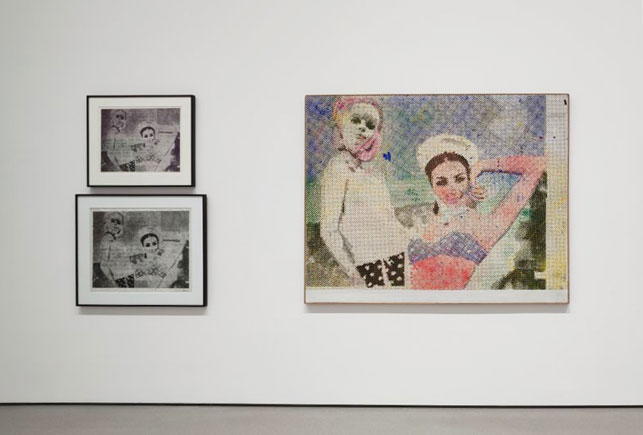
Installation view of Alibis: Sigmar Polke 1963–2010, The Museum of Modern Art, New York, April 19–August 3, 2014. © 2014 The Estate of Sigmar Polke/Artists Rights Society (ARS), New York/VG Bild-Kunst, Bonn, Germany

Installation view of Alibis: Sigmar Polke 1963–2010, The Museum of Modern Art, New York, April 19–August 3, 2014. © 2014 The Estate of Sigmar Polke/Artists Rights Society (ARS), New York/VG Bild-Kunst, Bonn, Germany

Within the arsenal of unusual and experimental techniques on clamorous display in Alibis: Sigmar Polke 1963–2010, the artist’s prints are notable for their sly celebration of the halftone dot pattern, the tonal register that has enabled images to be reproduced in newspaper photographs, magazine ads, consumer packaging, etc. since the late 19th century.

May 23, 2014  |  Artists, Collection & Exhibitions
John Cage and the Northwest School
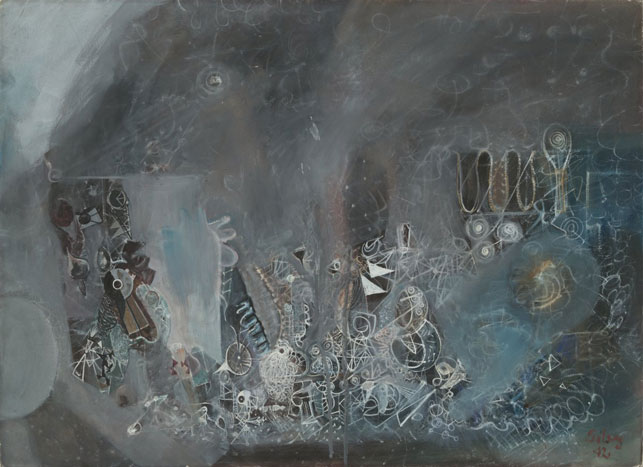
Mark Tobey. The Void Devouring the Gadget Era. 1942. Tempera on board, 21 7/8 x 30" (55.3 x 76.0 cm). The Museum of Modern Art, New York. Gift of the artist, 1964. © 2014 Estate of Mark Tobey/Artists Rights Society (ARS), New York

Mark Tobey. The Void Devouring the Gadget Era. 1942. Tempera on board, 21 7/8 x 30″ (55.3 x 76.0 cm). The Museum of Modern Art, New York. Gift of the artist, 1964. © 2014 Estate of Mark Tobey/Artists Rights Society (ARS), New York

The first gallery of the exhibition There Will Never Be Silence: Scoring John Cage’s 4’33” contains works by John Cage’s contemporaries and influences, including such well-known names as Marcel Duchamp, Joseph Albers, Jasper Johns, Barnett Newman, and Robert Rauschenberg. Works by two lesser-known West Coast artists, Mark Tobey and Morris Graves, also occupy this space, pointing to Cage’s brief but seminal years living in Seattle.

May 8, 2014  |  Artists, Collection & Exhibitions
Speaking with Joan Snyder about Sweet Cathy’s Song (1978)

Installation view, caption TK

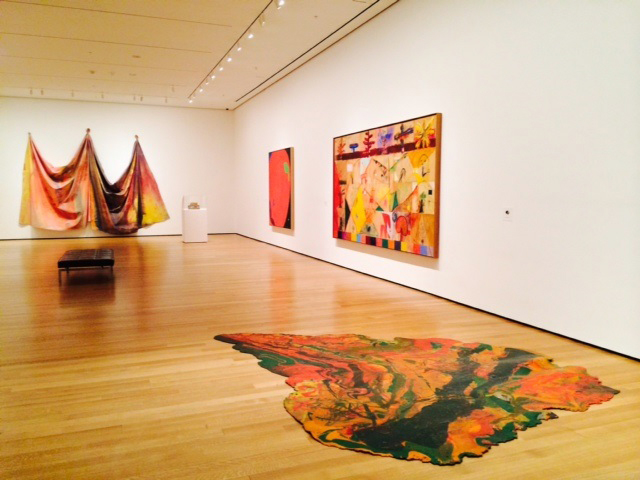
Installation view of the fourth-floor Alfred H. Barr Painting and Sculpture Galleries, The Museum of Modern Art, spring 2014. Pictured are works by (from left to right) Sam Gilliam, Dennis Oppenheim (in case), Elizabeth Murray, Joan Snyder, and (on floor) Lynda Benglis

A new installation in the galleries brings together a diverse group of works from the late 1960s and 1970s, a moment when many artists radically reexamined the medium of painting.

May 1, 2014  |  Artists, MoMA Stores
Now Available at the MoMA Stores: UNIQLO at MoMA Art-Inspired Accessories

UNIQLO has had a long and fruitful relationship with MoMA, and through UNIQLO Free Friday Nights has helped advance the Museum’s mission by making art and design accessible to everyone. To celebrate its continued support of MoMA, this spring UNIQLO unveiled UNIQLO at MoMA, an assortment of T-shirts, tote bags, bandanas, and socks that feature artwork by world-renowned artists, including Andy Warhol, Jean-Michel Basquiat, Keith Haring, Jackson Pollock, and Ryan McGinness.

April 30, 2014  |  Artists, Collection & Exhibitions
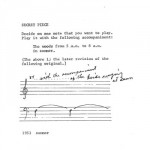
Yoko Ono’s Secret Piece
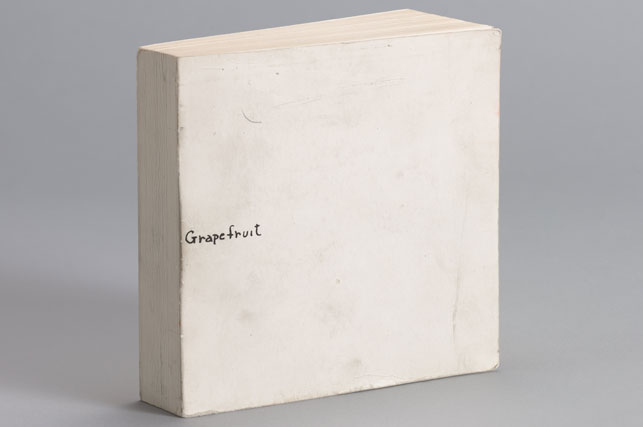
Yoko Ono Grapefruit

Yoko Ono. Grapefruit. 1964. Artist’s book (Tokyo: Wunternaum Press). Offset on paper, 5 1/2 x 5 1/16″ (13.9 x 13.8 x 3.1 cm) (overall, closed)

Many of the works featured in the exhibition There Will Never Be Silence: Scoring John Cage’s 4’33” were created around 1960, as a generation of artists and students of John Cage reacted to the radical possibilities opened up by his 4’33”. The score had finally been published eight years after its first performance at Woodstock in 1952.