Ink, mica flakes, acrylic, pressure-sensitive film, cut-and-pasted printed paper, and painted paper on paper
Not on view
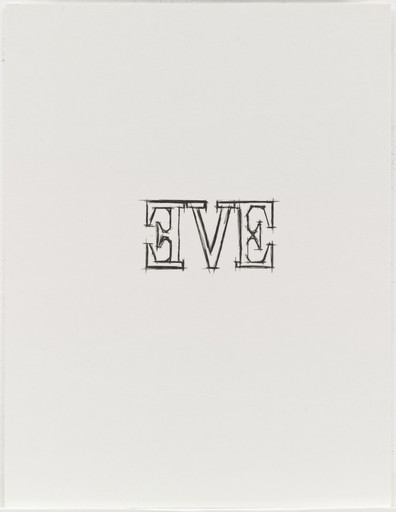
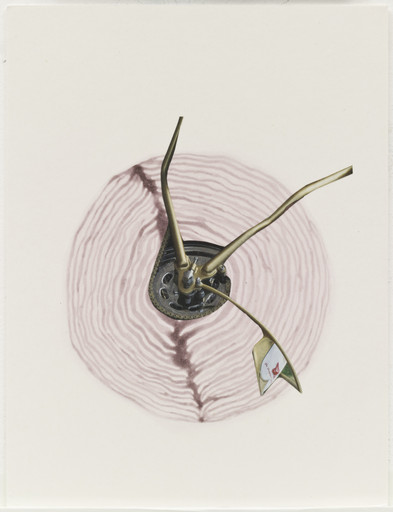
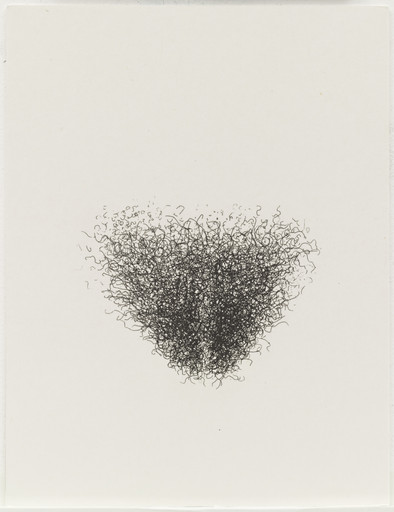
Mutu’s diptych Yo Mama pays tribute to Funmilayo Anikulapo-Kuti, the mother of the famous Afrobeat musician Fela Kuti. A pioneering feminist, said to have been the first woman in Nigeria to drive a car, Anikulapo-Kuti fought against the practice of female genital mutilation. Mutu depicts her symbolically as the biblical Eve, triumphantly slinging a headless serpent across her shoulder while her stiletto boot mutilates the snake, an intrusive phallus. In the artist’s words, “The figure exists in an imaginary outer space, clutching a mangled serpent, the phallic and mythological creature that instigated the downfall of Eve.... The image and title are infested with the inherent contradictions that were the experience of a radical like Funmilayo. A visionary and brave fighter, she was caught in the upheaval of the creation of a nation’s identity.”
Yo Mama is emblematic of Mutu’s collage strategy, which often mingles the glamorous sensuality of full lips and curled lashes with haunting violence and severed limbs. In appropriating details from magazine clippings, Mutu may generate facial features mismatched in scale, resulting in figures simultaneously alluring and strange. These layered references and remixed body politics contribute to an interrogation of otherness, race, alienation, and female representation.
There is no singular question at the core of Mutu’s work. The artist has said, “The idea of clearcut binaries—African/European, archaic/modern, religion/pornography—I’ve never really believed in that. I’m interested in powerful images that strike chords embedded deep in the reservoirs of our unconscious.” Here, atop a pink palette and leaping between two panels of opposing gravitational forces, the figure represents the feminist challenge—woman as both warrior and creator. The dualities and even multiplicities in the work are as tangled as the coiled serpent.
[Magazine, February 2021] (https://www.moma.org/magazine/articles/506)
Explore more
Wangechi Mutu
Kenyan American, born 1972 14 works onlineBorn in Nairobi, Kenya, in 1972, the artist relocated to the US in the mid-1990s to study fine art. Her experience of migration and her diasporic identity have infused the artist’s creations with an expansive philosophy of belonging: “If a plant has just one root that doesn’t necessarily mean it’s going to stand straight and strong.
Learn more →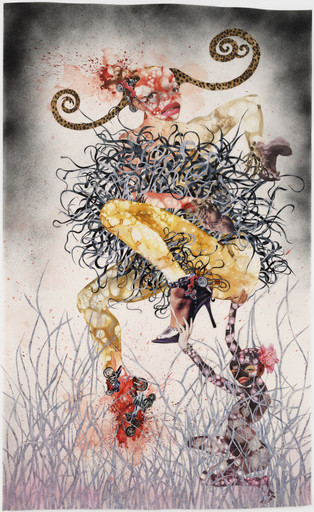
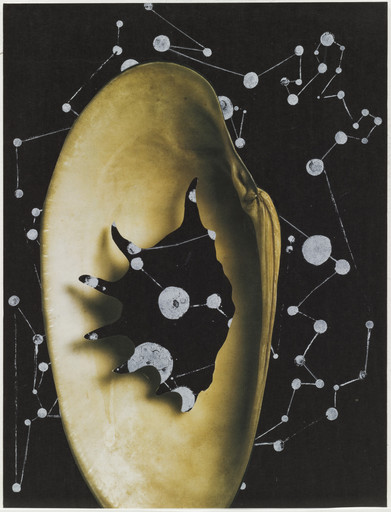
Afrofuturism
First coined in 1993 by the cultural critic Mark Derry, afrofuturism refers to a literary and artistic mode of reimagining Black history and culture—and possible futures—through the lens of science fiction and fantasy.
Learn more →

Collage
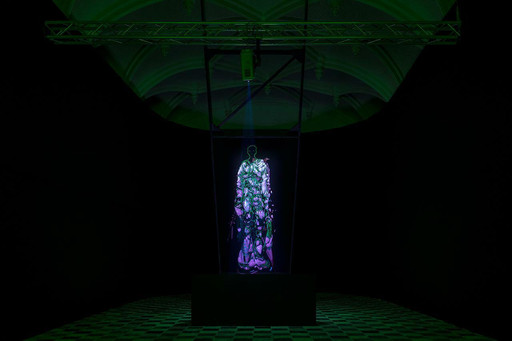
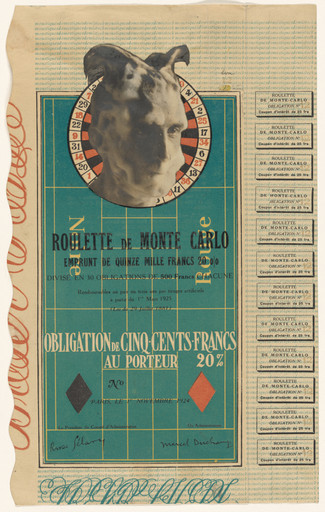
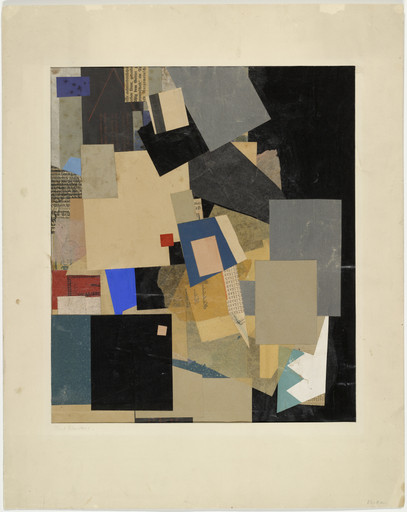
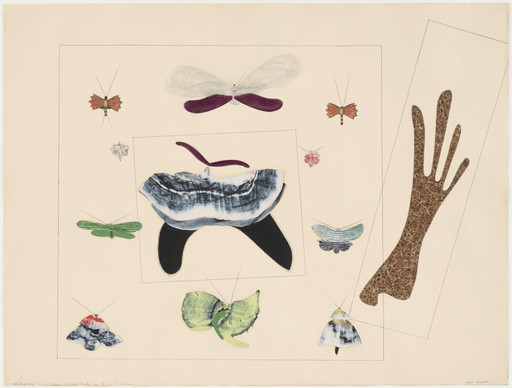
Derived from the French verb coller, meaning “to glue,” collage refers to both the technique and the resulting work of art in which fragments of paper and other materials are arranged and glued or otherwise affixed to a supporting surface.
Learn more →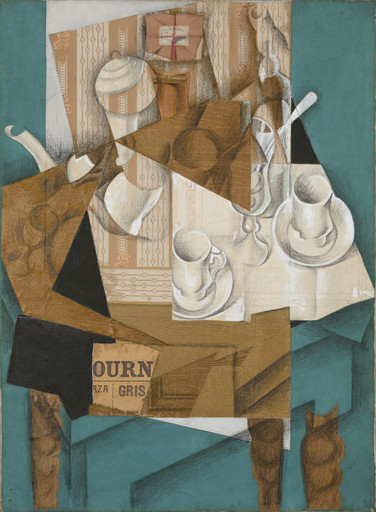
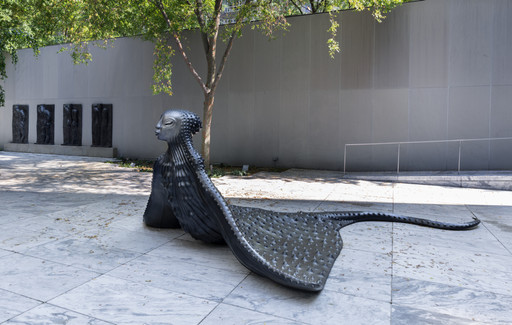
Feminist art
Art that seeks to challenge the dominance of men in both art and society, to gain recognition and equality for women artists, and question assumptions about womanhood.
Learn more →



Audio
Audio from the playlist 1980–Today: Works from the Collection
From MoMA Design Store


Installation views
We have identified this work in the following photos from our exhibition history.
Licensing
Artwork or archival images
If you would like to reproduce an image of a work of art in MoMA's collection, or an image of a MoMA publication or archival material (including installation views, checklists, and press releases), please contact Art Resource (publication in North America) or Scala Archives (publication in all other geographic locations).
Audio and film clips
MoMA licenses archival audio and select out of copyright film clips from our film collection. At this time, MoMA produced video cannot be licensed by MoMA/Scala. All requests to license archival audio or out of copyright film clips should be addressed to Scala Archives at [email protected]. Motion picture film stills cannot be licensed by MoMA/Scala. For access to motion picture film stills for research purposes, please contact the Film Study Center at [email protected]. For more information about film loans and our Circulating Film and Video Library, please visit Circulating Film and Video Library.
Text from a publication or the archives
If you would like to reproduce text from a MoMA publication, please email [email protected]. If you would like to publish text from MoMA's archival materials, please fill out this permission form and send to [email protected].
Feedback
This record is a work in progress. If you have additional information or spotted an error, please fill out this feedback form.