Silver dye bleach transparency; aluminum light box
Not on view
Jeff Wall based this elaborately staged photograph on the prologue of Ralph Ellison’s celebrated 1952 novel, Invisible Man. The novel’s protagonist, an unnamed African American man, relates that he lives secretly “in my hole in the basement,” where he has “wired the entire ceiling, every inch of it” with 1,369 lights powered by illegally siphoned off electricity. In addition to the prologue, Wall drew from other parts of Invisible Man and his own imagination to create this scene. His intention was not to make a literal illustration of the text, but to give form to the picture it inspired in his mind, which he calls “accidents of reading.” As he has explained, many of his images begin “from accidents in the street—events I witnessed by chance. These pictures are like that, except that the accident occurred when I happened to be reading a book. I had the same feeling reading […] that I have had many times when seeing something occur on the street or in some other place, a feeling that an opportunity for a picture was presented to me.”
Wall refers to his method of photography as “cinematography.” Similar to the process of making a movie, his work is dependent on collaboration with a cast and assistants who help him to develop his painstakingly constructed sets. He uses a large-format camera with a telephoto lens to achieve the high resolution and fine details that characterize his prints. This photograph, like most of the artist’s work, has been printed on a transparency and mounted in a steel-framed light box. The large-scale image is illuminated from behind by fluorescent lights, which Wall began utilizing after seeing light-box advertisements in the late 1970s.
Publication excerpt from MoMA Highlights: 375 Works from The Museum of Modern Art, New York (New York: The Museum of Modern Art, 2019)
After a brief but eventful career that embodies the hopes and humiliations of African Americans at mid-twentieth century, the hero of Ralph Ellison’s celebrated 1952 novel Invisible Man retreats to a secret basement room on the edge of the Manhattan neighborhood of Harlem. There, in the novel’s eloquent prologue, he patiently composes and reflects upon the story that follows. “I am invisible, understand,” he explains, “simply because people refuse to see me.”
Making pictures out of stories was once the main business of the visual arts. The rising modernist tradition consigned the practice to the margins; for most of the past century, “illustration” has been a term of contempt. In this large, richly detailed and thoroughly absorbing photograph, Wall has all but single-handedly reinvented the challenge.
The novel’s prologue is short on specifics, except one: 1,369 light bulbs cover the ceiling of the narrator’s underground lair. Starting with this fantastic detail, Wall scrupulously imagined in his Vancouver studio the concrete form of Ellison’s metaphorical space. Ambitiously reviving a forgotten art, he made visible the Invisible Man.
MoMA Highlights: 375 Works from The Museum of Modern Art, New York (New York: The Museum of Modern Art, 2019)
Explore more
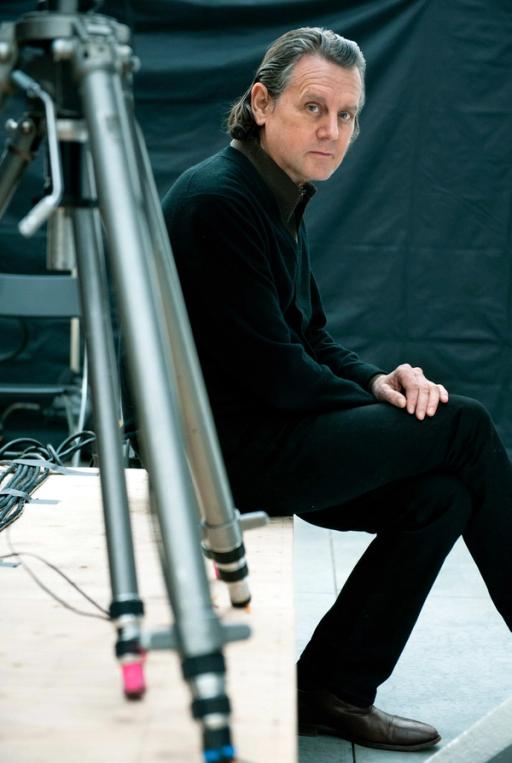
Jeff Wall
Canadian, born 1946 9 works onlineIn the summer of 1977, Jeff Wall visited Madrid’s Museo del Prado for the first time and became enchanted with its collection of Old Master paintings.
Learn more →
Audio
Audio from the playlist Kids
Audio from the playlist 1950–1980: Works from the Collection
From MoMA Design Store


Installation views
We have identified this work in the following photos from our exhibition history.
Licensing
Artwork or archival images
If you would like to reproduce an image of a work of art in MoMA's collection, or an image of a MoMA publication or archival material (including installation views, checklists, and press releases), please contact Art Resource (publication in North America) or Scala Archives (publication in all other geographic locations).
Audio and film clips
MoMA licenses archival audio and select out of copyright film clips from our film collection. At this time, MoMA produced video cannot be licensed by MoMA/Scala. All requests to license archival audio or out of copyright film clips should be addressed to Scala Archives at [email protected]. Motion picture film stills cannot be licensed by MoMA/Scala. For access to motion picture film stills for research purposes, please contact the Film Study Center at [email protected]. For more information about film loans and our Circulating Film and Video Library, please visit Circulating Film and Video Library.
Text from a publication or the archives
If you would like to reproduce text from a MoMA publication, please email [email protected]. If you would like to publish text from MoMA's archival materials, please fill out this permission form and send to [email protected].
Feedback
This record is a work in progress. If you have additional information or spotted an error, please fill out this feedback form.