While his New York School peers [Willem de Kooning] (https://www.moma.org/artists/3213) and [Jackson Pollock] (https://www.moma.org/artists/4675) used gestural painting techniques, Reinhardt’s work of the 1950s deliberately lacks both the physically aggressive handling of paint and the hot emotion characteristic of these artists. This attitude may be seen in the increasing austerity of his paintings and in the restrained brushwork of Number 107. The painting is one of a number of monochromes he produced in the 1950s, for which he explored a vertical format. Working in white over an off-white ground, Reinhardt fosters subtle chromatic variations by adding solvent to his paint, alternating opaque with translucent passages, and creating a bricklike pattern of horizontal brushstrokes that is both structured and painterly.
In The Studio: Postwar Abstract Painting online course, Coursera, 2017
Gallery label from Focus: Ad Reinhardt and Mark Rothko , 2008.
This painting is one of several monochromes in which Reinhardt explored the use of a vertical format. The combination of the white paint with the natural color of the underlying canvas emphasizes the composition's tonal variations. The rough-edged, horizontal brushstrokes of varying length and paint saturation create a bricklike pattern that is at once structured and painterly. Reinhardt developed these brick forms with greater linearity and modularity in paintings such as Abstract Painting (Blue) of 1953.
Focus: Ad Reinhardt and Mark Rothko, 2008.
Explore more
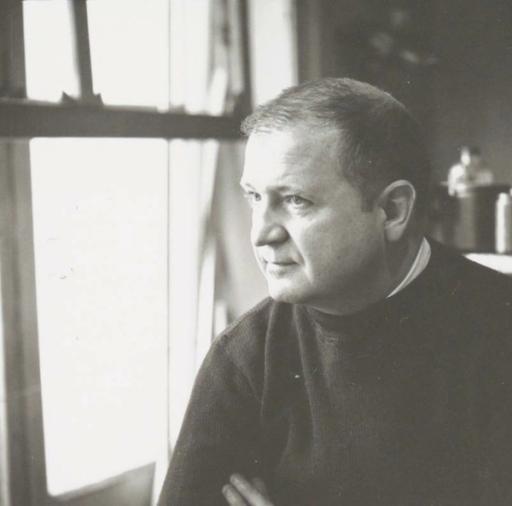
Ad Reinhardt
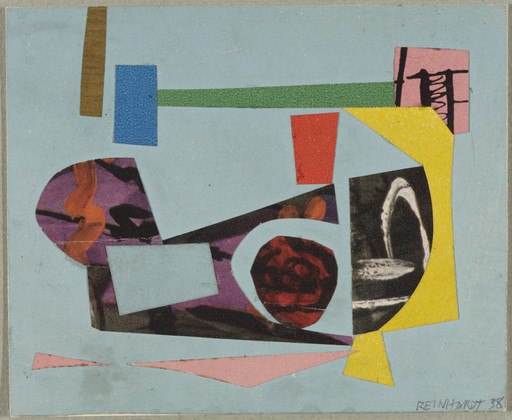
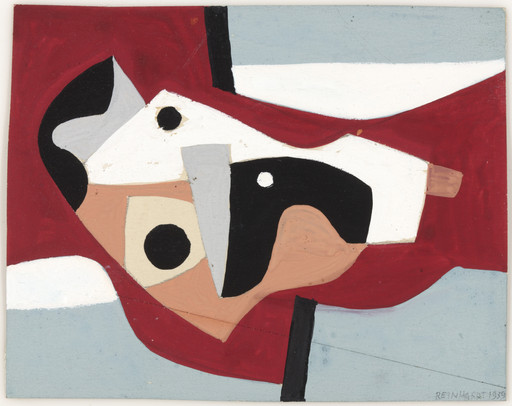
American, 1913–1967 29 works onlineAd Reinhardt was one of the most relentless defenders of the purity of abstraction. For Reinhardt, this manifested as an evolving effort to strip his paintings of everything external to the fundamental fact of paint on canvas.
Learn more →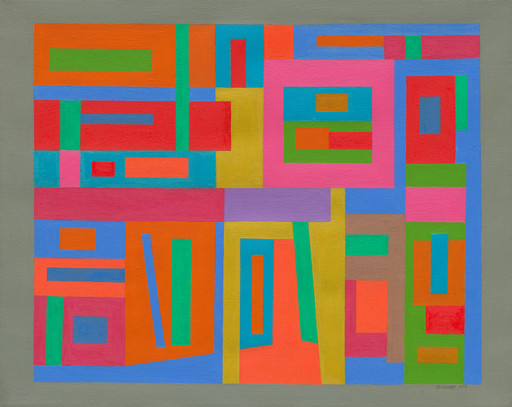
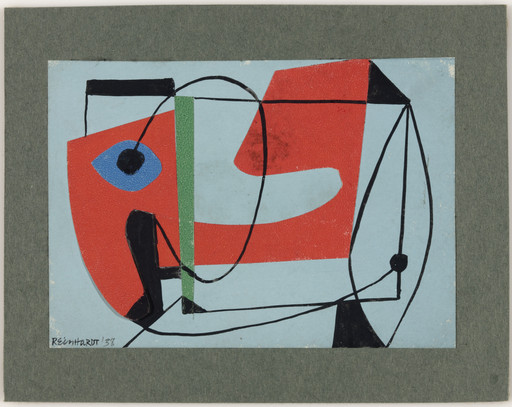
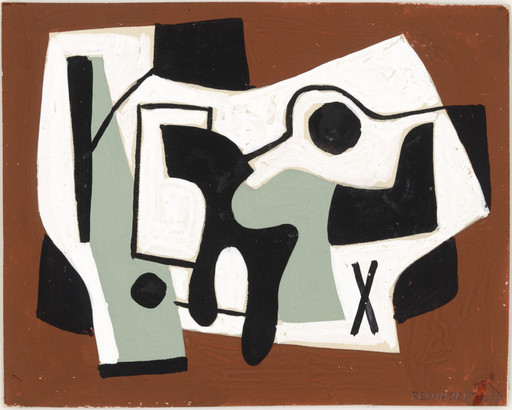
Fields and Figures
Gallery 402In New York City in the 1950s, artists grappled with the devastation felt after World War II by examining existentialist ideas, including individual creative expression and the importance of authentic feeling.
Learn more →

From MoMA Design Store


Installation views
We have identified this work in the following photos from our exhibition history.
Licensing
Artwork or archival images
If you would like to reproduce an image of a work of art in MoMA's collection, or an image of a MoMA publication or archival material (including installation views, checklists, and press releases), please contact Art Resource (publication in North America) or Scala Archives (publication in all other geographic locations).
Audio and film clips
MoMA licenses archival audio and select out of copyright film clips from our film collection. At this time, MoMA produced video cannot be licensed by MoMA/Scala. All requests to license archival audio or out of copyright film clips should be addressed to Scala Archives at [email protected]. Motion picture film stills cannot be licensed by MoMA/Scala. For access to motion picture film stills for research purposes, please contact the Film Study Center at [email protected]. For more information about film loans and our Circulating Film and Video Library, please visit Circulating Film and Video Library.
Text from a publication or the archives
If you would like to reproduce text from a MoMA publication, please email [email protected]. If you would like to publish text from MoMA's archival materials, please fill out this permission form and send to [email protected].
Feedback
This record is a work in progress. If you have additional information or spotted an error, please fill out this feedback form.